CA LICENSE #1091603 · BONDED · WORKERS' COMPMON–SAT 7AM–7PM · 24/7 EMERGENCY
  1. Home
  2. Trees
  3. California pepper

The species file · pepper trees

The pepper tree does everything gracefully. Including falling apart.

The California pepper — Peruvian by birth, Californian by a century and a half of ranch shade — earns its place: a lacy weeping canopy, shade that moves in the wind, a trunk that gnarls like an olive's. It also sheds year-round, roots like a plumbing inspector, and answers big pruning cuts with decay. Working on one is a balancing act: keep the grace, manage the wreckage.

FREE ESTIMATES · NO DEPOSIT · NO OBLIGATION

#1091603CSLB LICENSE — ACTIVE
$25,000CONTRACTOR'S BOND
State FundWORKERS' COMP ON FILE
5.0GOOGLE · 50 REVIEWS
20+YEARS OF EXPERIENCE

Know your tree

Is this the tree in your yard?

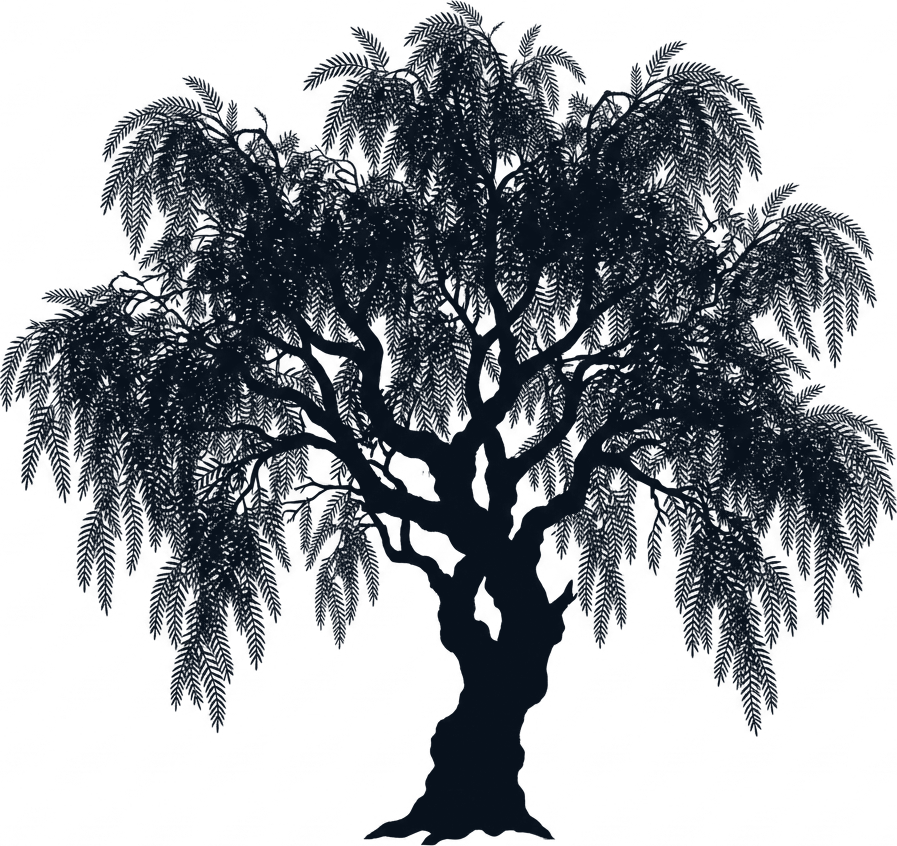
If a tree in the Valley looks like a green waterfall — fine ferny foliage pouring off arching limbs over a trunk that belongs on a much older continent — it's a pepper. Crush a leaf: the spicy smell is the nameplate.

01
Foliage

Fine, feathery leaflet streamers that weep toward the ground and move in any breath of wind — the whole crown drapes rather than spreads.

02
The berries

Female trees hang clusters of rosy 'pink peppercorns' — decorative on the branch, relentless on the patio beneath.

03
The trunk

Gnarled, fissured, and knotted with age, often hollowing at old wounds — half the charm of an old pepper, and half its engineering problem.

04
The carpet

A steady rain of leaflets, berries, and twiglets that mats into corners, stains concrete, and finds every pool skimmer in range. It never stops; it only varies.

SPECIES FILE — CALIFORNIA PEPPER

Botanical
Schinus molle
Mature size
25–40 ft tall, usually wider than tall
Growth rate
Fast when young; century-old specimens are common
The wood
Soft, brittle, decay-prone — big cuts never really close
Watch for
Litter mats · lifted hardscape · old limbs going hollow
Also called
Peruvian pepper · pepper tree · pirul

What goes wrong

The trouble it causes here.

01

Brittle wood on weeping levers

Those graceful arching limbs are long horizontal levers made of soft, brittle wood. Wind loads them, weight accumulates at the tips, and old peppers shed whole limbs — usually the low sweeping ones people park and picnic under, because those carry the most lever for the least strength.
02

Roots with a plumbing habit

Pepper roots run shallow, wide, and hard for water — lifting patios and pool decks, crowding foundations, finding old pipe joints. It's a tree for the far corner of a big lot, and most of the Valley's peppers weren't planted there.

03

It resents heavy pruning

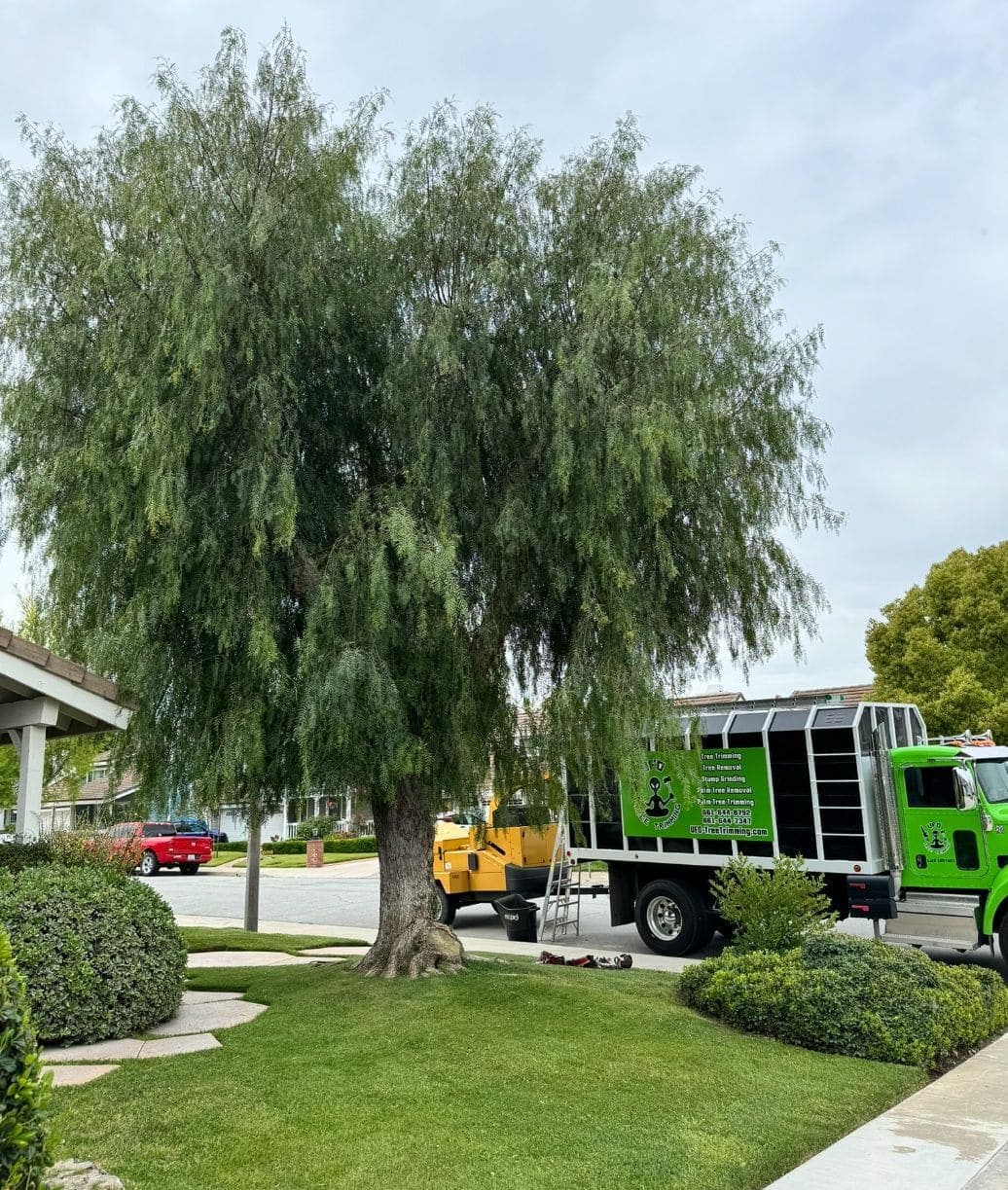
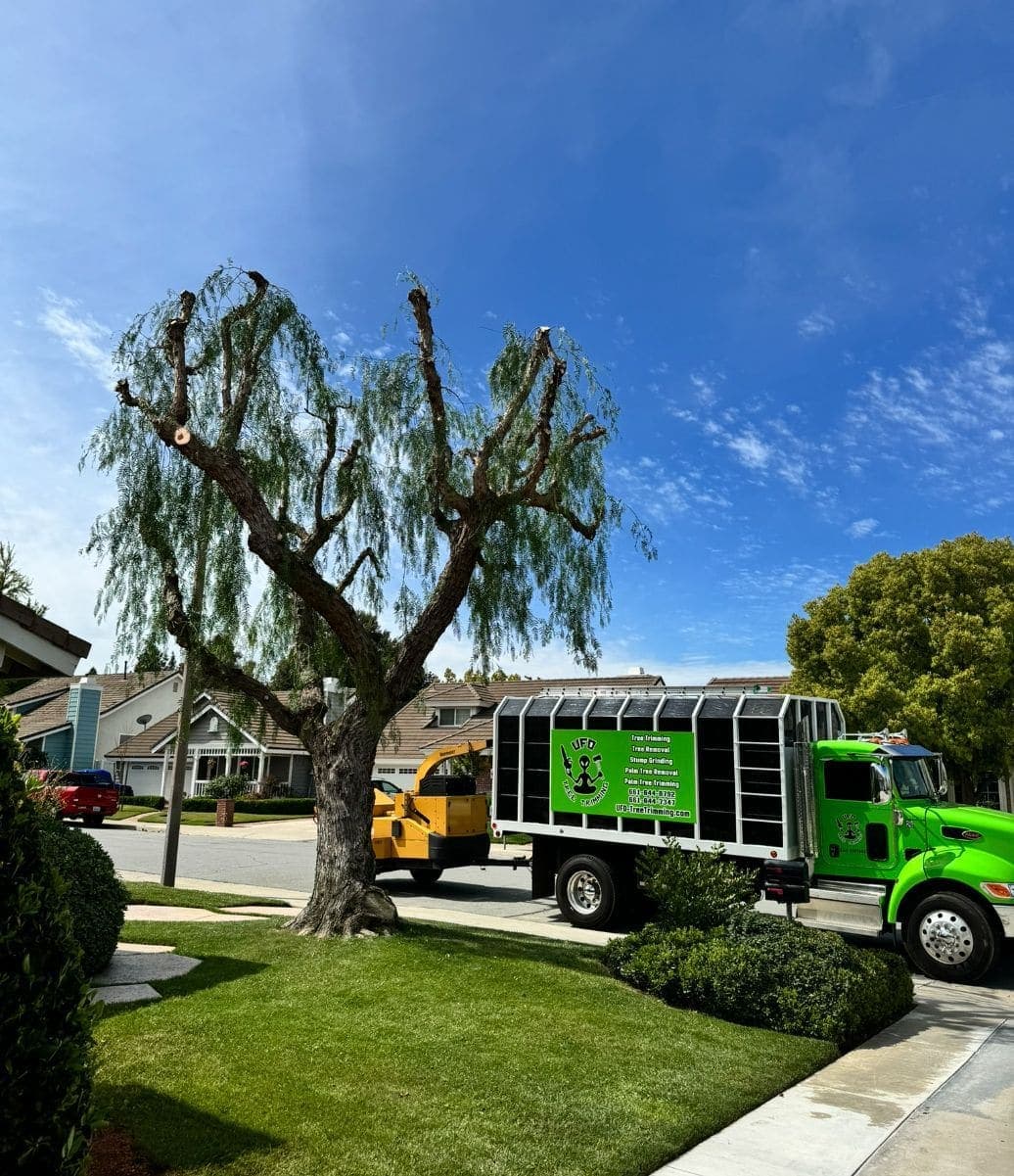
Soft wood plus poor compartmentalization means big cuts don't seal — they rot. Topping a pepper, or hacking its skirt back to fat stubs, converts a graceful tree into a set of decay columns with regrowth hanging off them. This species punishes brutality more than almost anything we work on.

04

The shed never stops

Leaflets, berries, bark flakes, twig ends — a pepper drops something every week of the year. Under the canopy that means stained hardscape and matted litter; in a pool it means a standing appointment with the skimmer basket.

05

Grand old age, hollow middle

The Valley's oldest peppers are ranch landmarks with genuinely hollow limbs and trunks — still alive, still leafing, structurally a question mark. A landmark pepper over anything valuable deserves a real assessment, not sentiment alone.

How we work it

How we handle this tree.

Pepper work rewards a light, frequent hand — many small cuts the tree can close, never a few big ones it can't. The goal is a crown that keeps weeping without accumulating the tip weight that snaps it.

01
Small cuts, short cycles

We reduce with many modest cuts back to live laterals — the size of wound this wood can actually wall off — on a return cycle rather than one dramatic visit. It's how a pepper stays graceful for a century.

02
Weight off the sweepers

End-weight comes off the long weeping horizontals over driveways, patios, and pool decks — the exact limbs this species drops. The drape stays; the lever shrinks.

03
Honest root triage

Roots already under a slab are an engineering conversation, not a chainsaw one: cutting big structural roots trades a lifted walkway for a tippy tree. We'll tell you which roots can go, which can't, and when the real answer is rerouting the hardscape — or the tree.

04
Assess the landmarks

Old hollow peppers get evaluated like the structures they are: how much sound shell, over what target, with what history. Some earn cables and care; some have finished their run. We'll tell you which one you have.

PUBLISHED PRICES — IN WRITING

Pepper trimming runs the published $150–$800 per tree — the frequent-light-touch pattern usually sits mid-range per visit. Removals follow the published tiers ($700–$1,800 medium, $1,500–$4,000 large), and hollow old landmarks over structures can price as technical work at $4,000–$10,000+.

See what your job costs →

RANGES FROM OUR 2026 COST GUIDE · EXACT QUOTE IS FREE, ON-SITE

From our own jobs

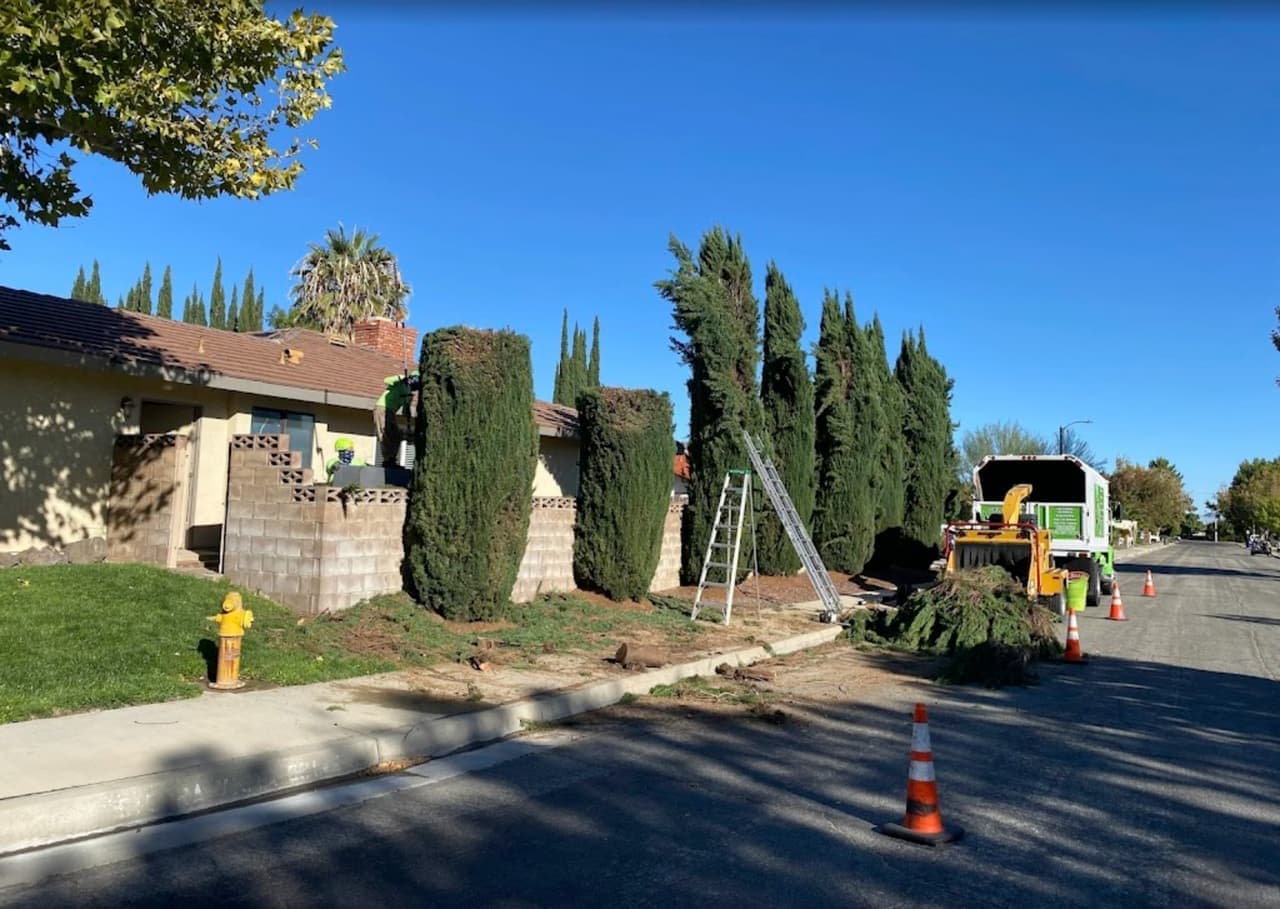
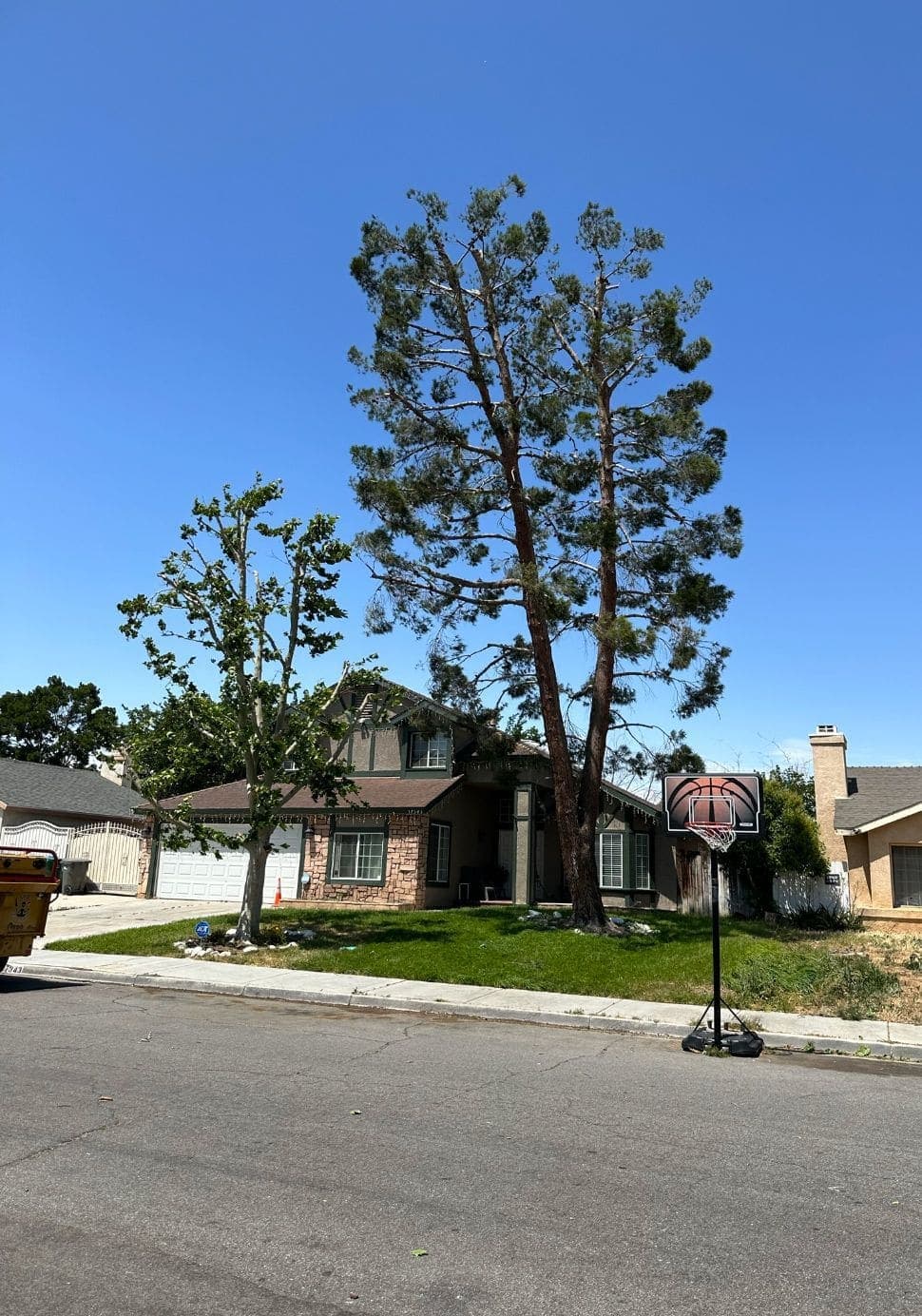
This species, our crew.

Full gallery →

Straight answers

Asked constantly.

Real questions from Antelope Valley phone calls — answered the same way we answer them on your driveway.

STILL WONDERING?Ask a human instead.661-644-7347

More often and more lightly than most trees — a modest pass every couple of years beats a brutal one every ten, because this species rots at big wounds. If a bid for your pepper involves the words 'top it' or 'cut it way back,' get a second opinion before the decay gets a head start.

Somewhat, and carefully. We can reduce and re-drape a pepper with small cuts to live laterals, and take real weight off the long limbs. What we can't do is halve it — cuts that size don't close on this species, and five years later you'd own a hollow-limbed version of the same tree. If it's genuinely outgrown the space, that's the removal conversation, said plainly.

If the pepper is within a few crown-widths of the deck, some of them almost certainly are — this species roots shallow, wide, and toward water. Lifting and cracking is the visible symptom. What to do about it depends on which roots are involved: some can be cut safely, and cutting the wrong ones destabilizes the tree. That's a look-first decision, and the look is free.

An honest one: less canopy means less litter, and good reduction helps at the margins — but a pepper sheds for a living, and no trim changes its job description. The real choices are a maintenance rhythm you can live with, or a different tree over that patio. We'll help with either, and we won't sell you a trim pretending to be a cure.

Priority dispatch

Emergencies jump the queue. 24/7.

A split trunk or a tree on your roof doesn't go on a waitlist. Emergency calls get the next available crew — any hour, any day — and you reach the crew, not a call center.

661-644-7347
I need emergency tree removal

24/7 · LICENSED #1091603 · BONDED · WORKERS' COMP ON FILE

Not sure it's an emergency? Here's what counts →