CA LICENSE #1091603 · BONDED · WORKERS' COMPMON–SAT 7AM–7PM · 24/7 EMERGENCY
  1. Home
  2. Trees
  3. Olive

The species file · olives

An olive is a two-hundred-year tree. The fruit is optional.

Olives thrive in the Antelope Valley for the same reasons they thrive around the Mediterranean: heat, sun, and patience. The gnarled trunks only get better with age. The question is everything the tree drops — fruit that stains and slicks, pollen that travels — and the answer depends on which olive you own. We prune for structure, handle the mess honestly, and know when an old olive is worth more standing than removed.

FREE ESTIMATES · NO DEPOSIT · NO OBLIGATION

#1091603CSLB LICENSE — ACTIVE
$25,000CONTRACTOR'S BOND
State FundWORKERS' COMP ON FILE
5.0GOOGLE · 50 REVIEWS
20+YEARS OF EXPERIENCE

Know your tree

Is this the tree in your yard?

The olive is the easiest ID on this list: no other Valley tree pairs that silver-flickering canopy with a trunk that looks carved. The only real question is whether yours makes fruit — and October answers that.

01
Leaves

Narrow gray-green leaves with silvery undersides — the whole canopy flickers two-tone in any breeze. Evergreen, year-round.

02
The trunk

Gnarled, knotted, and twisting, more sculpture than lumber — the reason mature olives get moved by crane and sold, not chipped.

03
Fruiting or fruitless

True olives set purple-black fruit from fall into winter; fruitless cultivars like Swan Hill and Wilsonii look identical and drop nothing. One glance at the ground in October tells you which you own.

04
The suckers

Vigorous sprouts crowding the base of the trunk are standard issue on yard olives — left alone, they turn a sculpted tree into a shrub thicket.

SPECIES FILE — OLIVE

Botanical
Olea europaea
Mature size
20–35 ft — a small tree with a huge presence
Growth rate
Slow and steady; the trunk improves for centuries
The fruit
Fruiting trees drop olives fall into winter; fruitless cultivars drop none
Watch for
Sucker thickets at the base · dense twiggy interiors · stained hardscape
Also called
fruitless olive · Swan Hill olive · olivo

What goes wrong

The trouble it causes here.

01

The fruit, everywhere

A mature fruiting olive drops a serious crop across months — staining concrete and car paint, fermenting in planters, slicking walkways into a genuine slip hazard, and feeding every fly in the neighborhood. It's the single reason most olive calls happen.
02

Pollen with a reputation

Olives are wind-pollinated and allergenic enough that several southwestern cities restrict planting new fruiting olives. If May wrecks someone in your house, the olive in the yard is a suspect worth naming.

03

The interior thicket

Left unpruned, olives densify into twiggy interiors and vertical watersprouts — more bloom surface, more fruit set, less of the open sculptural form the species is famous for. The classic Mediterranean open-vase structure isn't just pretty; it's less pollen and fruit, too.

04

Death by hedge-ball

Shearing an olive into a tight green ball erases the trunk — the only part that took eighty years — and the crown answers with denser twig growth that needs shearing again sooner. It's the topping cycle at olive scale.

05

Worth more than the chipper

Healthy mature olives have real transplant value — relocated specimens sell for serious money — and a few SoCal cities protect old or heritage olives by ordinance. Before a good one comes down, both facts deserve a look.

How we work it

How we handle this tree.

Olive work is patience work: keep the structure open, keep the base clean, and be straight with the owner about what pruning can and can't do about the fruit.

01
Settle the fruit question first

Timed pruning after bloom reduces fruit set — it doesn't eliminate it. Chemical suppression exists, but it's a licensed-applicator service with a narrow annual window, and on a big tree the results are mixed at best. We'll tell you which fight is worth having; the permanent fix is a fruitless cultivar.

02
Open-vase structure

Thin the interior twiggery, select clean scaffolds, keep light moving through the crown — the tree holds its natural silhouette, the trunk stays the star, and there's simply less surface making pollen and fruit.

03
Base discipline

Suckers cleaned on a regular pass, skirt kept off the ground. Ten minutes of discipline per visit is the difference between a sculpture and a shrub pile.

04
Removal — or relocation

When an olive genuinely has to go, we check two things first: whether your city protects it, and whether it's worth moving instead of chipping. A healthy specimen with access is sometimes a crane day and a sale, not a removal bill.

PUBLISHED PRICES — IN WRITING

Most olive work is trimming — the published $150–$800 per tree, with badly thicketed crowns toward the top. Even large olives are small trees by removal standards, so removals usually land in the $300–$900 and $700–$1,800 published tiers, plus $300–$600+ for the stump — worth grinding on a species whose suckers don't give up.

See what your job costs →

RANGES FROM OUR 2026 COST GUIDE · EXACT QUOTE IS FREE, ON-SITE

Before anyone cuts

Some cities call old olives heritage trees

A handful of Southern California cities protect mature or heritage olives by ordinance — and independent of the law, a healthy old olive can be worth relocating rather than removing. Before one comes down we check both: the local rules, and whether the tree is worth more standing or moving than chipped. When approvals apply, city by city →

From our own jobs

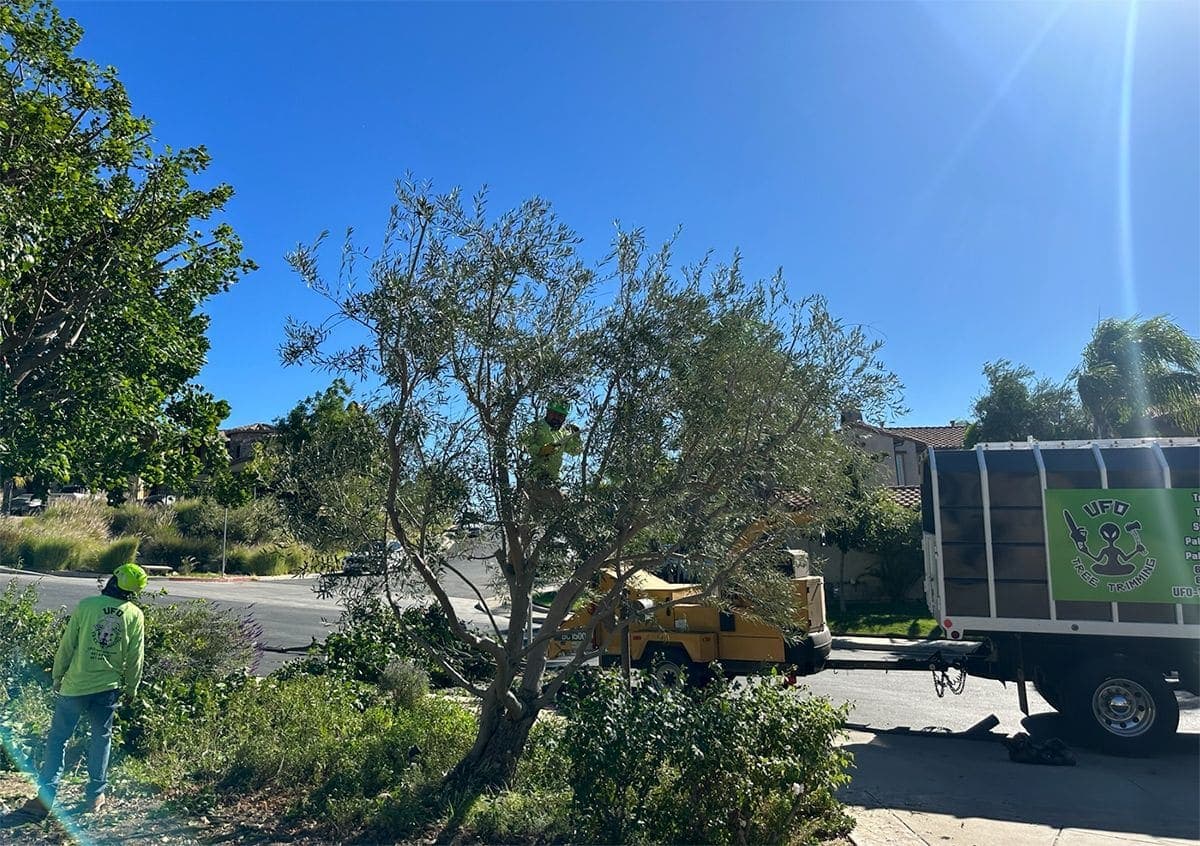
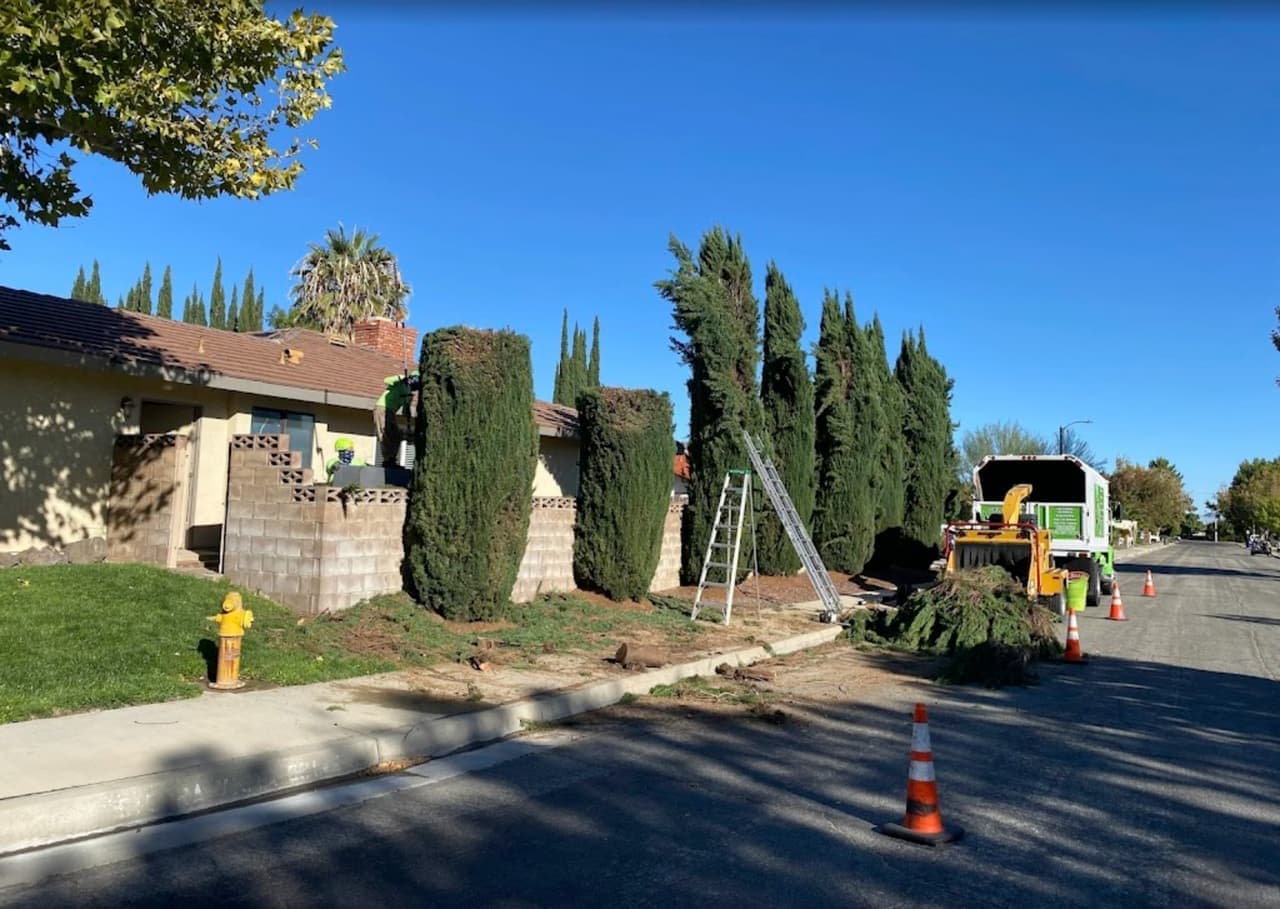
This species, our crew.

Full gallery →

Straight answers

Asked constantly.

Real questions from Antelope Valley phone calls — answered the same way we answer them on your driveway.

STILL WONDERING?Ask a human instead.661-644-7347

Reduce it, yes; stop it, no — and we'd rather tell you that on your driveway than after. Pruning right after bloom trims the crop meaningfully. Spray suppression is real but timing-critical, licensed-applicator work with mixed results on big canopies. If zero fruit is the requirement, the answer is a fruitless cultivar, and we'll say so.

Late spring, after frost risk and around bloom, is ideal — you can shape structure and knock down fruit set in the same visit. Light cleanups and sucker patrol are fine any time of year. What olives don't need is constant shearing.

They're spending its energy and burying its best feature. Suckers rob growth from the crown, crowd air out of the base, and given a few years they'll turn a single sculpted trunk into a thicket. Cutting them clean on a regular cycle is cheap and completely wins.

Possibly — mature, healthy, well-shaped olives with crane access get relocated and sold rather than removed; it's a real market. Not every tree qualifies: health, form, and access decide it. If yours does, we'll say so before anyone starts a saw — it'd be a strange thing to keep from you.

Priority dispatch

Emergencies jump the queue. 24/7.

A split trunk or a tree on your roof doesn't go on a waitlist. Emergency calls get the next available crew — any hour, any day — and you reach the crew, not a call center.

661-644-7347
I need emergency tree removal

24/7 · LICENSED #1091603 · BONDED · WORKERS' COMP ON FILE

Not sure it's an emergency? Here's what counts →