There's no fixed number on the calendar for tree trimming in Palmdale, Lancaster, and the Antelope Valley — but there is a working schedule: palms and fruit trees once a year, most shade trees every 2–3 years, pines and eucalyptus every 1–2, and an annual inspection for any large tree near a structure. In this high-desert climate, tree care is driven by wind, drought stress, and structural safety — not by dates on a chart.
Most tree problems we see in the field don't come from neglect alone. They come from timing that's just slightly off. Here's the full guide, based on real field experience rather than guesswork.
Recommended Tree Trimming Frequency (Antelope Valley Guide)
The rule of thumb we give homeowners:
- Palm trees: once per year
- Fruit trees: once per year (dormant season)
- Most shade trees: every 2–3 years
- Pine and eucalyptus trees: every 1–2 years
- Large trees near structures: annual inspection (trim as needed)
More important than any schedule is this:
If something about your tree changes, don't wait — have it inspected.
Why Timing Matters So Much in the High Desert
Trees in the Antelope Valley don't grow in stable conditions. They grow under constant pressure from:
- Strong seasonal winds
- Long-term drought cycles
- Extreme summer heat
- Sudden temperature swings
- Occasional heavy winter storms
Those conditions build hidden structural problems — weak branch attachments, deadwood buildup, uneven canopy weight. Preventative maintenance beats reactive cleanup almost every time.
Tree Types and Recommended Maintenance Cycles
Shade Trees
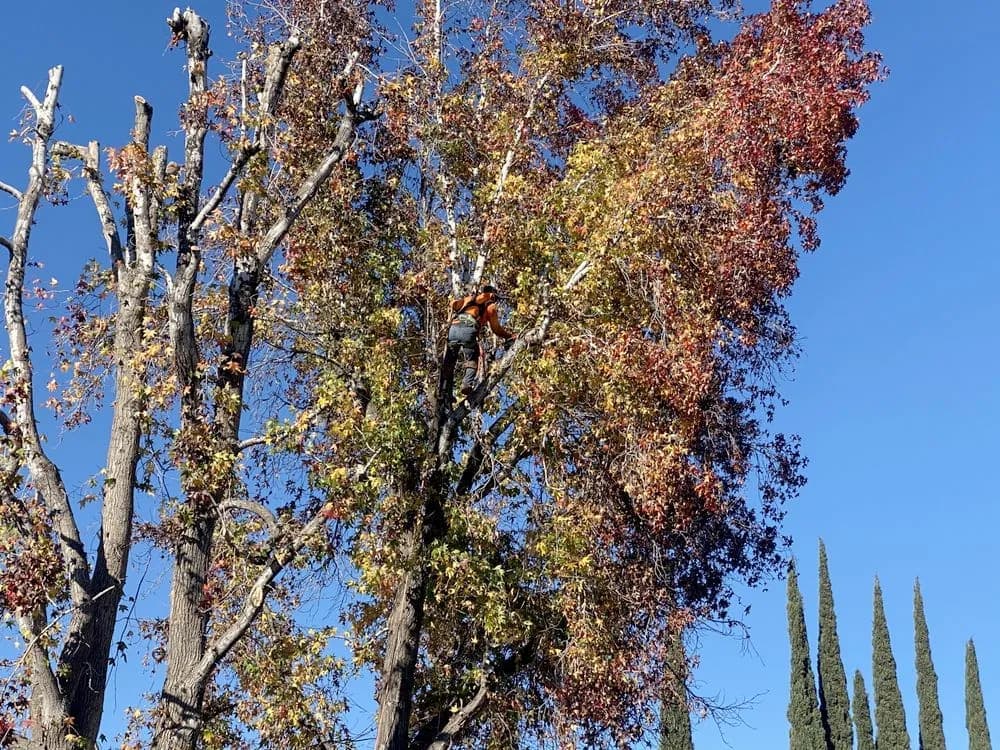
Examples: Chinese elm, ash, pistache, sycamore, California pepper. Recommended trimming: every 2–3 years.
These trees need selective thinning, deadwood removal, and structural balancing. A dense canopy in high wind acts like a sail — skip maintenance long enough and limbs get overloaded and start failing.
Pine Trees
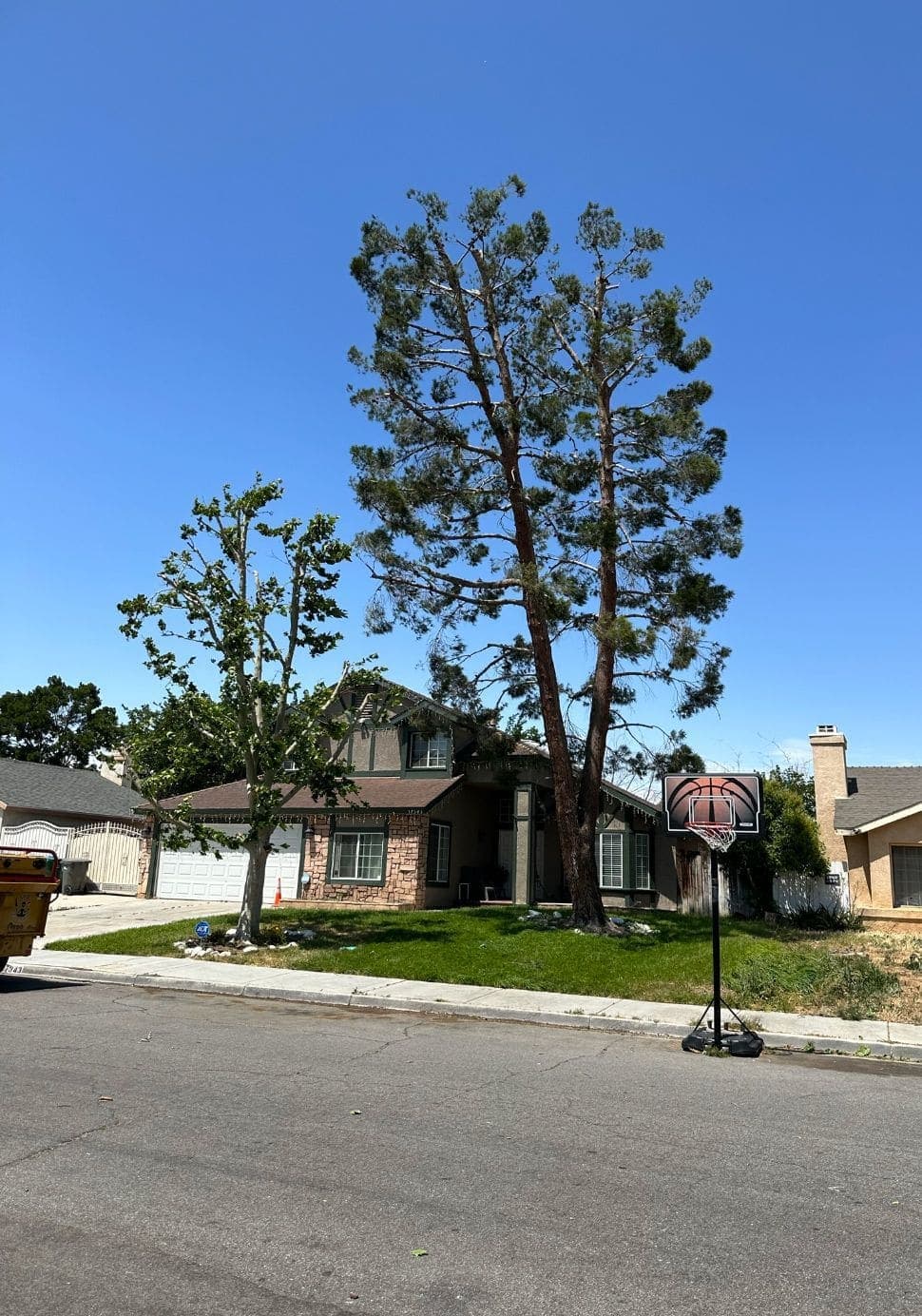
Examples: Aleppo pine, Canary Island pine, Afghan pine. Recommended trimming: every 2–3 years.
Pines want a light touch — mainly deadwood removal and selective pruning near structures. Over-pruning weakens their structure, so careful, minimal cuts are the rule.
Palm Trees
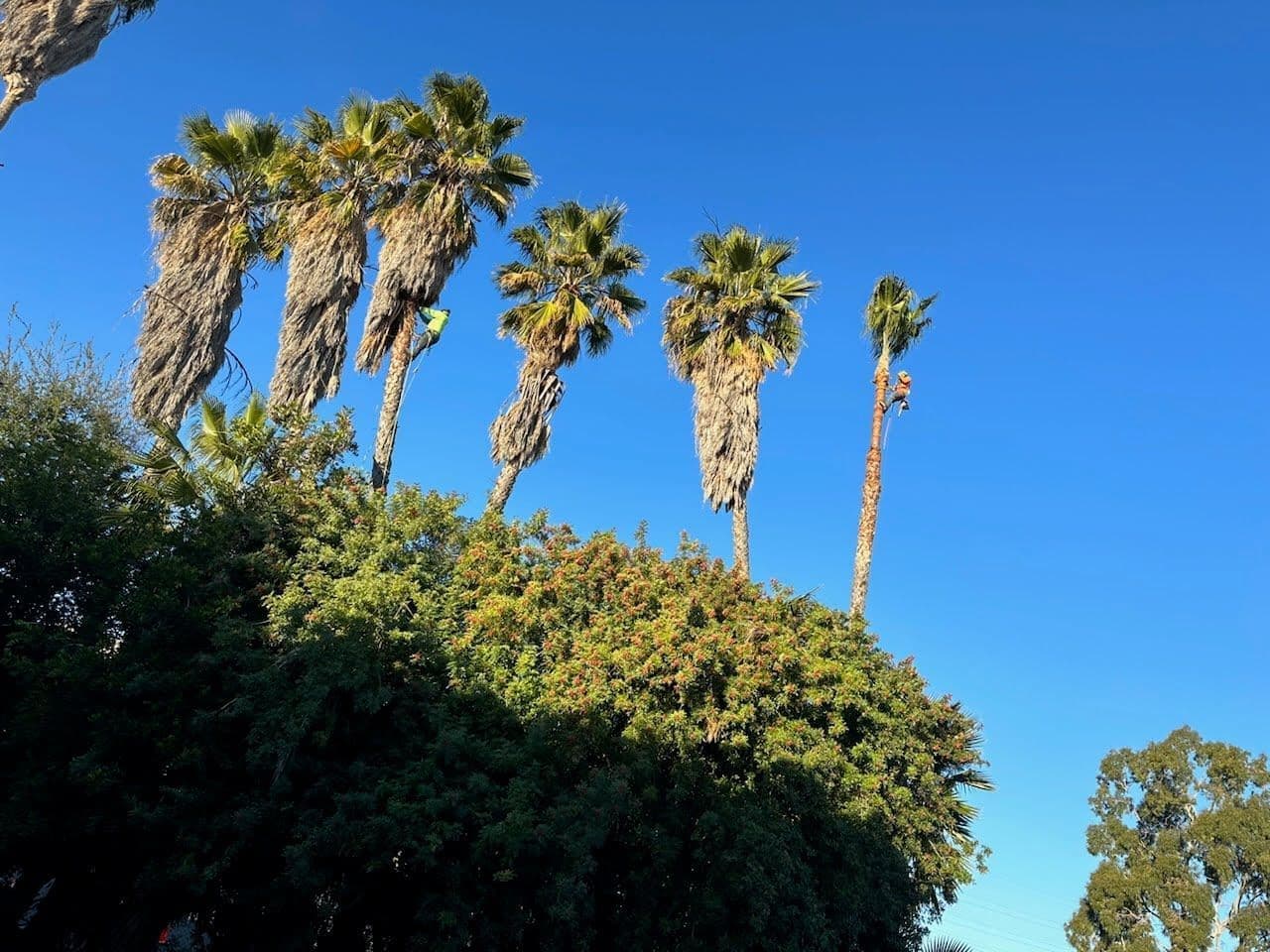
Examples: Mexican fan palm, date palm. Recommended trimming: once per year.
Palm maintenance is about consistency, not heavy pruning. Regular service prevents:
- Fire hazards
- Rodent nesting
- Dead frond buildup
Over-trimming a palm, on the other hand, stresses the tree and costs it long-term health.
Fruit Trees
Examples: apple, peach, plum, apricot. Recommended trimming: annually (winter dormancy).
Proper pruning improves fruit production, airflow, and disease resistance.
Eucalyptus Trees
Recommended trimming: every 1–2 years.
Eucalyptus grows fast and can drop large limbs without warning, especially during heat waves and wind events. Regular inspections here are a safety issue, not a cosmetic one.
Desert Trees and Drought-Tolerant Species
Examples: desert willow, palo verde, acacia. Recommended trimming: every 2–3 years.
Lower maintenance, but they still need structural pruning to hold up against wind exposure.
Real Examples From the Field
1. Wind-Damaged Chinese Elm
A homeowner hadn't trimmed their elm in nearly a decade. Dense growth loaded the limbs over a driveway, and during a wind event a major limb failed — taking a vehicle and a fence with it.
Lesson: Wind exposure in the Antelope Valley makes structural pruning essential.
2. Overgrown Palm Fire Hazard
Several untrimmed palms carried thick skirts of dead fronds — rodent nesting and fire risk in one package. The cleanup took significantly more work than regular annual maintenance would have.
Lesson: Palms are easiest — and safest — when maintained on schedule.
3. Eucalyptus Removal After Limb Failure
A neglected eucalyptus built up structural imbalance over the years. A major limb failure damaged a fence, and the tree ultimately had to be removed, with stump grinding to fully clear the area afterward.
Lesson: Some trees become unsafe to maintain if problems are ignored too long.
Warning Signs a Tree Is Overdue for Trimming
Watch for:
- A dense canopy with little airflow or light coming through
- Branches touching the roof or other structures
- Dead limbs that hang on all year
- Crossing or rubbing branches
- Leaning or unbalanced growth
- Palm skirts hanging low
- Cracks or splits in major limbs
Any of these means it's time to schedule a professional inspection.
Common Misconceptions About Tree Trimming
Most of the tree problems we see in this area start with a misunderstanding:
- "Healthy trees don't need trimming"
- "Topping keeps trees safer"
- "Waiting until a branch breaks is fine"
- "All trees should be trimmed the same way"
In reality, improper or delayed trimming often does more long-term damage than doing nothing at all.
What to Expect From a Professional Tree Service
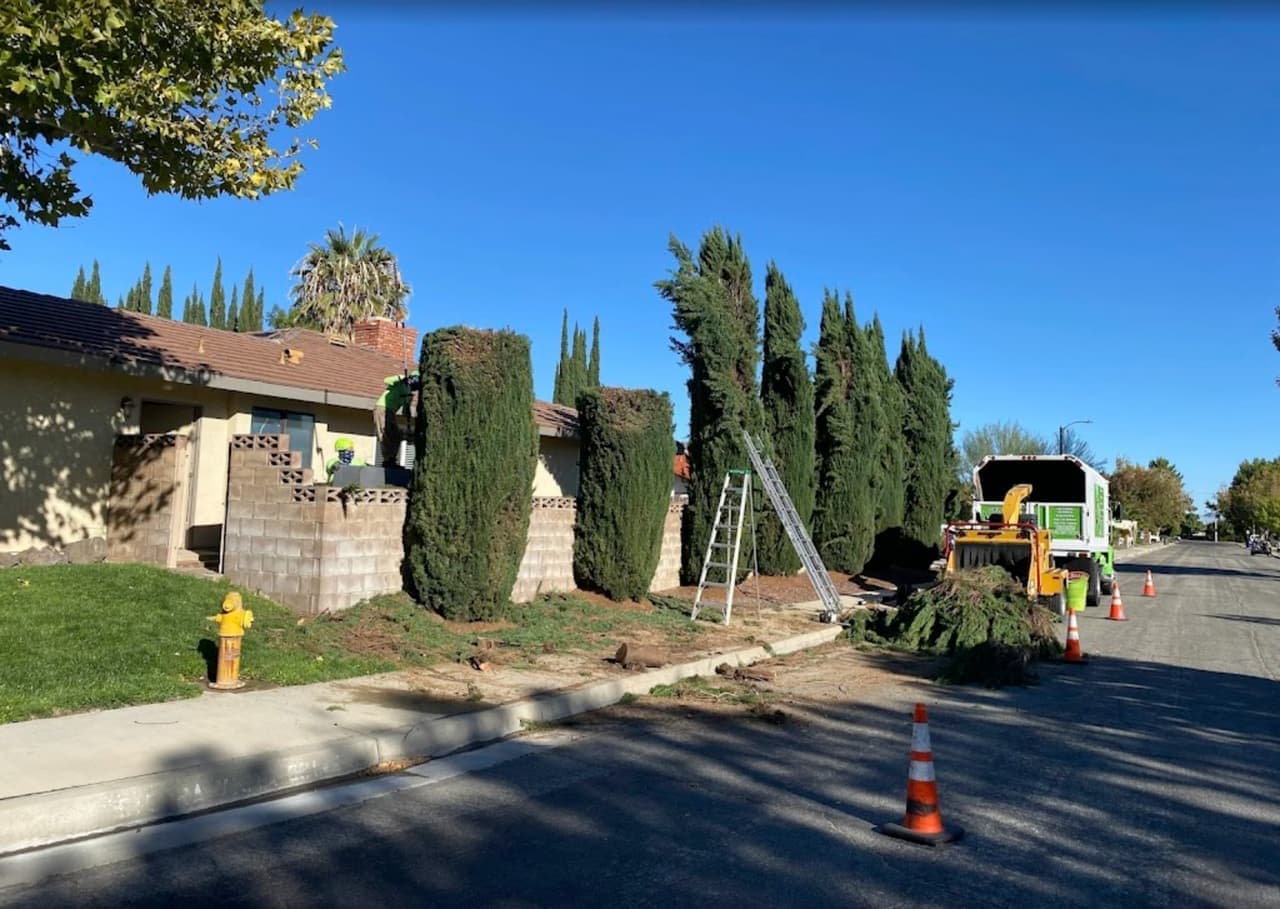
When we arrive at a job in Palmdale or Lancaster, we start with a full walk-through. We evaluate:
- Tree structure and health
- Wind exposure
- Proximity to homes and structures
- Deadwood and weak limbs
- Previous pruning history
Then we set a clear plan before any cutting starts. The goal is always the same: safe, balanced, sustainable structure — not over-pruned, stripped trees.
If a tree is beyond safe trimming, we'll recommend tree removal rather than force a risky solution. When removal is necessary, stump grinding is often the final step to fully restore the property.
The Best Time of Year to Trim Trees
In the Antelope Valley, timing follows conditions more than strict seasons:
- Winter: best for major structural trimming
- Spring: light shaping and cleanup
- Summer: safety and emergency work only
- Fall: wind preparation and risk reduction
A hazardous tree, though, never waits for a "better season."
Tree Care Philosophy: Safety, Health, Appearance
Our order of operations is simple: safety first, tree health second, appearance third. A tree that's structurally sound and wind-ready ends up looking better long-term than one cut hard for looks.
How Homeowners Can Maintain Trees Between Visits
Between professional visits:
- Do a visual check every 1–2 months
- Look trees over after wind events
- Watch for deadwood or structural changes
- Keep irrigation consistent
- Skip the DIY cutting and never top a tree
Small observations now prevent major problems later.
The Real Cost of Waiting Too Long
In our experience, delayed maintenance leads to:
- More expensive trimming later
- Emergency storm damage cleanup
- Structural corrections
- Full tree removal in severe cases
- Additional stump grinding costs after removals
Regular maintenance is almost always the most cost-effective approach.
Final Takeaway
Tree trimming in the Antelope Valley isn't about a fixed schedule — it's about staying ahead of wind, weight, and wear before problems develop.
The rule of thumb:
- Palm trees: yearly
- Fruit trees: yearly
- Shade trees: every 2–3 years
- Pines and eucalyptus: every 1–2 years
- Large trees near structures: inspect yearly
And most important: if something changes, don't wait. Good tree care in Palmdale and the Antelope Valley comes down to staying ahead of the wind, staying consistent with maintenance, and not letting small issues grow into big ones.