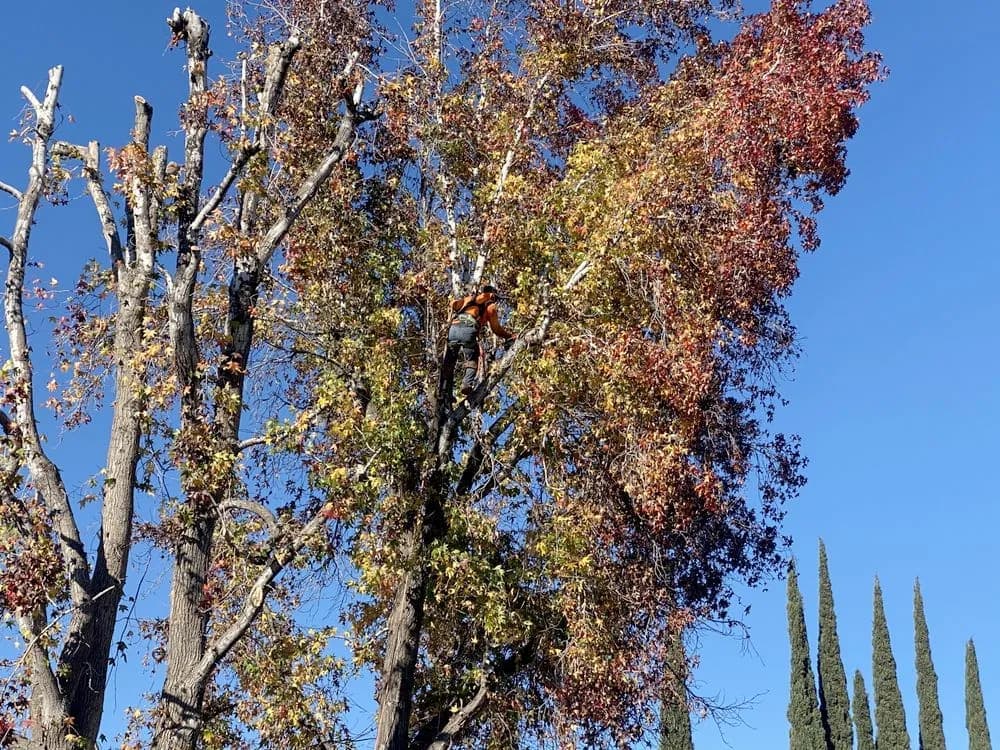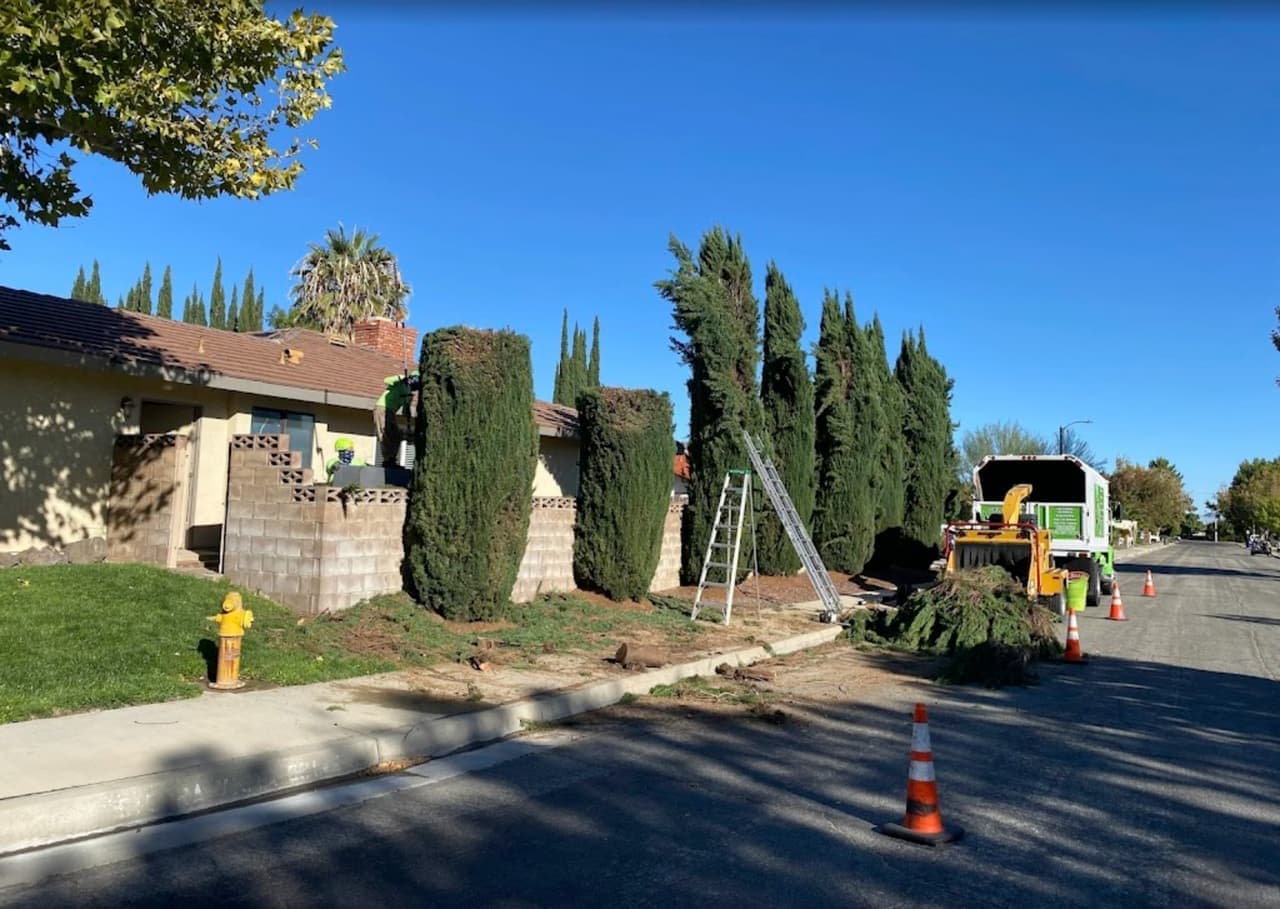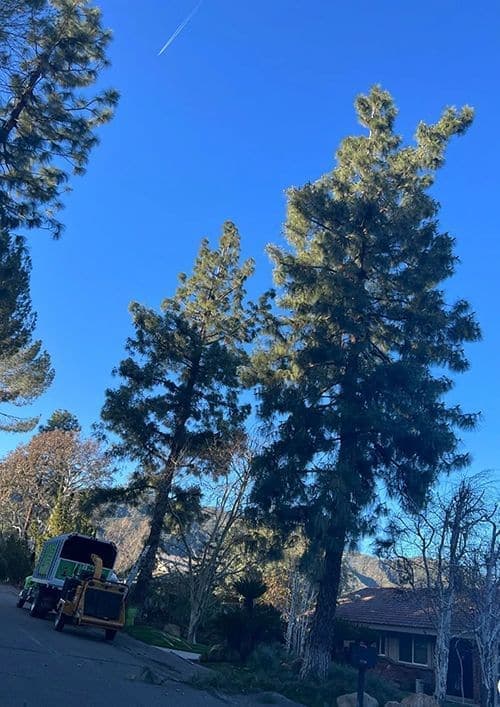
Thinning canopy, dead branch tips, bark starting to peel — when a tree in Palmdale or Lancaster starts sliding, it's usually not a mystery. The Antelope Valley is a hard place to keep trees healthy: triple-digit summers, low humidity, strong wind, and long dry stretches put trees under stress that coastal California never sees. And stressed trees are the ones pests and disease find first.
Here are the five causes we see most often when a tree starts to fail out here.
1. Drought Stress and Bad Watering
The number one cause of decline we see is watering — usually too little, sometimes too much. Mature trees get treated as zero-maintenance, but a long dry stretch will weaken even a well-established tree.
What drought stress looks like:
- Browning leaves
- Leaves dropping early
- A thin, sparse canopy
- Dead branch tips
Overwatering does damage too. Saturated soil invites root problems and fungal growth. The target is deep, consistent watering that reaches the root zone without soaking the soil.
2. Summer Heat Damage
Summer here runs into the triple digits and stays there. Sustained heat like that damages trees — young ones most of all, because their root systems haven't spread far enough to keep up.
Heat stress shows up as:
- Scorched leaves
- Wilting foliage
- Cracked bark
- Slowed growth
Mulch and proper watering are the two tools that help a tree ride out the worst of it.
3. Pests
Insects go after trees that are already struggling. Borers, aphids, scale, and similar pests feed on leaves, bark, or the tissue underneath — and they compound whatever stress the tree was already carrying.
Watch for:
- Small holes in the trunk
- Sawdust-like material near the base
- Sticky residue on leaves
- Branch dieback with no obvious cause
Catch it early. Pest problems don't stall out on their own — left alone, they get worse.
4. Bad Pruning
Tree pruning done right protects long-term health. Done wrong — over-pruning, topping, or taking big limbs off at the wrong point — it opens the tree up to decay, disease, and structural failure.
Proper pruning:
- Removes dead and damaged limbs
- Improves airflow through the canopy
- Reduces storm and wind hazards
- Directs healthy growth
This is one job where an experienced crew earns its keep — the cuts you make now decide the tree's health for years.
5. Hidden Root and Structural Problems
A tree can look fine above ground while failing below it. Construction damage, compacted soil, root rot, and underground disturbance all undermine a tree's stability without much warning.
The signs, when they finally surface:
- A lean
- Exposed roots
- Soil heaving near the base
- Large dead sections in the canopy
A professional inspection can catch these before they turn dangerous.
When Should You Call an Arborist?
Tree problems get more expensive the longer they sit. Dead limbs, unusual leaf loss, cracking bark, insect activity, a tree that's clearly going downhill — have it looked at sooner rather than later. An arborist can assess the condition, find the cause, and recommend the fix that actually addresses it.
FAQ
Can a dying tree be saved?
Often, yes — if the underlying problem is caught early. Pruning, corrected watering, pest management, or soil improvements can bring a declining tree back.
Why are my tree leaves turning brown?
Drought stress, heat damage, pests, disease, or watering problems. The list of suspects is short, but telling them apart takes a professional evaluation.
How do I know if a tree is dangerous?
Large dead branches, significant trunk damage, visible decay, or a lean are the red flags. A tree showing any of these should be inspected promptly.
Should I remove a tree that is dying?
Not necessarily. Plenty of declining trees recover with the right care. Trees that are severely damaged, diseased, or structurally compromised may need removal for safety reasons.