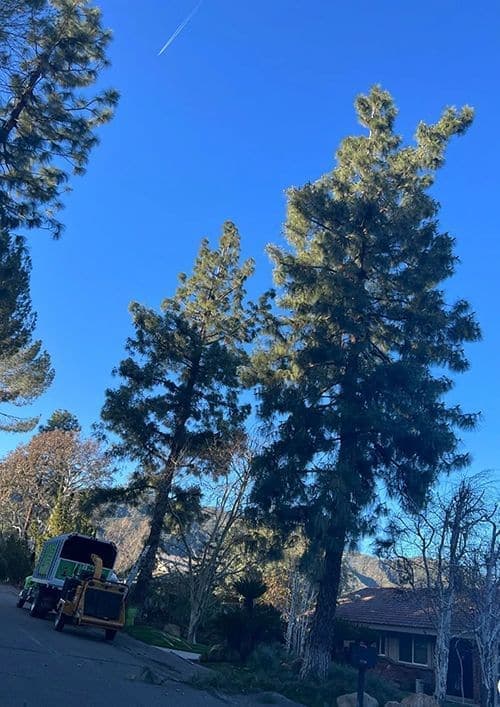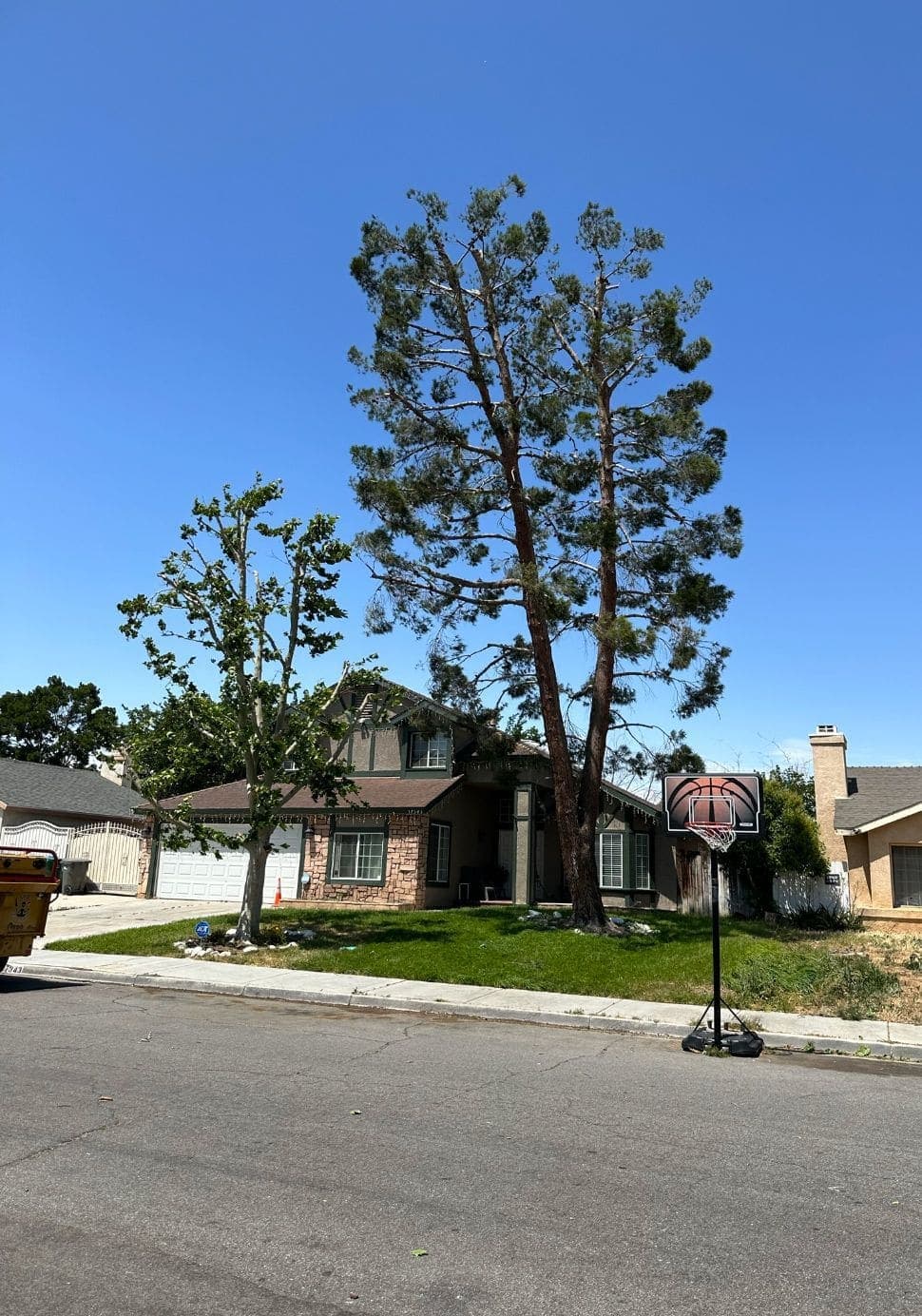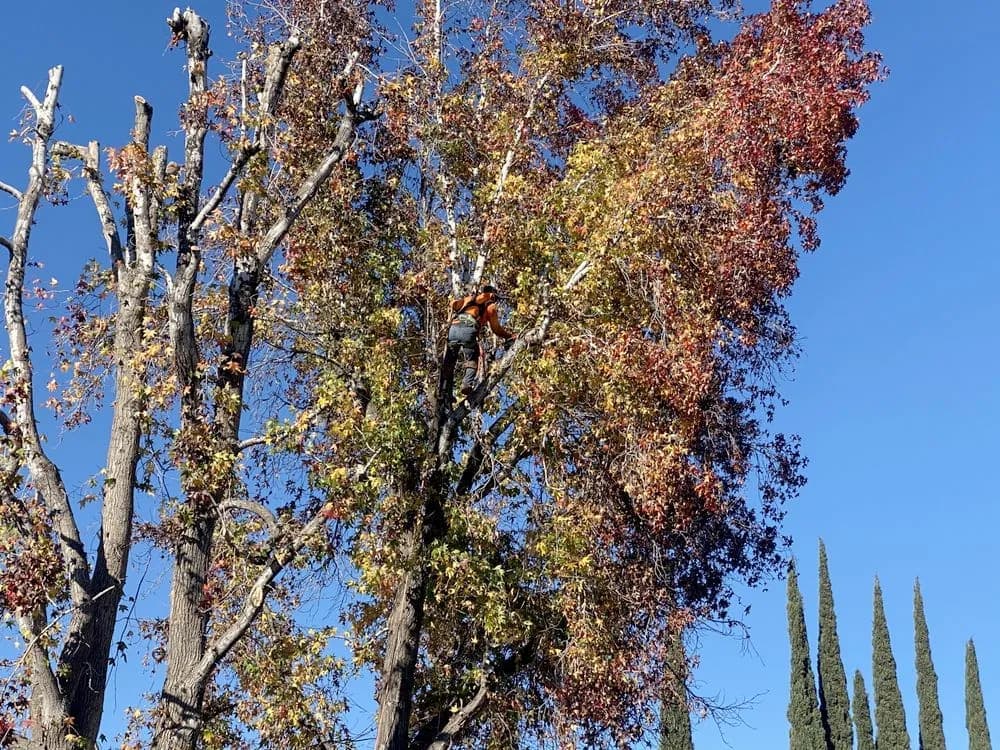
A dying tree doesn't announce itself. Disease, pests, or environmental stress compromise it quietly — and then the next big wind finds it. Dying trees are far more likely to topple in high winds, taking fences, vehicles, and rooflines with them. At UFO Tree Trimming, we identify dying trees and remove them safely when it comes to that. These are the four warning signs we tell homeowners never to ignore.
Discolored or Wilting Leaves
Leaves are the tree's first report card. Discolored, wilted, or dropping early — leaves turning yellow or brown out of season usually point to disease, root damage, or environmental stress. Left alone, the condition tends to worsen, not stabilize.
Cracks or Splits in the Trunk
A healthy trunk is strong and solid. Cracks or splits in the bark expose the inner wood to pests and disease and speed up the tree's decline.
Deep cracks or vertical splits running up and down the trunk are the serious ones — they compromise structural integrity and raise the odds the tree comes down.
Brittle or Falling Branches
Healthy limbs flex. Stressed or dying limbs dry out and snap. If branches keep breaking off, or you keep finding them on the ground under the tree, that often points to internal decay — and a real hazard once the wind picks up.
Fungal Growth on the Tree
Mushrooms or conks on the trunk or around the base usually mean decay inside. Some fungal growth is natural in certain settings, but an abundance of mushrooms or shelf fungi typically means the tree's internal structure is rotting. That rot weakens the tree from the inside out — and a strong wind does the rest.