CA LICENSE #1091603 · BONDED · WORKERS' COMPMON–SAT 7AM–7PM · 24/7 EMERGENCY
  1. Home
  2. Trees
  3. Italian cypress

The species file · cypresses

Italian cypresses are architecture. Until the wind edits them.

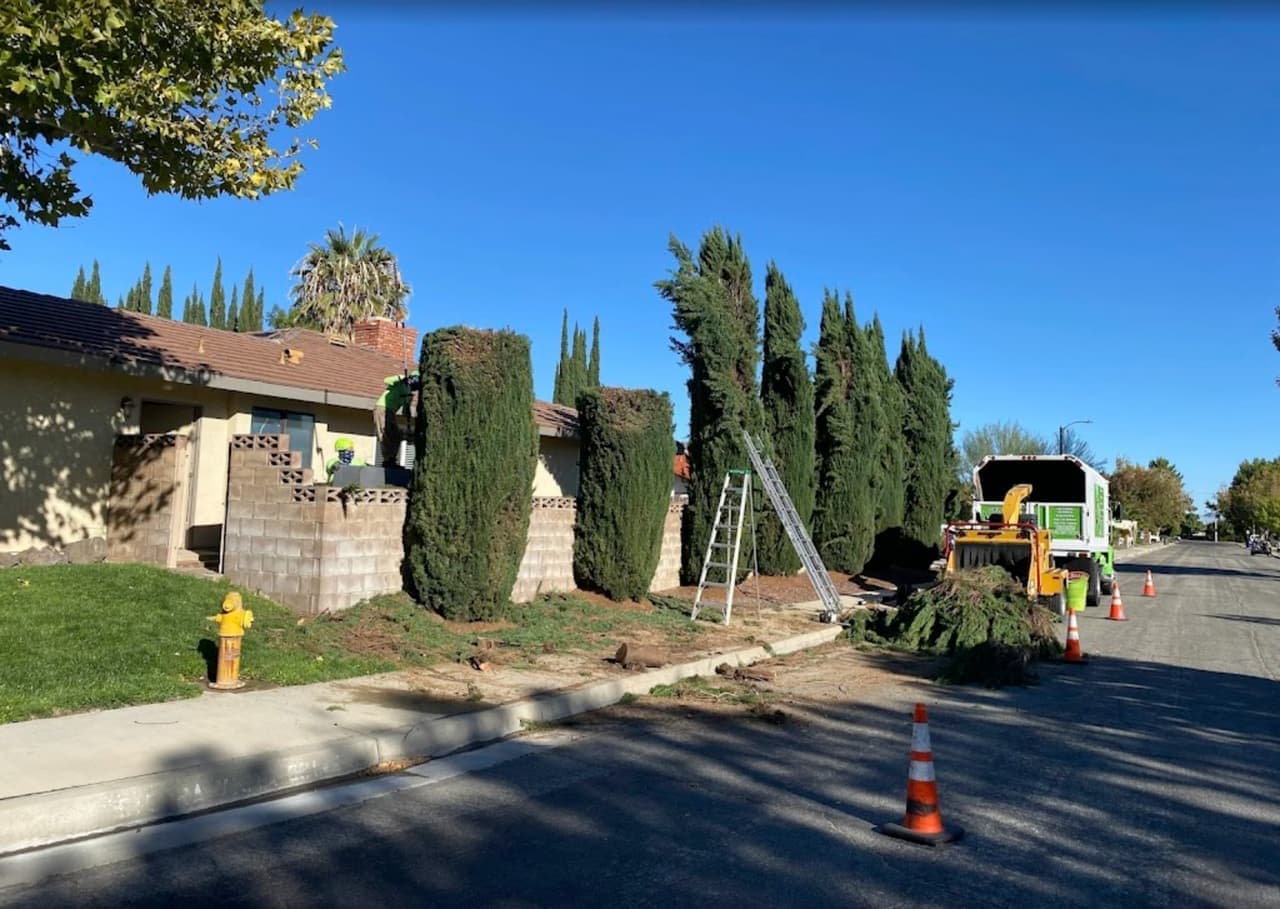
Planted in rows along half the driveways and property lines in the Valley, Italian cypresses are the most architectural tree we work on — sixty feet tall, three feet wide, drought-proof, and perfectly vertical. Their problems are architectural too: spider mites hollowing the green from inside, canker flagging branches rust-brown, and wind teaching a sixty-foot pencil about leverage. Row trees fail as rows — when one goes wrong, we look at all of them.

FREE ESTIMATES · NO DEPOSIT · NO OBLIGATION

#1091603CSLB LICENSE — ACTIVE
$25,000CONTRACTOR'S BOND
State FundWORKERS' COMP ON FILE
5.0GOOGLE · 50 REVIEWS
20+YEARS OF EXPERIENCE

Know your tree

Is this the tree in your yard?

There's no mistaking the tree — the only questions are about its condition, and those are answered from arm's length: green all the way through, or browning from the inside? Whole column healthy, or single branches gone rust-colored?

01
The column

Dense sprays of dark scale-like foliage in a tight spire — the tree is its silhouette. Any interruption in the column is information.

02
Dusty inside browning

Foliage browning from the interior outward with a dusty, gray cast — run a white sheet of paper behind a spray and tap it; moving specks are spider mites, the dry-year classic.

03
Rust-brown flags

Whole individual branches dead rust-brown, scattered through an otherwise green column, often with resin oozing at a sunken canker below the flag — that's cypress canker, and it spreads.

04
The lean

These trees stand plumb for decades. A new lean — usually after wind on saturated soil — is a root-plate event on a tree with no crown to counterweight it. That one's a call, not a wait.

SPECIES FILE — ITALIAN CYPRESS

Botanical
Cupressus sempervirens
Mature size
40–70 ft tall, only 3–6 ft wide
Growth rate
Fast upward — 2–3 ft a year when young
The shape
Born columnar — no pruning creates it, bad pruning ruins it
Watch for
Dusty interior browning · rust-brown flags · a new lean after wind
Also called
Mediterranean cypress · Tuscan cypress · pencil cypress

What goes wrong

The trouble it causes here.

01

Spider mites in dry years

Drought-stressed cypresses are mite banquets — the browning starts deep in the column and works outward while the outside still looks passable, and by the time a row reads brown from the street, the mites have been at it for a season. Deep, infrequent watering is the only real defense; a stressed row is an invitation.
02

Cypress canker, moving down the row

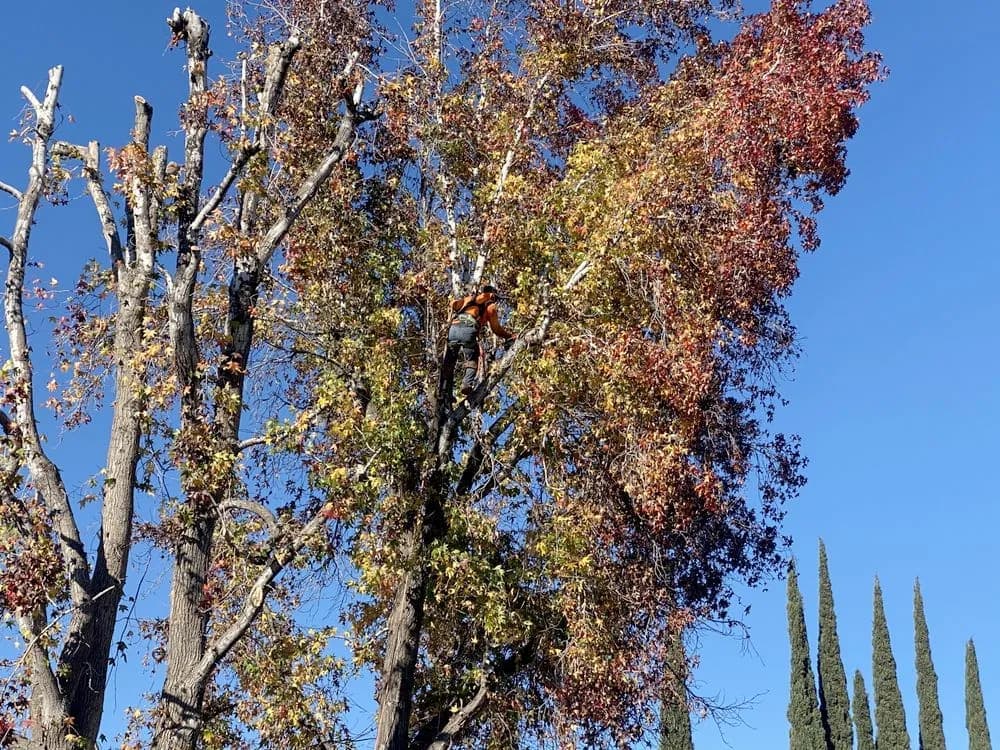
Seiridium canker kills a branch at a time — the rust flag is the tombstone, the sunken oozing canker below it is the cause — and pruning tools and splashing water carry it tree to tree. There's no spray cure. Early sanitation pruning saves trees; ignoring flags costs rows.

03

Sixty feet of sail, three feet of anchor

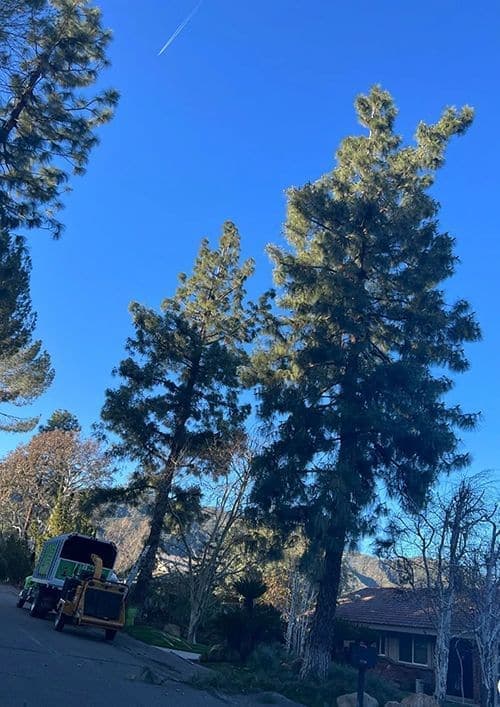
A cypress is a mast with foliage. Wind on saturated soil leans whole trees; gusts pop individual limbs out of the column, and once a limb has flopped it never tucks back on its own. The Valley's spring windstorms leave a visible wake of bent exclamation points.

04

The topping temptation

Topping an Italian cypress leaves a permanently flat, dead-topped pole that never regrows its spire — the species can't rebuild a leader. Height control on this tree is measured in inches at the tip, taken early and often, or it isn't real.

05

Standing dead = standing fuel

A dead cypress is a resin-cured torch shaped for maximum draft, usually planted against a house or along a fence line. Whatever killed it, a brown cypress near a structure is a fire-season removal, not a someday project.

How we work it

How we handle this tree.

Cypress work is row work. These trees are planted as architecture, so we treat the row as the unit — one tree's mites, canker, or lean is the row's problem a season later.

01
Walk the whole row

Every stem gets the same look: interior browning, flags, cankers, lean, root heave. Finding the second sick tree early is worth more than perfectly treating the first.

02
Sanitation cuts for canker

Flagged branches come out well below the canker with tools sterilized between cuts — the unglamorous discipline that actually stops the spread. Miticide programs, where warranted, are licensed-applicator work; we'll say so rather than sell around it.

03
Keep the column honest

Light shearing keeps rows crisp; flopped limbs get tied back while young and removed once set; tip reduction — inches, not feet — manages height while the leader is still alive to manage.

04
Remove the dead ones promptly

Dead spires between live ones come out with rigging in tight quarters — often the space between a wall and a fence. It's precise, unglamorous work, and it's how the rest of the row keeps its looks and the house loses a torch.

PUBLISHED PRICES — IN WRITING

Row shearing and cleanup price like trimming — the published $150–$800 per tree, quoted by the row on the free visit. Single-tree removals usually land in the published $300–$900 or $700–$1,800 tiers; tight-access removals between structures run higher within the published ranges.

See what your job costs →

RANGES FROM OUR 2026 COST GUIDE · EXACT QUOTE IS FREE, ON-SITE

Straight answers

Asked constantly.

Real questions from Antelope Valley phone calls — answered the same way we answer them on your driveway.

STILL WONDERING?Ask a human instead.661-644-7347

Some interior browning is normal shading — a dense column keeps no needles where light never reaches. The pattern that means mites is dusty, gray-brown, and moving outward, usually in a dry year; the paper-tap test settles it in ten seconds. Rust-brown whole branches are a different disease story. Send a photo — this ID genuinely works from a picture.

Treat it as a yes until proven otherwise. Canker spreads down rows via tools and splash, mites spread by proximity and shared stress, and whatever site condition killed one stem is shared by its neighbors. We check the survivors when we take the dead one out — same trip, and the row's odds improve immediately.

By inches at the tip, yes — kept up, that genuinely holds a row at height. By feet, no: cutting into the column leaves a flat dead top the tree can never regrow. If the row has simply gotten taller than the property can live with, we'll say the honest thing, and sometimes the honest thing is a shorter species.

As a fire object, genuinely yes — a dead cypress is dense, resinous, and shaped like a chimney, and they're usually planted tight against structures. It's not an emergency in the falling-limb sense, but in the Antelope Valley it shouldn't see another wind season standing. Removal is quick, and this is one we'd rather do early.

Priority dispatch

Emergencies jump the queue. 24/7.

A split trunk or a tree on your roof doesn't go on a waitlist. Emergency calls get the next available crew — any hour, any day — and you reach the crew, not a call center.

661-644-7347
I need emergency tree removal

24/7 · LICENSED #1091603 · BONDED · WORKERS' COMP ON FILE

Not sure it's an emergency? Here's what counts →