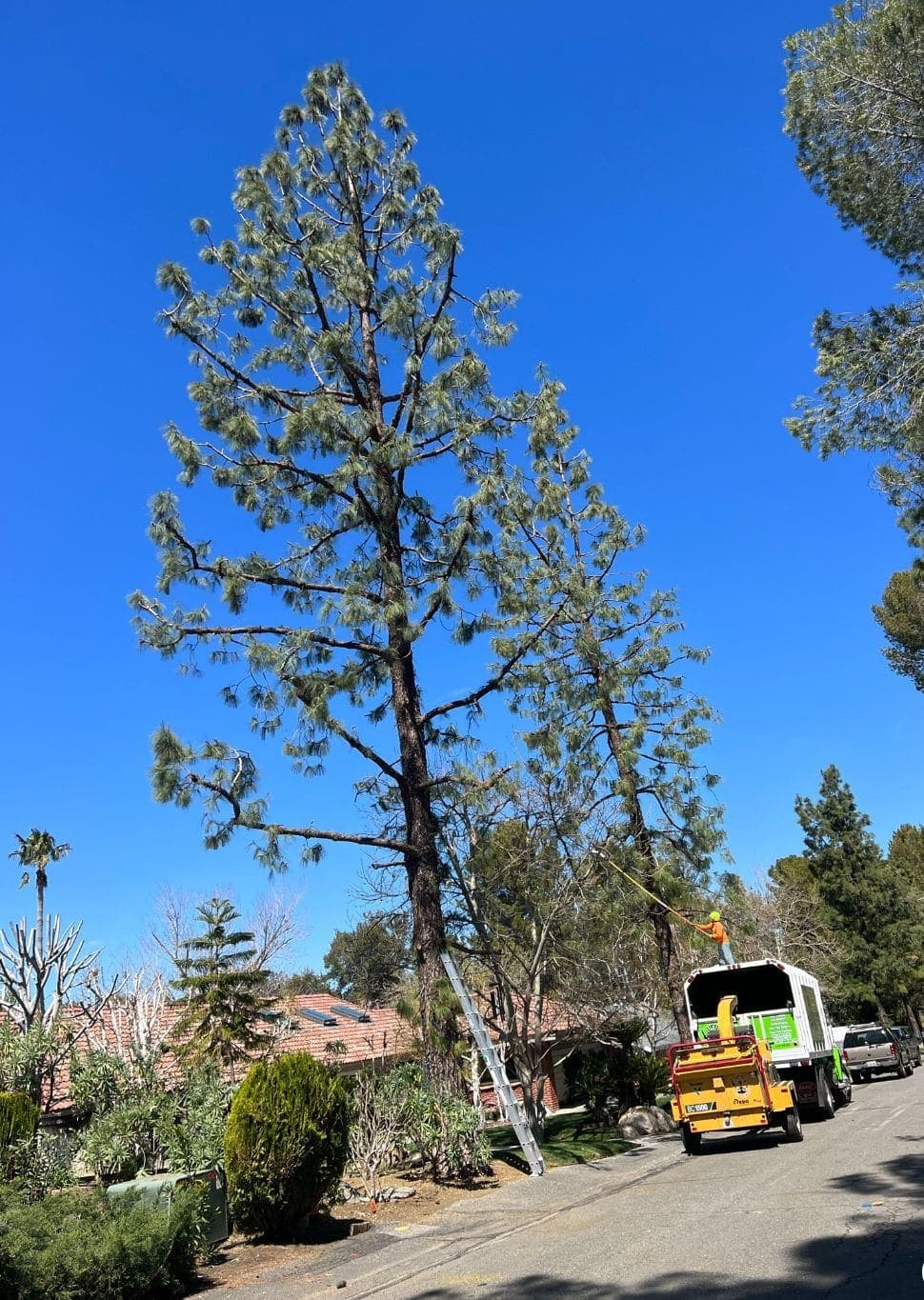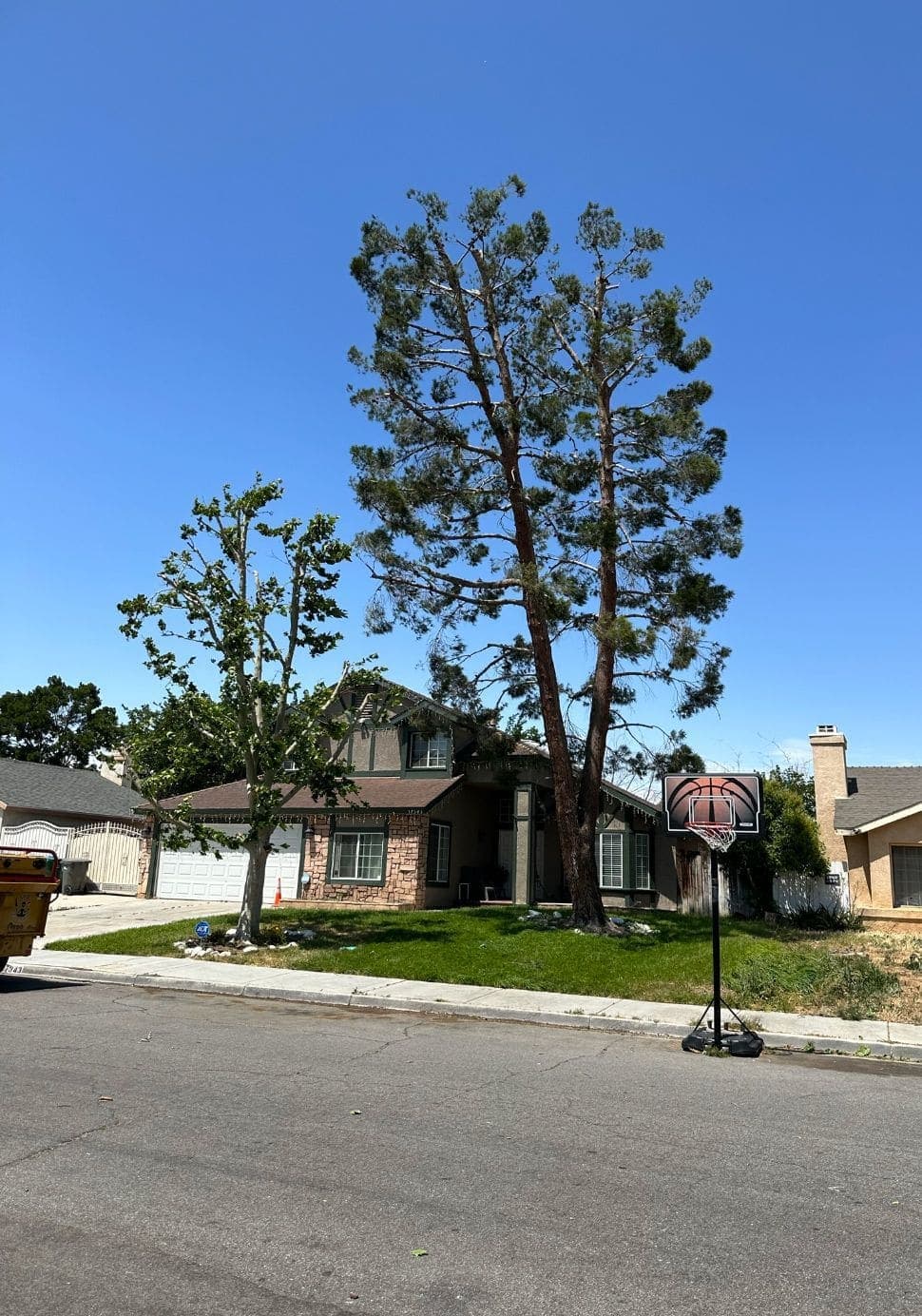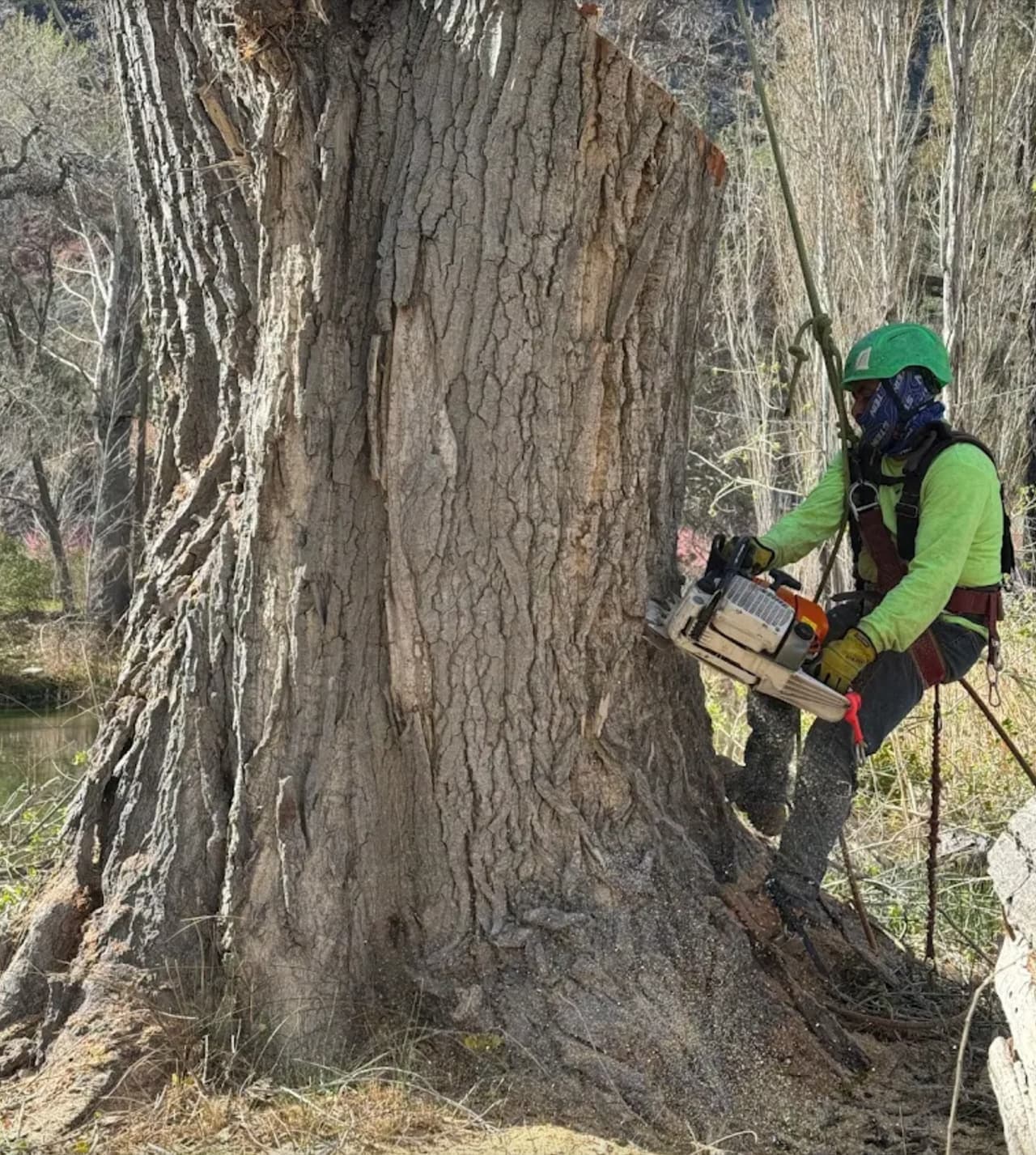
Ask around Palmdale, Lancaster, or Quartz Hill, and most homeowners will tell you that removing a tree means pulling a permit first. Usually, it doesn't. The bigger problem we see across the Antelope Valley isn't homeowners ignoring permit rules — it's misreading when those rules actually apply, in both directions.
In most residential situations, tree removal does not require a city permit. But the exceptions matter enough that guessing can create real problems.
The Misconception Runs Both Ways
The one we hear most: every tree removal needs city approval. In most of the Antelope Valley, it doesn't. Typical residential landscape trees — Chinese elm, ash, pine, mulberry, eucalyptus, and similar species on private property — can usually come down without any city permitting process.
The opposite assumption causes just as much trouble: it's my property, so I can remove anything. Not quite. Permits, approvals, or restrictions may apply to:
- Native oak trees in certain areas or under specific county rules
- Trees inside HOAs with architectural or landscaping requirements
- Street trees, or trees in the parkway between sidewalk and street
- Developer-installed trees in newer subdivisions
- Trees tied to construction or grading plans
- Commercial properties with additional oversight
HOAs cause the most confusion. We've seen the city have no issue with a removal and the homeowner still get fined — because nobody asked the HOA first.
Short version: most trees don't require permits, but the wrong assumption in the wrong situation means delays or violations.
What Permit Confusion Looks Like in the Field
A Lancaster homeowner sat on a removal for almost two months because he believed a city permit was required. The tree — a large Siberian elm in the backyard — was pushing on a block wall and dropping heavy limbs in the wind. No permit was actually needed. During the delay, a major limb failed in a wind event and landed in the yard. Nobody was hurt, but the wait accomplished nothing except adding risk.
On a rural property outside Lancaster city limits, the owner planned to clear multiple trees in a single weekend with rented equipment. Most were standard landscape species — but several mature native oaks were mixed in, and after evaluating the site, it was clear those required a different level of consideration. The plan changed: the oaks stayed, and only the non-protected trees came out.
And after a major windstorm in West Palmdale, a homeowner called about a partially uprooted Aleppo pine leaning toward the house. That's an emergency removal — safety outranks everything else, and the tree came down immediately to eliminate the risk.
In all three cases, the hard part wasn't the physical work. It was reading the situation before anyone started cutting.
How to Know If You Need a Permit
When a homeowner asks, the first question is always location — where the tree sits on the property. From there:
- Front yard, backyard, side yard, or near the street?
- Palmdale, Lancaster, Quartz Hill, Acton, Littlerock, or unincorporated Los Angeles County?
- Is there an HOA?
- What species is it?
- Why is it coming out?
Those answers determine whether it's a straightforward case or something that needs verification. Trees near sidewalks, parkways, or streets always get closer review — same for native oaks and anything tied to a construction project.
Once that's clear, we can usually tell whether city or HOA approval is needed before planning the removal work.
Remove It or Keep It?
A healthy, structurally sound tree in the right spot is usually worth keeping. In the Antelope Valley, mature shade trees are worth more than most people realize, especially in extreme summer heat.
People request removal over maintenance, windstorm concerns, and root damage. In many cases, though, trimming and pruning are the better answer — proper structural pruning can often correct the problem without losing a mature tree.
More serious situations may justify removal, especially with warning signs like:
- Fresh cracks in major limbs or the trunk
- Soil movement or root heaving
- Rapid canopy decline
- Structural splitting
- Visible instability after wind events
One thing this work teaches fast: health and structure are not the same thing. A tree can look green and still be structurally unsafe.
How We Help Homeowners Decide
UFO Tree Trimming works throughout Palmdale, Lancaster, Quartz Hill, Acton, Littlerock, and the broader Antelope Valley, and the work here is shaped by local conditions:
- Extreme summer heat
- Low rainfall
- Irrigation-dependent landscapes
- Compacted desert soils
- Strong seasonal wind events
- Older trees never designed around modern subdivisions
That environment changes how trees grow and how they fail, especially in wind. Local experience is what tells you whether a tree needs trimming, full removal, or stump cleanup after it's down. And the guidance customers value most is the honest kind — including when a tree does not need to be removed.
The Bottom Line
Most tree removals in Palmdale, Lancaster, and the Antelope Valley are straightforward and don't require permits. The complexity lives in the exceptions: HOAs, protected species, street trees, and emergencies.
Evaluate before you act. Once the situation is properly understood, the right call usually makes itself — trimming, removal, or long-term maintenance.