When homeowners ask "How much does tree removal cost?" they want a number, so here it is: in the Antelope Valley, most removals fall between $300 for a small tree and $10,000+ for very large or complex jobs. The range is that wide because height is only one input. Location, access, risk, equipment, tree condition, and cleanup all move the price. We remove trees throughout Palmdale, Lancaster, Quartz Hill, and the rest of the Antelope Valley, and no two removals are exactly alike.
A small tree in the wrong place can be harder than a big tree with room to work. Tree removal is not cutting down a tree — it is dismantling a structure that may weigh thousands of pounds without touching anything around it.
Average Tree Removal Cost in the Antelope Valley
In Palmdale, Lancaster, and surrounding Antelope Valley communities, tree removal pricing typically lands in these ranges:
- Small tree removal (under approximately 20 feet): $300–$900
- Medium tree removal (approximately 20–40 feet): $700–$1,800
- Large tree removal (approximately 40–70 feet): $1,500–$4,000
- Very large or complex removals: $4,000–$10,000+
- Stump grinding: $300–$600+ depending on size and access
These are ranges, not fixed prices. A 25-foot tree wedged between a house and a block wall can take more labor and planning than a 70-foot tree standing alone in an open yard.
If you'd rather skip the arithmetic, our instant estimator walks you to the range for your specific job in about ten seconds — no phone call, no email address, no salesperson.
The tree doesn't set the price. The situation around the tree sets the price.
Why Do Tree Removal Prices Vary So Much?
The question we hear most: "Why does one company quote $600 and another quote $3,000 for what looks like the same tree?" Because professional tree removal is priced on much more than tree size.
Tree Location and Access
Location is one of the biggest cost factors.
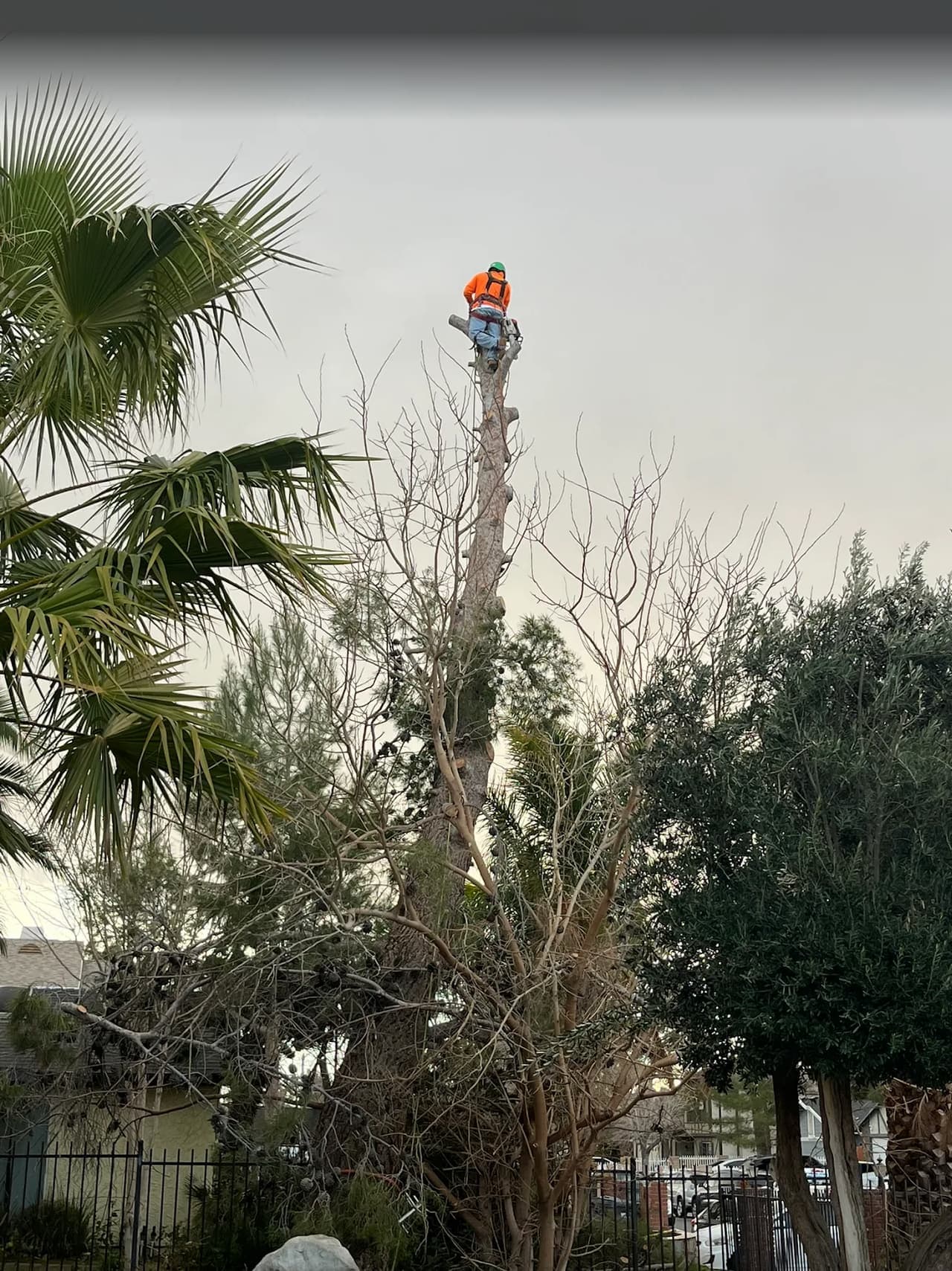
A tree in an open front yard comes down fast — equipment parks close, branches drop and get processed. A tree between a home, fence, patio cover, pool, or power lines is a different job entirely: instead of cutting branches and letting them fall, each section gets tied off and lowered on ropes and rigging. More time, more labor, more experience.
Access matters too. If the truck and chipper park next to the tree, the job moves. If every branch and log gets carried through a narrow gate and around landscaping, the labor climbs.
Tree Size and Species
Size matters, but height alone doesn't tell the story. A 25-foot Chinese elm is not a 25-foot eucalyptus.
Eucalyptus wood can be extremely heavy, and the limbs are brittle enough to demand careful planning. Big pines generate serious cleanup — dense branches, needles everywhere. Mature ash trees carry massive limbs and structural concerns.
The question isn't "How big is the tree?" It's "How hard is it to remove this tree safely?"
Tree Condition and Safety Risks
A healthy tree and a declining tree are different jobs. Dead trees are not automatically easier or cheaper — often they're more dangerous, because dead wood is brittle and unpredictable.
Antelope Valley trees take a beating:
- Long periods of drought
- High winds
- Extreme heat
- Insect activity
- Root stress
- Previous poor pruning
A tree can look fine from the street and be structurally compromised. Before any removal, we evaluate trunk condition, branch structure, lean direction, root stability, dead limbs, and everything the tree could hit. Safety before speed.
Equipment and Labor Required
Professional tree removal takes specialized equipment and training. Depending on the job:
- Bucket trucks
- Chippers
- Stump grinders
- Rigging equipment
- Climbing gear
- Additional crew members
A company that invests in professional equipment, insurance, and training carries higher operating costs than someone showing up with basic tools. Those investments are what let the job finish safely.
Real Examples: Why Difficult Trees Cost More
Two removals show why experience is part of the price.
A Wind-Damaged Eucalyptus Next to a Home
After a major wind event in West Palmdale, we got a call about a large eucalyptus leaning toward a house. A major scaffold limb had already split, and the homeowner was worried the next storm would finish the job.
There was nowhere safe to drop the tree. House on one side, block wall, patio cover, power lines along the street. So the entire removal was planned before the first cut: every large limb tied off and lowered, the tree dismantled piece by piece until it was gone — home, landscaping, and property untouched. On a job like this, the cost isn't for removing wood. It's for controlling risk.
A Large Chinese Elm in Lancaster
Another job involved a large Chinese elm in an older Lancaster neighborhood. The tree had developed multiple trunks, and one section had begun separating after years of drought stress and high winds.
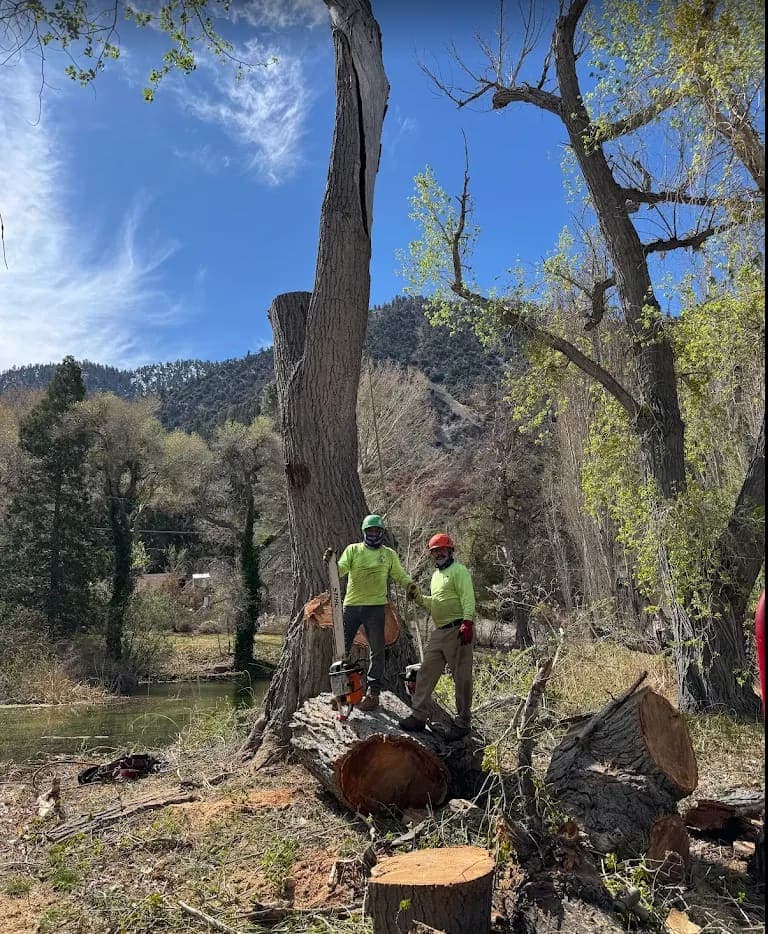
The homeowners had invested heavily in the backyard — decorative concrete, irrigation, mature plants, a custom patio — and there was almost no room for equipment. Rather than drive machinery through the yard and risk damage, we climbed the tree and took it apart section by section, lowering each limb into a controlled landing area and carrying the wood out by hand. Slower than a simple job. The property stayed intact.
Those are the jobs where homeowners see what they're paying for: planning, skill, and protection — not the cutting.
Why the Cheapest Quote Is Not Always the Best Value
The lowest price isn't automatically bad, and the highest isn't automatically best. But a large gap between quotes should raise questions. Knowing the right questions to ask before hiring a tree service helps you tell a fair quote from a risky one.
A professional tree service should be able to tell you plainly:
- What is included in the price
- Whether debris will be removed
- Whether stump grinding is included
- How the property will be protected
- Whether the company carries insurance
Insurance is one major divide between reputable companies and inexperienced operators. A properly insured company carries liability insurance and workers' compensation — protection for the crew and for you. And if a tree falls and causes damage, your homeowners policy may be involved too; we cover that in detail in our Antelope Valley homeowners insurance and tree removal guide.
Cleanup is the other divide. Some estimates cover cutting the tree down, period. A complete removal may include:
- Cutting and processing logs
- Chipping branches
- Loading debris
- Hauling material away
- Cleaning the work area
One question worth asking every bidder: "Is this a complete removal, or just the tree coming down?"
Common Trees We Remove in the Antelope Valley
The Antelope Valley has a unique climate that is hard on trees: extreme summer heat, dry conditions, strong seasonal winds, heavy soils, and drought stress. The trees we work on most:
Chinese Elm Trees
Common in older Palmdale and Lancaster neighborhoods. Excellent shade, but mature elms develop heavy limbs, dense canopies, poor structure from past pruning, and deadwood buildup.
Eucalyptus Trees
Among the most challenging removals we do: extremely heavy wood, brittle limbs, real height, and high wind exposure. Many large eucalyptus removals require advanced planning, rigging, and sometimes specialized equipment.
Pine Trees
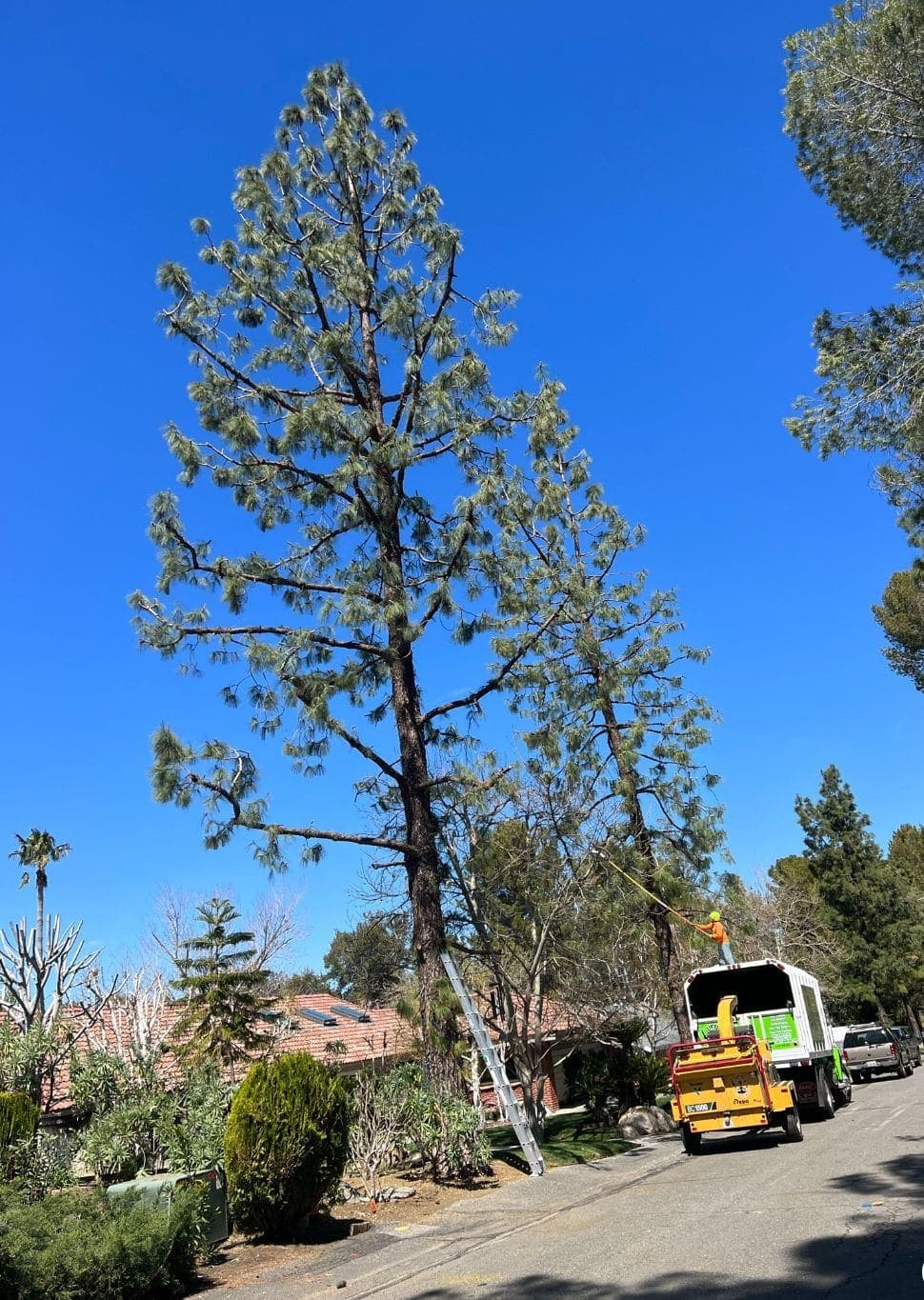
Common throughout the Antelope Valley. Large heavy limbs, wind damage, needle buildup, difficult cleanup. Big pines near homes usually get dismantled carefully rather than dropped.
Ash Trees and Palms
Mature ash trees develop structural issues. Large palms look simple next to a traditional tree, but the sections coming off can be extremely heavy, and access is often the hard part.
Tree Removal Is Not Always the Best Option
Removal is usually the last option, not the first. Sometimes the better answer is:
- Tree trimming
- Pruning
- Hazardous limb removal
- Tree maintenance
- A professional inspection
A healthy tree doesn't need to come down just because it's large. A few branches touching a roof doesn't condemn the whole tree. A tree with good structure may just need proper pruning to stay safe and healthy.
Before any removal, it's also worth knowing whether your tree requires a permit — read our full tree removal permit guide for Palmdale and Lancaster.
Our goal at UFO Tree Trimming is not to remove as many trees as possible. It's to make the right call for each tree and each property. Sometimes the right answer is removal. Sometimes it's pruning. Sometimes it's telling a homeowner: "Your tree is healthy. Keep it and maintain it."
That last one doesn't pay very well. We say it anyway.