CA LICENSE #1091603 · BONDED · WORKERS' COMPMON–SAT 7AM–7PM · 24/7 EMERGENCY
  1. Home
  2. Trees
  3. Ash

The species file · ashes

An ash fails from the inside out. By the time it shows, it's late.

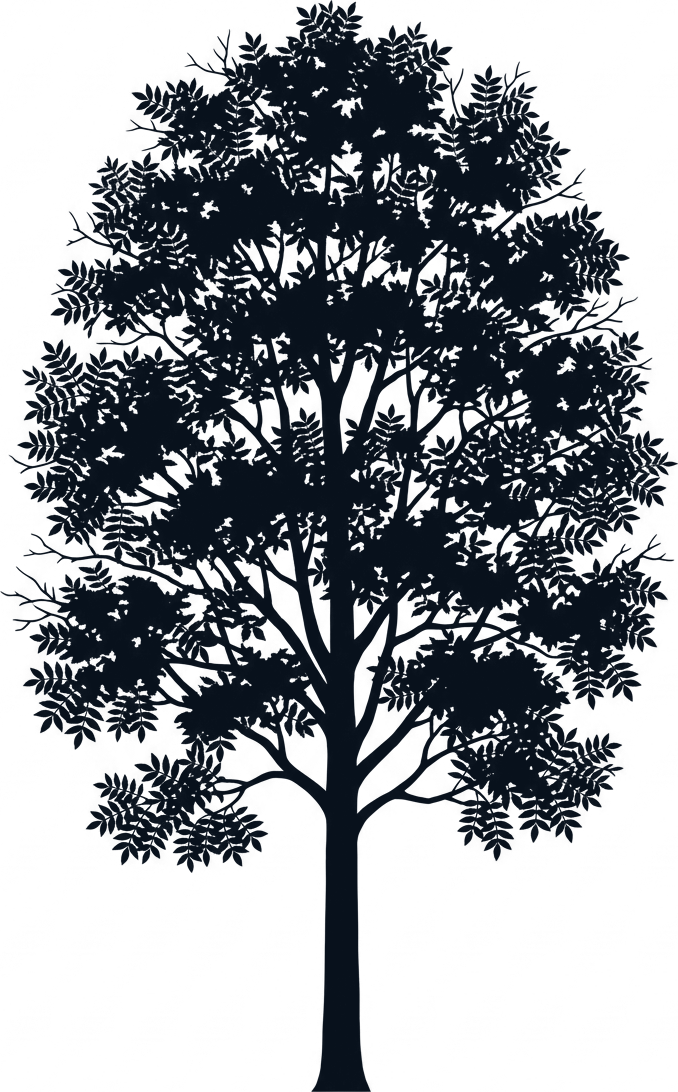
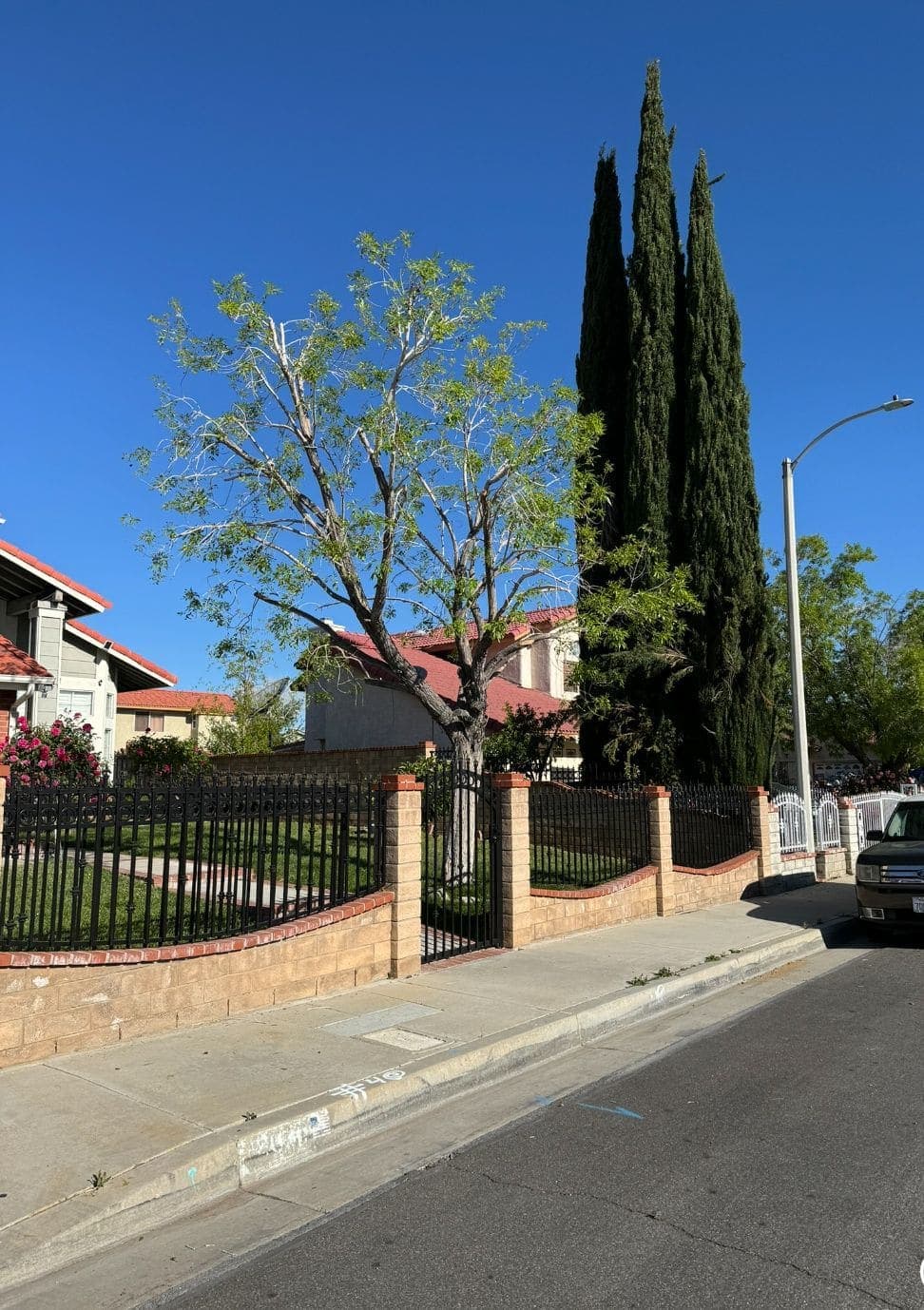
Modesto and Arizona ashes anchor the older neighborhoods of Palmdale and Lancaster — big, symmetrical, honest-looking shade trees. The catch is in our own storm files: ash is the species that most often fails with no outward warning, because the rot works through the inside of the trunk while the canopy stays green. Reading one takes more than a glance up.

FREE ESTIMATES · NO DEPOSIT · NO OBLIGATION

#1091603CSLB LICENSE — ACTIVE
$25,000CONTRACTOR'S BOND
State FundWORKERS' COMP ON FILE
5.0GOOGLE · 50 REVIEWS
20+YEARS OF EXPERIENCE

Know your tree

Is this the tree in your yard?

Ash is easy to identify and hard to assess — the field marks are on the outside, and the story is on the inside. Start with the branching: almost nothing else this big in the Valley grows in perfect opposite pairs.

01
Opposite everything

Twigs, buds, and leaves in matched opposite pairs — the thirty-second field mark that separates ash from nearly every other big Valley tree.

02
Compound leaves

Each leaf is a stem of three to nine leaflets. Modesto ash turns clean gold in fall; Raywood goes deep wine-red.

03
Bark

Gray, with a tight, woven diamond-furrow pattern on mature trunks — and any long vertical seam or crack in that weave is worth a professional look.

04
The low fork

Valley ashes typically split low into three, four, five big leaders. That fork is the tree's signature — and its weak point.

SPECIES FILE — ASH

Botanical
Fraxinus spp.
Mature size
40–80 ft with broad, rounded crowns
Growth rate
Fast when young, slowing with age
The catch
Decay hides inside — green canopy over hollow wood
Watch for
Cracked bark seams · mushroom conks · thinning at the crown edge
Also called
Modesto ash · Arizona ash · Raywood ash · shamel ash

What goes wrong

The trouble it causes here.

01

Hidden internal decay

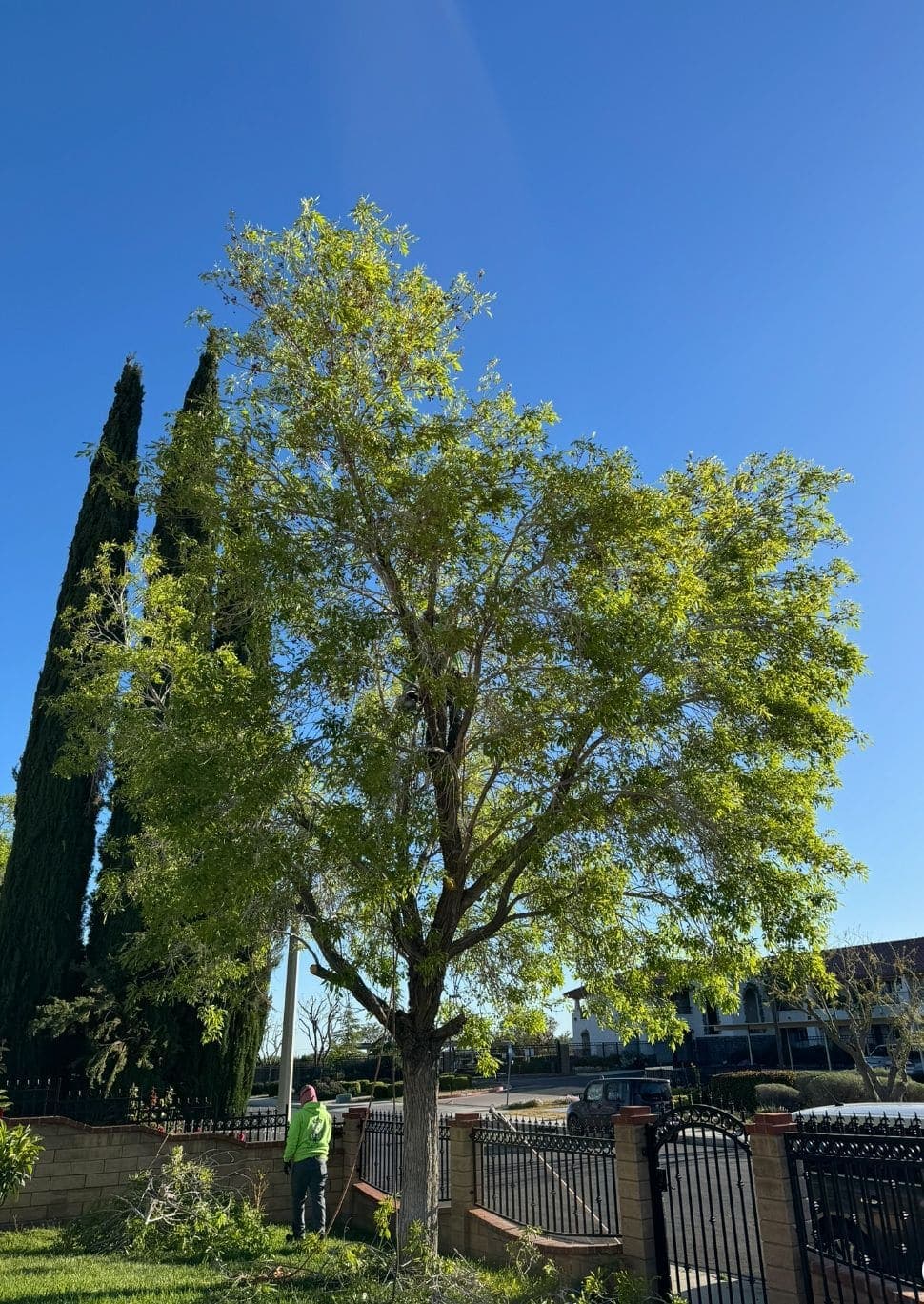
Our own insurance guide lists ash for exactly this: trees that often fail from decay nobody could see. Heart rot spreads through the trunk and leader unions behind healthy bark, and the canopy stays green because the living outer shell still moves water. Then an ordinary windy afternoon removes a third of the tree.
02

Crowded leaders, pinched unions

Those low forks usually grow with bark trapped inside the union — a built-in crack that decay finds first. The classic ash failure isn't a broken branch; it's a whole leader peeling out of the trunk at the crotch, and it takes a slice of the trunk with it.

03

Borers pile onto stress

Drought-stressed and decayed ashes draw wood borers — look for exit holes in the bark and fresh woodpecker work, which means the birds found them first. (The infamous emerald ash borer isn't known to be established in Southern California; ours are opportunists, but they finish what stress starts.)

04

Leaf drama that isn't decline

Wet springs bring anthracnose — browned, curled, dropping leaves — and hard summers bring leaf scorch. Both look alarming and are mostly cosmetic. Knowing which browning is a fungus and which is a dying leader is exactly the difference an experienced eye makes.

05

Roots under the concrete

Modesto ash earned a reputation for lifting sidewalks and driveways, and it deserves it. Shallow watering makes it worse — the roots come up for the sprinkler line and find the slab on the way.

How we work it

How we handle this tree.

Ash work starts with an assessment that assumes nothing. A green canopy is not evidence of a sound tree — the trunk, the unions, and the ground around the base are where this species tells the truth.

01
Sound it out

Conks, seams, cavities, borer holes, dead bark, the state of every big union — we read what the canopy can't tell you. Sometimes the honest answer is 'this tree is fine,' and that's a good visit.

02
Lighten the leaders

End-weight reduction on the big co-dominant leaders takes strain off the weak unions — for an aging ash over a house, it's often the single highest-value cut list there is.

03
Deadwood on a cycle

Ash makes deadwood steadily as it ages, and it drops it without ceremony. Regular deadwooding keeps the heavy stuff off roofs, cars, and the people under the shade.

04
Retire the spent ones

A hollow trunk or a failed leader is the end of the conversation. Decayed ash can't be climbed or rigged like sound wood — those removals are slower, more technical, and engineered around what the wood can no longer hold.

PUBLISHED PRICES — IN WRITING

Sound ash follows the published tiers — $700–$1,800 medium, $1,500–$4,000 large — but a decayed ash over a structure often prices as complex ($4,000–$10,000+): compromised wood can't be climbed or rigged the normal way. Trimming runs the published $150–$800 per tree. The free on-site look tells you which tree you have.

See what your job costs →

RANGES FROM OUR 2026 COST GUIDE · EXACT QUOTE IS FREE, ON-SITE

From our own jobs

This species, our crew.

Full gallery →

Straight answers

Asked constantly.

Real questions from Antelope Valley phone calls — answered the same way we answer them on your driveway.

STILL WONDERING?Ask a human instead.661-644-7347

Looking healthy is the ash problem — the species' signature failure comes out of a green, full canopy. If your ash is decades old, forks low into several leaders, or has never been assessed, a free look is cheap insurance. Most checks end with 'it's fine, here's what to watch.'

Take it seriously. Conks are the fruiting bodies of a fungus that is already eating the wood inside — they're the visible tip of an invisible problem. On an ash, which hides decay better than almost anything, a conk is the tree finally admitting it. That's an evaluation this week, not this year.

Probably not. Wet-spring anthracnose and summer leaf scorch both brown an ash dramatically and both are survivable. The pattern that actually worries us is different: thinning and dieback at the top and edges of the crown that comes back worse each year. Send us a photo — we'll tell you which one you're looking at.

Yes — a tree's strength lives in its outer shell, and hollow trees can stand for decades. The real questions are how much shell is left, how the hollow sits relative to the load, and what's underneath if the math stops working. That's a measurement, not a guess, and it's what the assessment is for.

Priority dispatch

Emergencies jump the queue. 24/7.

A split trunk or a tree on your roof doesn't go on a waitlist. Emergency calls get the next available crew — any hour, any day — and you reach the crew, not a call center.

661-644-7347
I need emergency tree removal

24/7 · LICENSED #1091603 · BONDED · WORKERS' COMP ON FILE

Not sure it's an emergency? Here's what counts →