CA LICENSE #1091603 · BONDED · WORKERS' COMPMON–SAT 7AM–7PM · 24/7 EMERGENCY
  1. Home
  2. Trees
  3. Eucalyptus

The species file · gum trees

The eucalyptus grows fast. That's the problem.

Planted across the Antelope Valley since the windbreak era, eucalyptus outgrows its own wood: heavy limbs on brittle attachments, oil-rich litter that burns hot, and a species-wide habit of dropping branches on calm summer days. Our crew trims, thins, and removes them across the Valley — with the rigging this tree specifically demands.

FREE ESTIMATES · NO DEPOSIT · NO OBLIGATION

#1091603CSLB LICENSE — ACTIVE
$25,000CONTRACTOR'S BOND
State FundWORKERS' COMP ON FILE
5.0GOOGLE · 50 REVIEWS
20+YEARS OF EXPERIENCE

Know your tree

Is this the tree in your yard?

You often smell a eucalyptus before you look at it — that camphor-menthol hit on a hot afternoon is the oil in the leaves, and it's also the reason fire agencies treat this tree differently from everything else on the block.

01
Bark

Smooth upper trunk shedding long ribbons and strips that pile at the base. On blue gum it's a two-tone patchwork of cream, gray, and tan; red gum runs mottled white to rust.

02
Leaves

Long, leathery, sickle-shaped leaves that hang vertically to dodge the sun — blue-gray on young growth, deep green later, unmistakable menthol scent when crushed.

03
Canopy

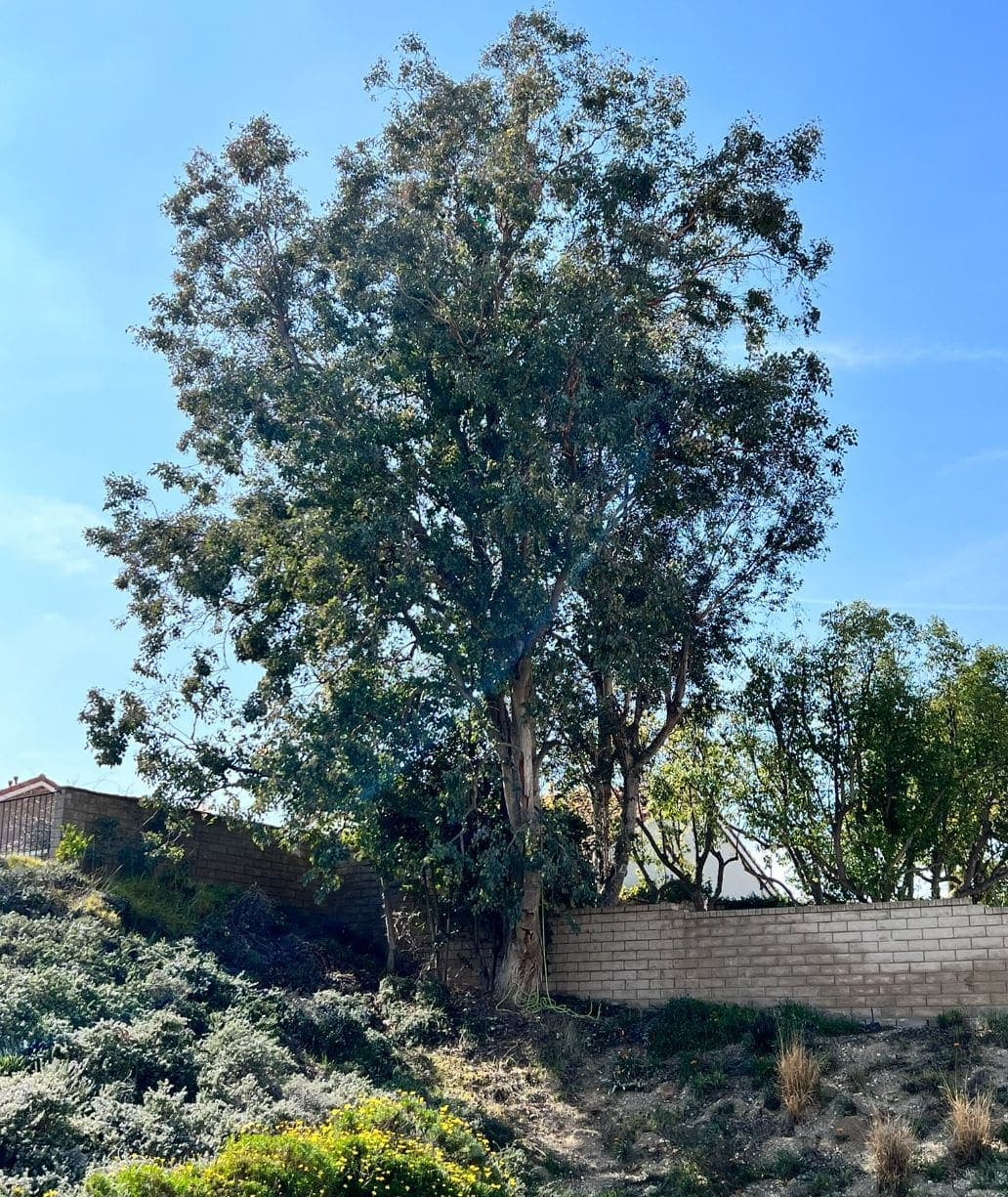
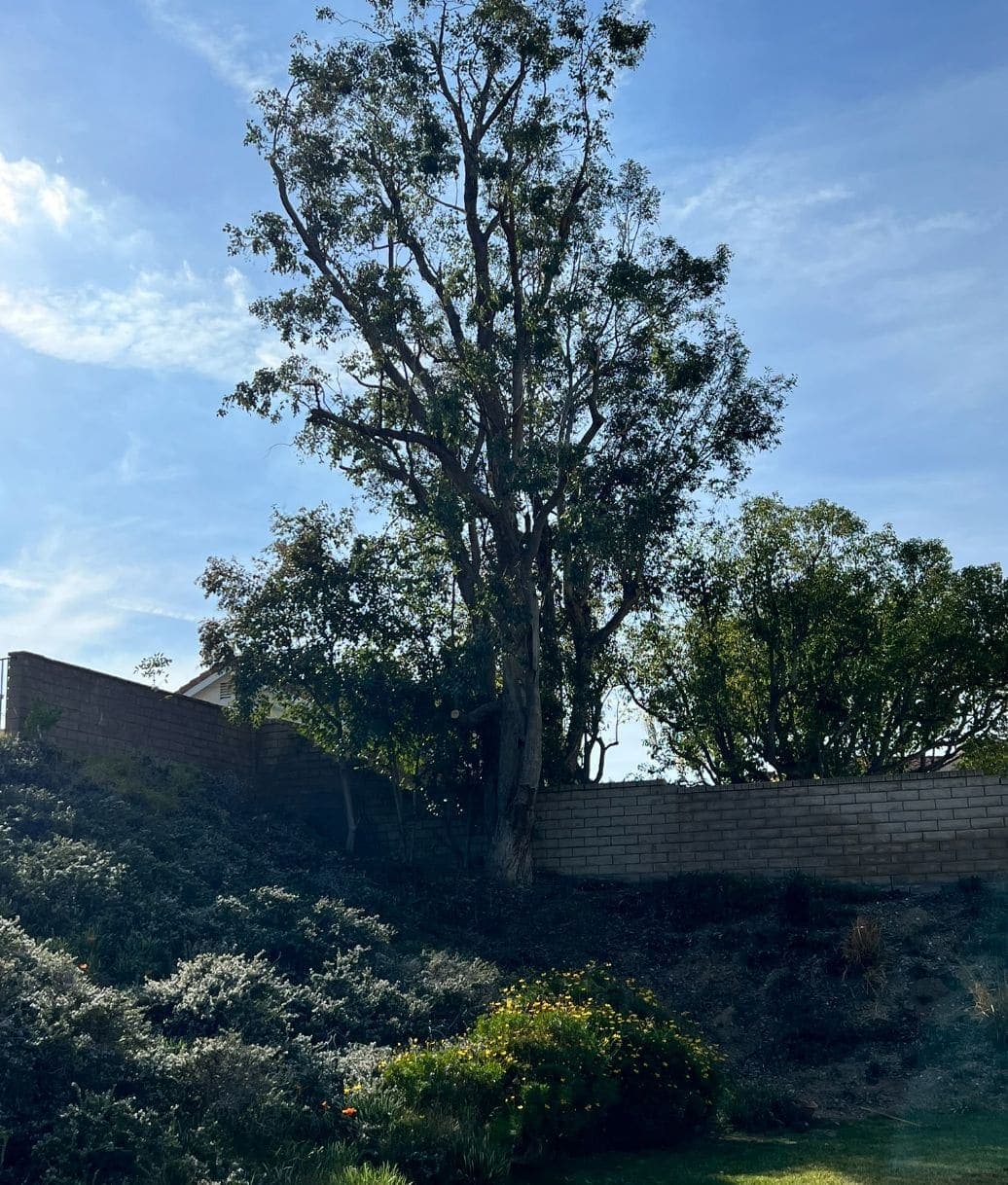
Tall, open, and irregular: daylight through the crown, with big limb masses carried on a few heavy attachments instead of an even dome.

04
Litter

Constant. Bark ribbons, woody seed capsules (gumnuts), twig tips, and oily leaves that resist breaking down — the ground under one is never clean for long.

SPECIES FILE — EUCALYPTUS

Botanical
Eucalyptus spp.
Mature size
40–120 ft — among the tallest trees in the Valley
Growth rate
Very fast — several feet a year when young
In California
Since the 1850s, planted for timber & windbreaks
Watch for
Limb drop in summer heat · bark ribbons piling at the base
Also called
gum tree · blue gum · red gum · silver dollar gum

What goes wrong

The trouble it causes here.

01

Sudden limb drop

Eucalyptus is the textbook case of what arborists call summer branch drop: large, healthy-looking limbs let go without warning on hot, windless days, when internal water stress peaks. A limb that rode out a windstorm in March can fail over a patio at noon in August. Long horizontal limbs over targets are the ones we watch.
02

Brittle wood, heavy crowns

Wood grown this fast is weak for its weight, and eucalyptus carries a lot of weight a long way from the trunk. Our own insurance guide lists eucalyptus as the most common source of massive limb failures causing high-dollar damage in Valley wind events — long levers on brittle attachments.

03

Fire behavior

Oil-rich foliage, shaggy ribbons of shed bark, and a deep litter bed make eucalyptus one of the most flammable landscape trees in California — burning bark streamers can loft embers far downwind. Near structures in a wind corridor, spacing, skirting, and litter cleanup are fire decisions, not tidiness.

04

Roots that hunt water

Eucalyptus roots chase irrigation aggressively — lawns, planter lines, leach fields — and big surface roots lift hardscape as the trunk flares. A mature gum in a small front yard is usually winning a fight the owner doesn't know is happening.

05

The topping trap

Topping a eucalyptus doesn't make it safe — it makes it angry. The species resprouts explosively from every cut, and the regrowth is attached more weakly than the wood that was removed. A topped gum is a taller, denser hazard five years later.

How we work it

How we handle this tree.

Eucalyptus is rigging work. Brittle attachments you can't fully trust, serious weight over targets, and wood that shock-loads ropes harder than a same-size elm — so we cut smaller pieces and control every one of them.

01
Read the attachments first

Included bark, old failure scars, cavities, and lean get assessed before anyone climbs. On a eucalyptus the crotch matters more than the limb — that's where the failures start.

02
Trim to shorten the levers

End-weight reduction on the long horizontals and selective thinning through the crown — never topping. The goal is shorter levers and less sail, on cuts the tree can actually close over.

03
Remove in controlled sections

Removals come down roped and lowered, piece by piece — sized smaller than other species because brittle wood punishes big rigging shocks. Over structures, that's the whole job.

04
Take the litter seriously

Bark ribbons, gumnuts, and oily brush get chipped and hauled. If the tree stays, we'll tell you what cleanup rhythm fire safety wants around it.

PUBLISHED PRICES — IN WRITING

Most mature eucalyptus land in the published large-removal tier — $1,500–$4,000 per tree — and the over-structure giants run $4,000–$10,000+ as crane or technical work. Smaller gums fall in the lower published tiers ($300–$900 small, $700–$1,800 medium), and trimming runs the published $150–$800 per tree.

See what your job costs →

RANGES FROM OUR 2026 COST GUIDE · EXACT QUOTE IS FREE, ON-SITE

From our own jobs

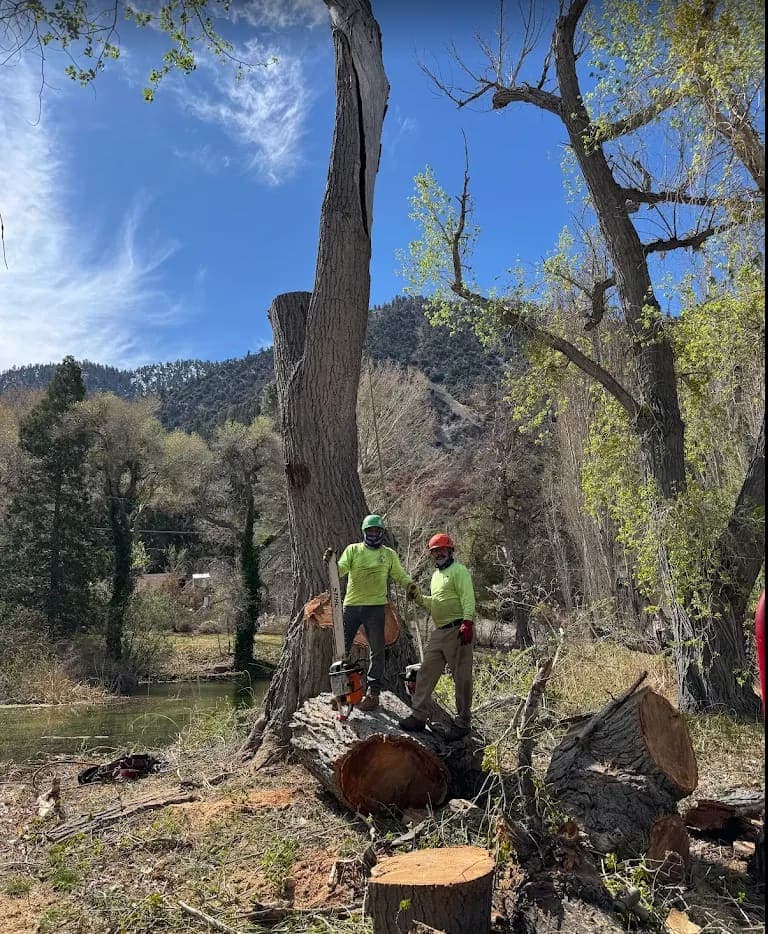
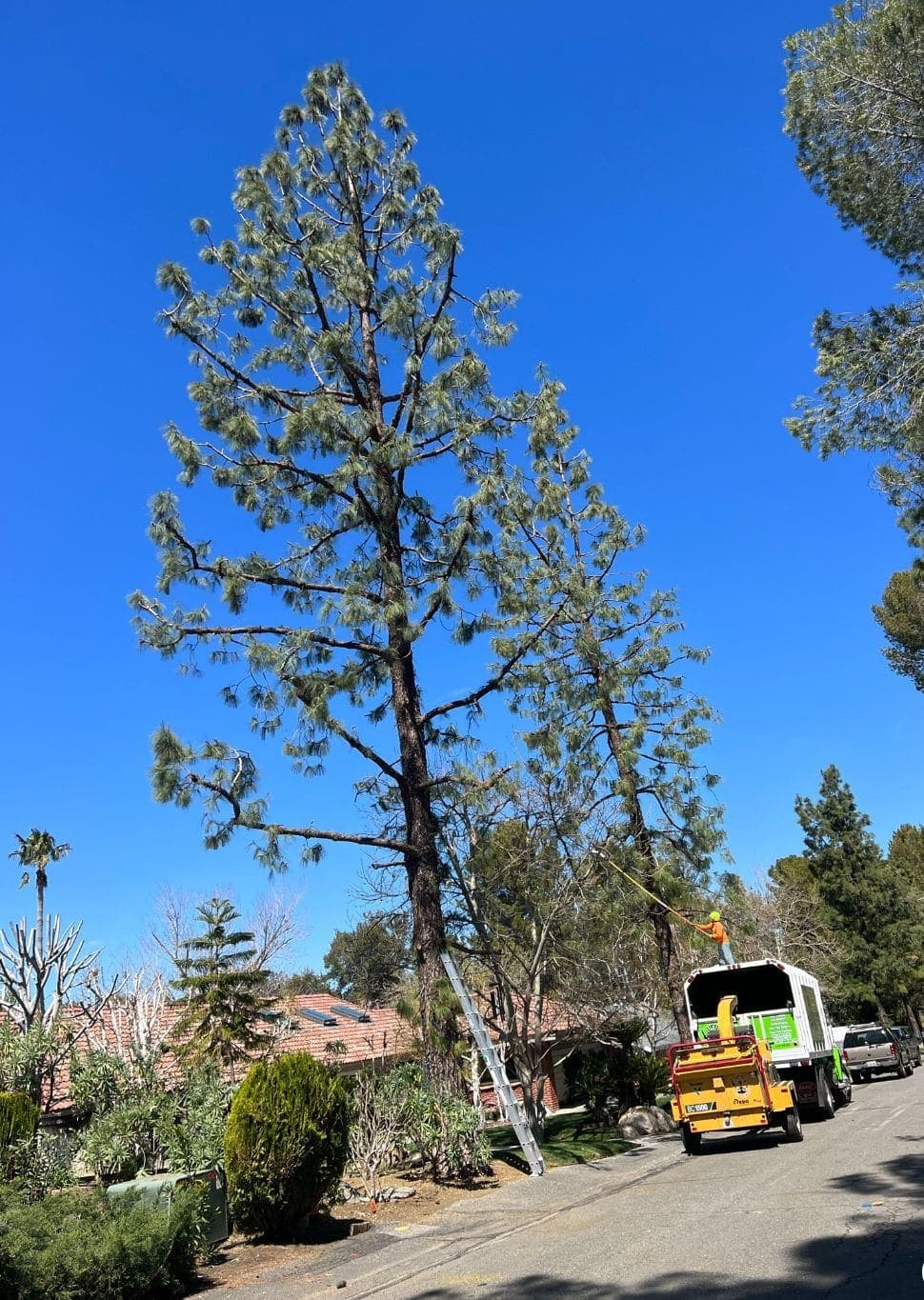
This species, our crew.

Full gallery →

Straight answers

Asked constantly.

Real questions from Antelope Valley phone calls — answered the same way we answer them on your driveway.

STILL WONDERING?Ask a human instead.661-644-7347

Summer branch drop — a documented pattern in eucalyptus, not a myth. On hot, still days the tree's internal water balance shifts, load redistributes, and a big limb that looks perfectly healthy fails at the attachment. It's most common on long horizontal limbs, which is why weight-reducing those over patios, driveways, and roofs is the single most useful trim this species gets.

We won't, and you don't want it: eucalyptus answers topping with a burst of fast, weakly attached regrowth, so you trade one known hazard for dozens of new ones plus decay at every stub. What actually works is reduction to sound laterals and thinning — the tree ends up carrying less weight and less sail without the regrowth explosion.

It's one of the more flammable trees you can own — oily foliage, ribbon bark, heavy litter. Whether yours is a problem depends on what's within reach: distance to the house, what's under it, how much litter has built up. Skirting low growth, clearing the litter bed, and keeping structures out of the drop zone are the practical moves, and defensible-space clearing is listed work for us.

Usually not in Antelope Valley residential situations — it's not a protected species out here. The exceptions are the usual ones: street and parkway trees, HOA rules, and city-specific ordinances. We check before we cut, and the estimate is free either way.

Priority dispatch

Emergencies jump the queue. 24/7.

A split trunk or a tree on your roof doesn't go on a waitlist. Emergency calls get the next available crew — any hour, any day — and you reach the crew, not a call center.

661-644-7347
I need emergency tree removal

24/7 · LICENSED #1091603 · BONDED · WORKERS' COMP ON FILE

Not sure it's an emergency? Here's what counts →