CA LICENSE #1091603 · BONDED · WORKERS' COMPMON–SAT 7AM–7PM · 24/7 EMERGENCY
  1. Home
  2. Trees
  3. Aleppo & Canary Island pine

The species file · desert pines

The high desert's favorite pine is the wind's favorite target.

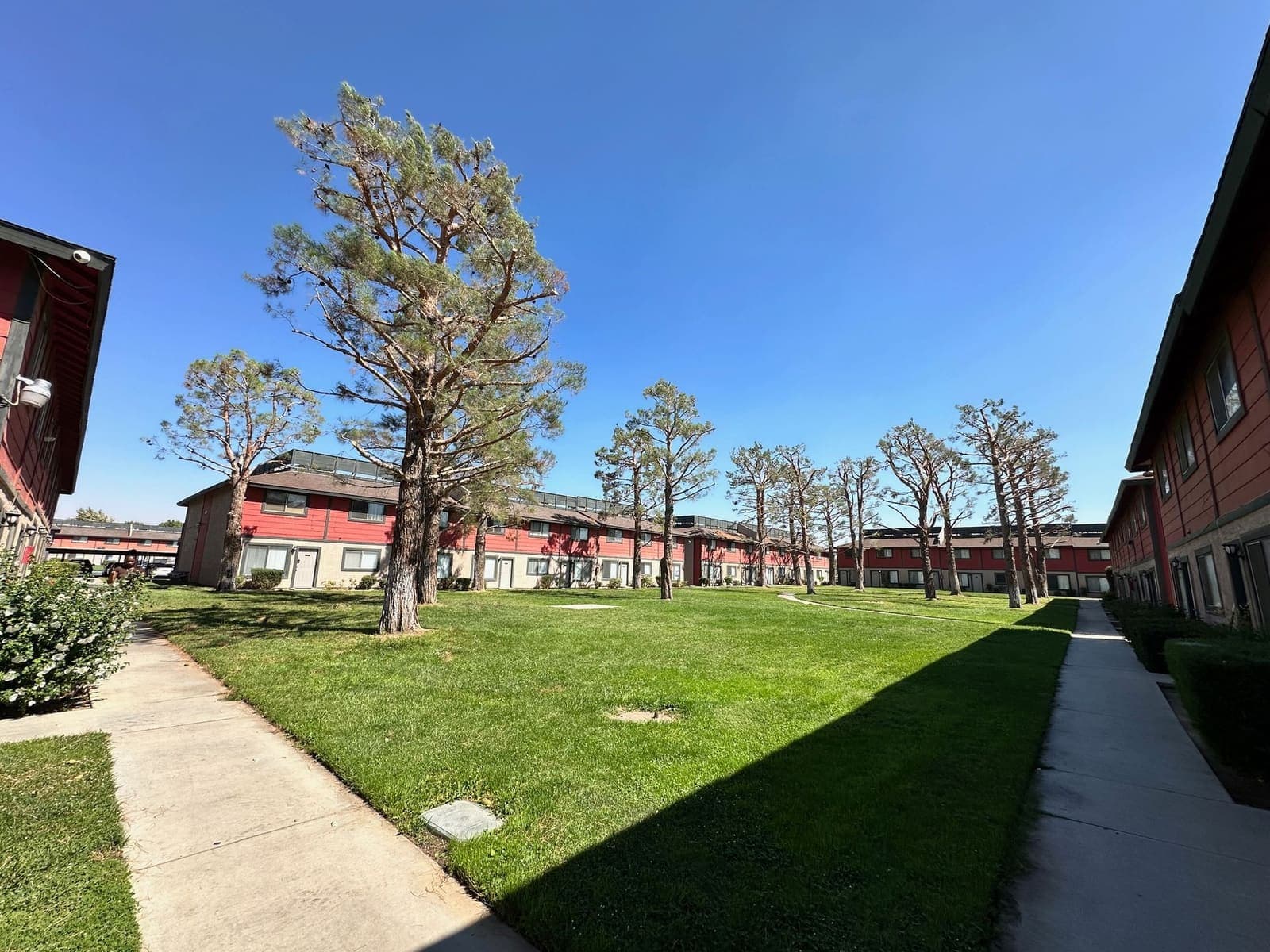
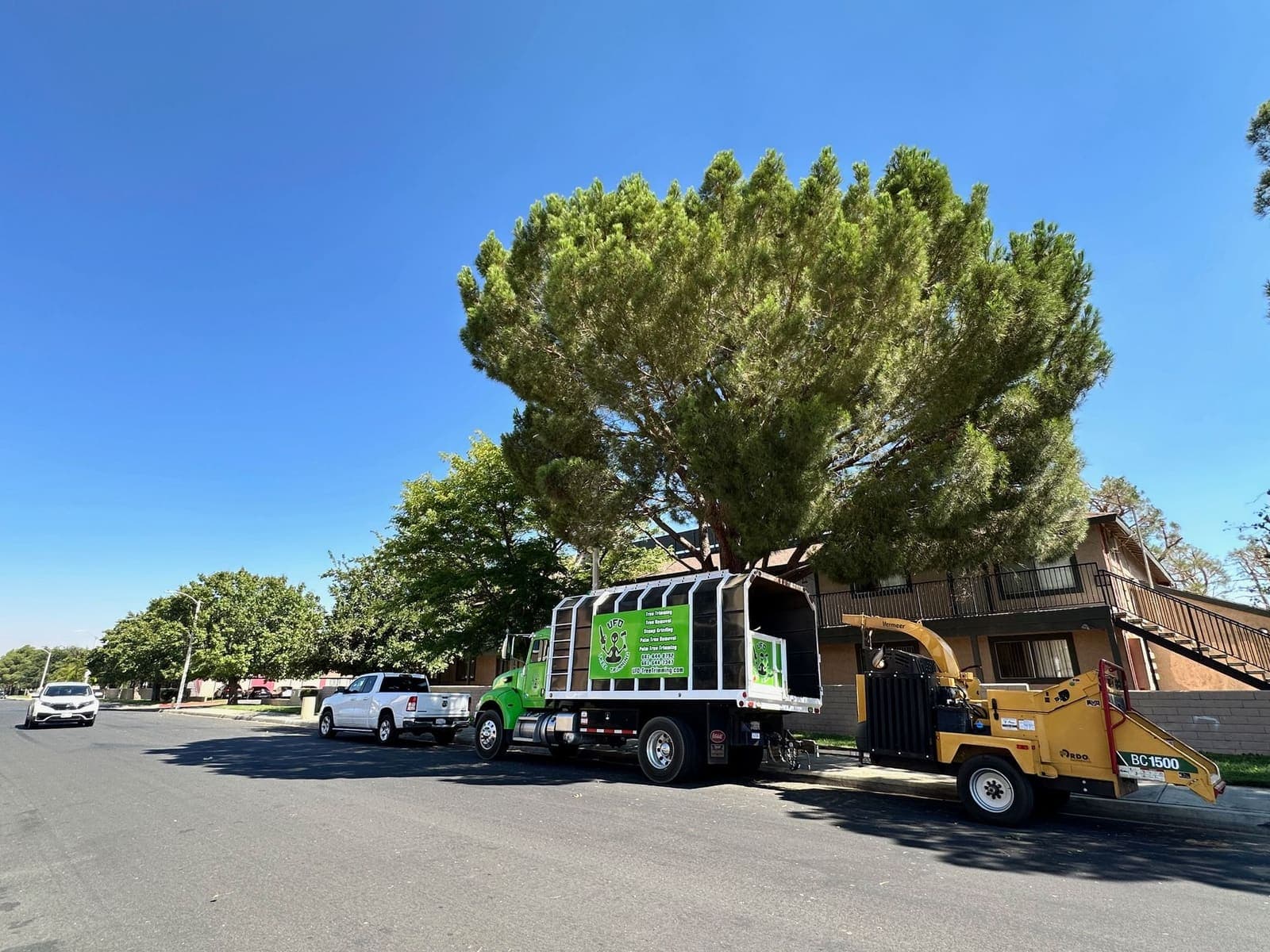
Aleppo and Canary Island pines got planted all over Palmdale and Lancaster because they shrug off heat, drought, and alkaline soil. Then they get sixty feet tall over a roof in a wind corridor — sail-heavy crowns on shallow lawn-watered roots, with bark beetles waiting for a dry year. This is the tree our storm season is named after, and we work on it constantly.

FREE ESTIMATES · NO DEPOSIT · NO OBLIGATION

#1091603CSLB LICENSE — ACTIVE
$25,000CONTRACTOR'S BOND
State FundWORKERS' COMP ON FILE
5.0GOOGLE · 50 REVIEWS
20+YEARS OF EXPERIENCE

Know your tree

Is this the tree in your yard?

Two different pines, one shared career: cheap fast shade that outlived its planning. Telling them apart takes one look at the trunk — and telling a stable one from a dangerous one takes a look at the roots.

01
Aleppo pine

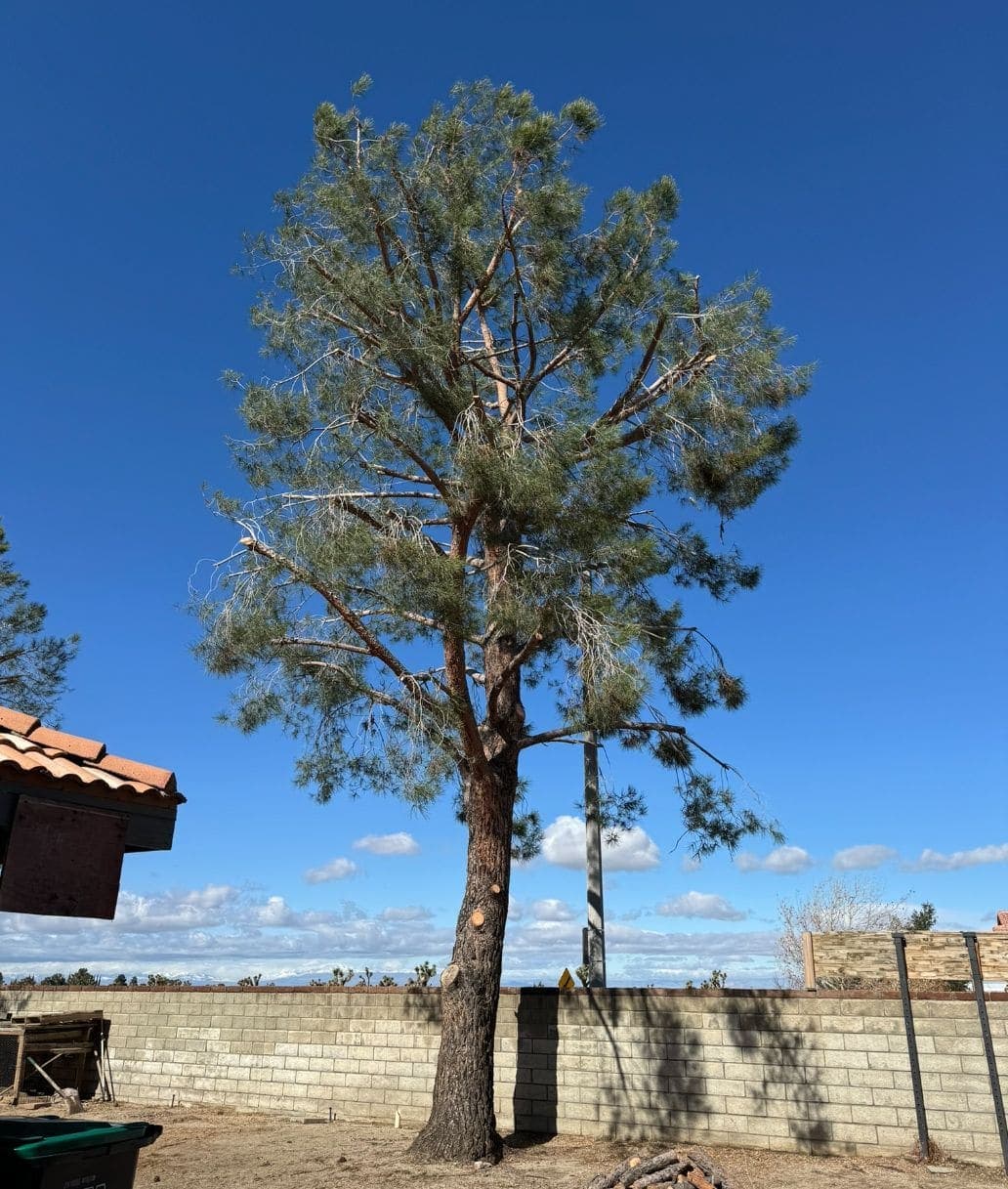
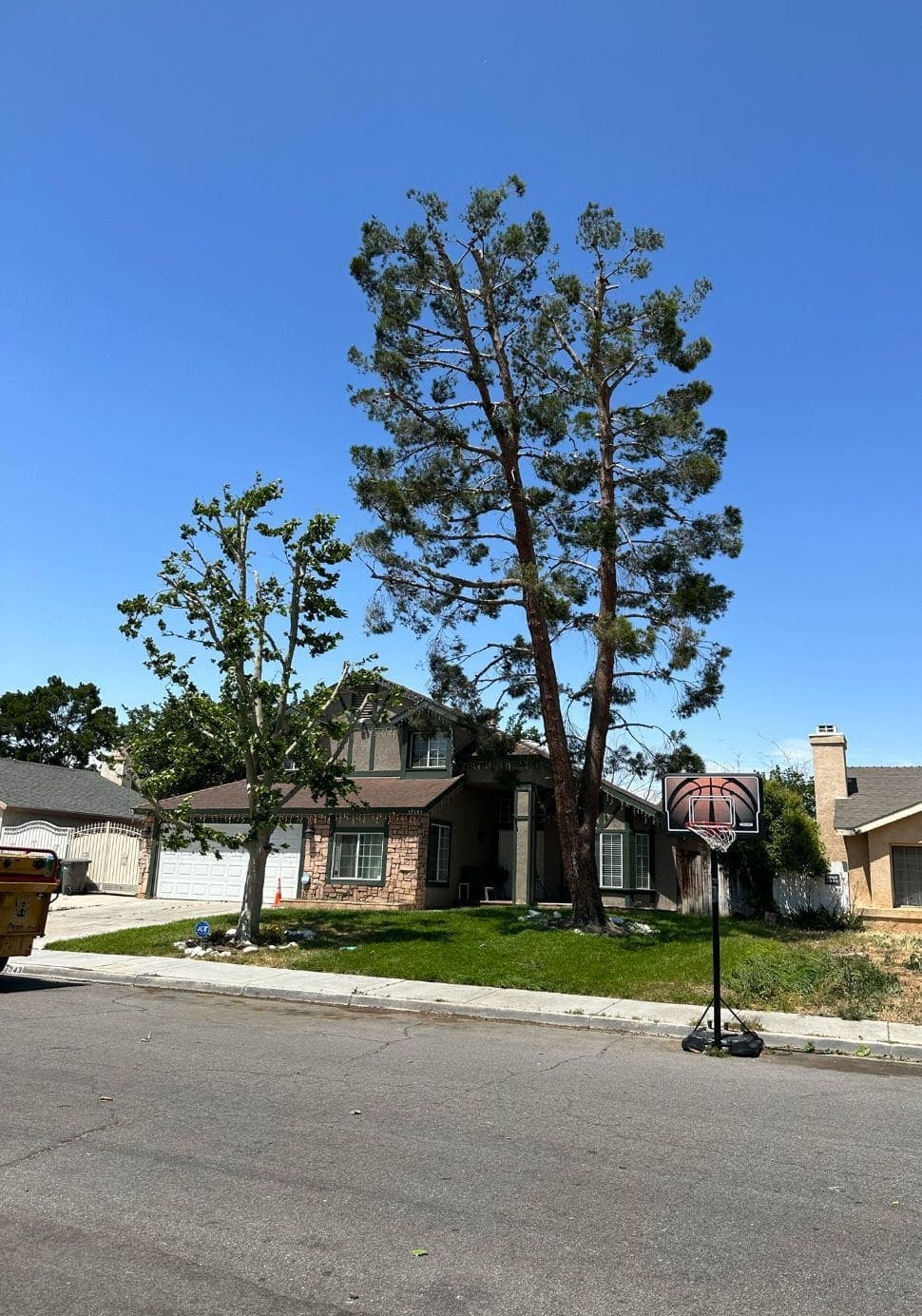
Open, twisted, often multi-leader crown with fine gray-green needles in pairs; bark reddish and furrowed low on the trunk. Very often carries a permanent lean away from the prevailing wind.

02
Canary Island pine

One straight mast of a trunk with a narrow, tiered crown and long, drooping needles in threes — the tall 'telephone-pole pine' of older streets and parkways.

03
Cones & litter

Egg-shaped cones that hang on for years, steady needle rain, and pitch that finds every car and patio underneath. The needle bed under a mature pine is measured in inches.

04
The lean that matters

An old, uniform lean the tree has always had is character. A new lean, a fresh crack, or soil lifting on the windward side of the roots is an emergency call — that's a tree mid-failure, not a quirk.

SPECIES FILE — ALEPPO & CANARY ISLAND PINE

Botanical
Pinus halepensis · P. canariensis
Mature size
40–80 ft; Canary Islands can pass 80 ft
Growth rate
Fast for a pine — 2–3 ft a year with water
Root habit
Shallow & wide in irrigated yards — sail vs. anchor
Watch for
A NEW lean · top-down browning · pitch tubes on the trunk
Also called
desert pine · Halepensis · Canary pine

What goes wrong

The trouble it causes here.

01

The windstorm failure

A dense unthinned crown catches wind like a sail, and a pine watered by a lawn roots shallow — it never had to dig. Our own insurance guide lists Aleppo pines as the most common full-tree failures onto structures in Valley wind events: they snap, or they go over roots-and-all, and either way the roof underneath loses.
02

Bark beetles in drought years

A drought-stressed pine can't push enough sap to drown attacking engraver and turpentine beetles. Pitch tubes on the trunk, boring dust in the bark crevices, a fading top — and by the time a pine browns from the top down it is usually past saving. A standing dead pine is a removal on a clock.

03

Litter that turns to fuel

Inches of dry needle duff, resinous cones, and low skirts of dead growth are flash fuel with a ladder into the crown. In a wind-driven fire area, raising the skirt and clearing the duff line near structures is defensible-space work, not landscaping.

04

Topping ruins pines — permanently

A pine can't rebuild a crown the way a mulberry can. Topping leaves dead stubs and decay columns; whatever regrows (Canary Islands sprout in weak tufts, Aleppos often just don't) is worse-attached than what was cut. A topped pine never becomes safe again — it becomes a slow removal.

05

Roots vs. everything flat

Shallow structural roots thicken with age and lift whatever's above them — sidewalks, curbs, patio slabs, pool decks. Cutting the big roots to save the concrete trades a trip hazard for a stability hazard, so it's a decision we make case by case.

How we work it

How we handle this tree.

Pine work in the Valley is wind work. Everything we do to these trees is about what the next Santa Ana event finds when it arrives — how much sail, how much dead weight, and how honest the root plate is.

01
Read the crown and the roots

Density, deadwood, lean history, beetle sign, and what the root zone has been living on — lawn water grows a different (and weaker-anchored) pine than desert soil does.

02
Thin — never top

Selective thinning lets wind pass through the crown instead of shoving it. We keep the natural outline, avoid stripping inner growth (over-lifted 'lion-tailed' limbs whip harder at the tips), and leave the tree its shape.

03
Take the weight off the targets

End-weight reduction over roofs, driveways, and play areas, plus dead skirt removal for fire clearance. Before wind season, not after — that order is the whole trick.

04
Remove the ones past saving

Beetle-killed, storm-cracked, or badly topped pines come down in rigged sections. Tall Canary Islands between houses are exactly the technical, crane-tier work our published complex range exists for.

PUBLISHED PRICES — IN WRITING

Most Valley pines price in the published medium and large removal tiers — $700–$1,800 (~20–40 ft) and $1,500–$4,000 (~40–70 ft) — with the tallest or most confined jobs at $4,000–$10,000+ (crane / technical). Trimming and thinning runs the published $150–$800 per tree.

See what your job costs →

RANGES FROM OUR 2026 COST GUIDE · EXACT QUOTE IS FREE, ON-SITE

From our own jobs

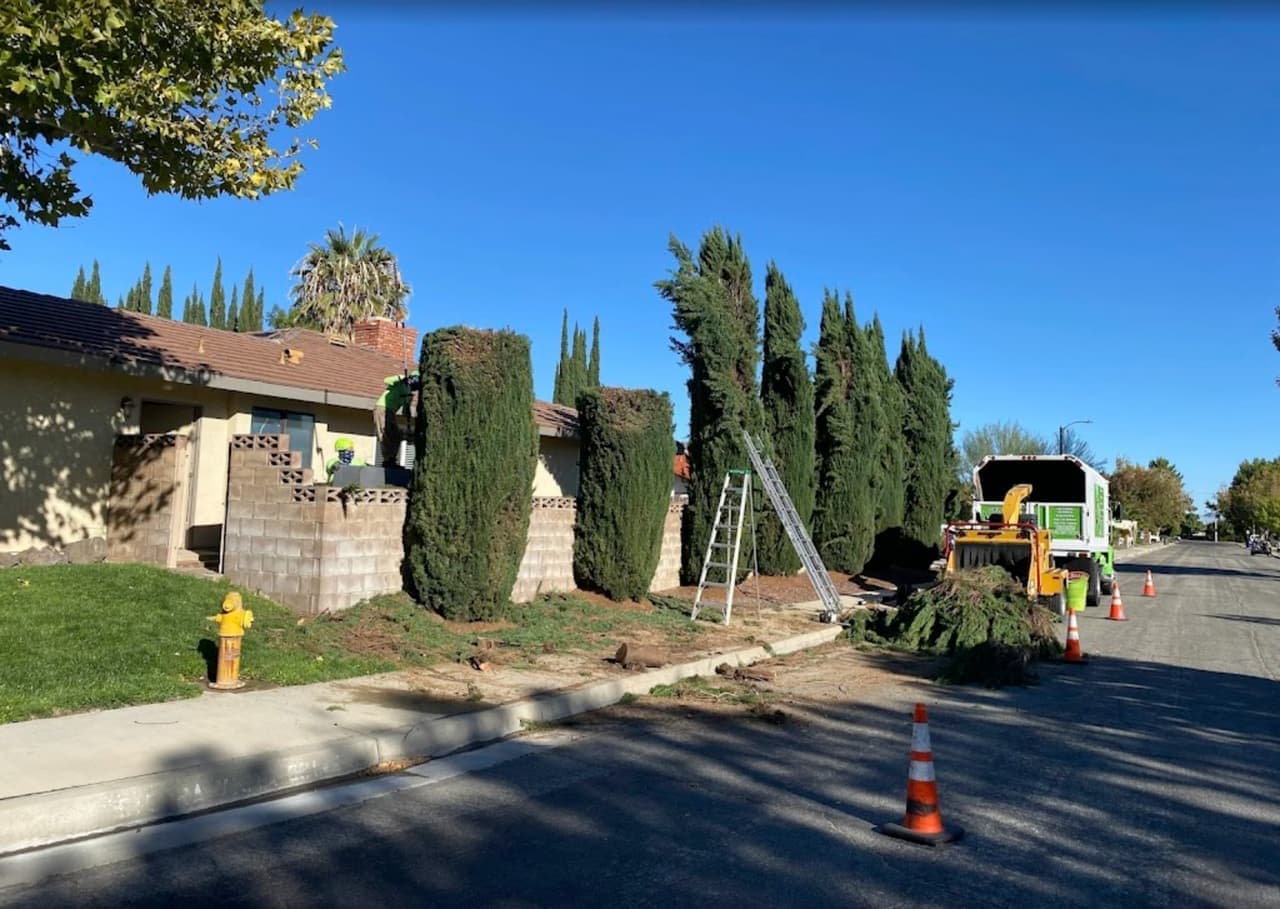
This species, our crew.

Full gallery →

Straight answers

Asked constantly.

Real questions from Antelope Valley phone calls — answered the same way we answer them on your driveway.

STILL WONDERING?Ask a human instead.661-644-7347

Top-down browning is the bad pattern: it usually means bark beetles, drought stress, or both, and once the whole top has faded the tree is usually not coming back. Caught early — a few fading branches, pitch tubes but a green crown — deep infrequent watering can genuinely turn a pine around. We'll look for free and tell you which side of that line yours is on.

If it's dense, carries deadwood, or stands over anything you value — yes, and before the wind arrives, not after. Thinning is the honest version of what people want from topping: less force on the tree in a gust, without wrecking its structure. Most Valley pines are on a several-year cycle.

Not the way people hope. Pines don't regrow from topping cuts the way broadleaf trees do — you get permanent stubs, decay, and (on Canary Islands) weak tufted regrowth. If a pine's height over your house is genuinely the worry, we can take real weight and sail off it, or we can have the removal conversation. We'll tell you which one your tree is.

Depends which lean. Aleppos grow into a permanent wind-lean over decades — if it's always been there and the roots are sound, it's usually just character. A NEW lean, a crack, or soil heaving on the far side of the trunk means the root plate is moving: get people out from under it and call 661-644-7347, any hour.

Priority dispatch

Emergencies jump the queue. 24/7.

A split trunk or a tree on your roof doesn't go on a waitlist. Emergency calls get the next available crew — any hour, any day — and you reach the crew, not a call center.

661-644-7347
I need emergency tree removal

24/7 · LICENSED #1091603 · BONDED · WORKERS' COMP ON FILE

Not sure it's an emergency? Here's what counts →