After a tree comes out, most homeowners think the hard part is over. The tree is gone, the branches are cleaned up, the yard looks better — and one question remains:
What do we do with the stump?
We get this constantly from homeowners across Palmdale, Lancaster, Quartz Hill, Acton, Littlerock, Rosamond, and the rest of the Antelope Valley.
The two options usually offered are stump grinding and stump removal. They sound similar. They solve different problems.
Grinding focuses on removing the visible stump and reclaiming the space. Full removal goes further, taking out the stump and much of the main root system underground.
There's no single answer that works for every property. The right choice depends on what's happening around the stump, what you want to do with the space afterward, and whether the roots themselves are causing trouble.
The Real Difference Is Underground
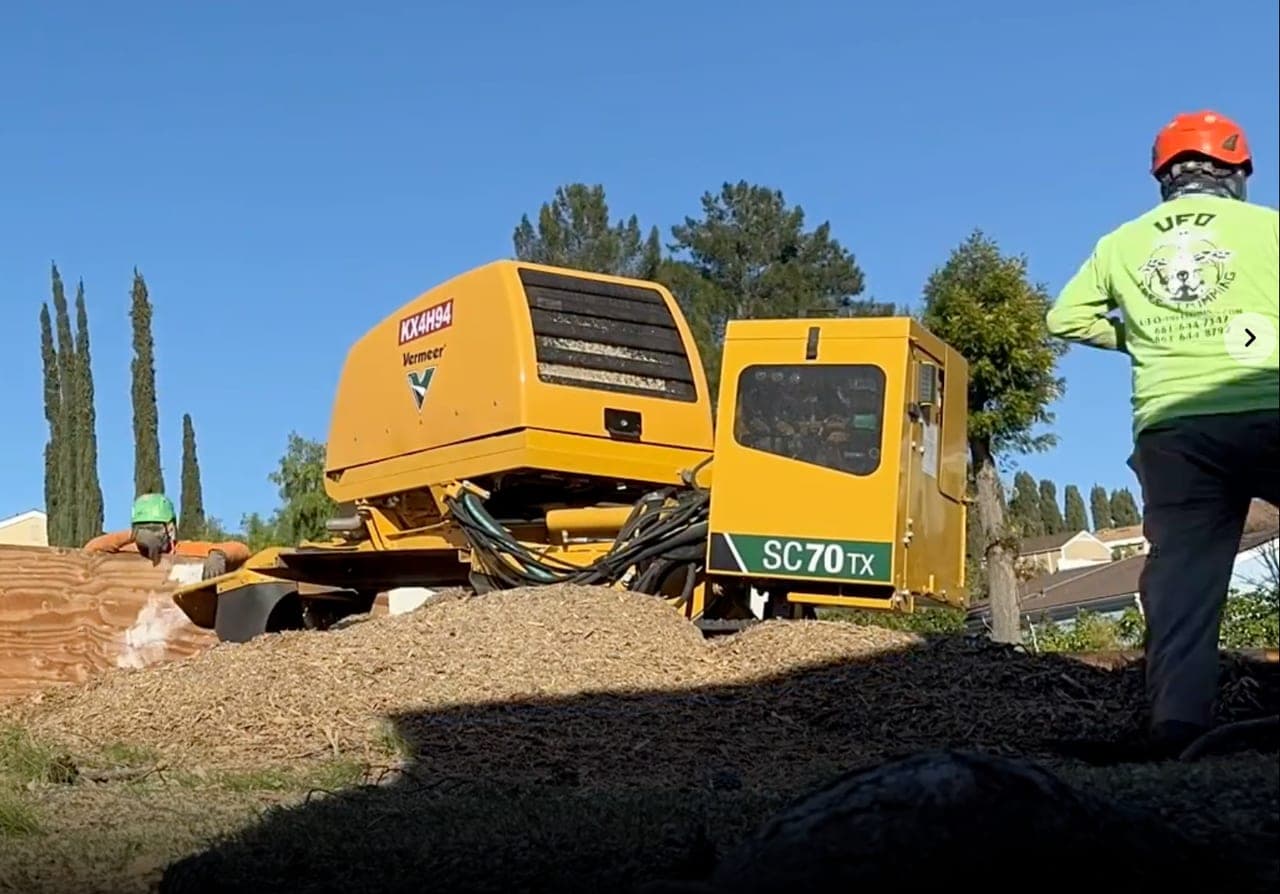
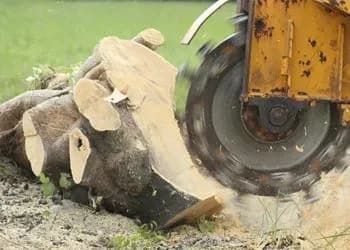
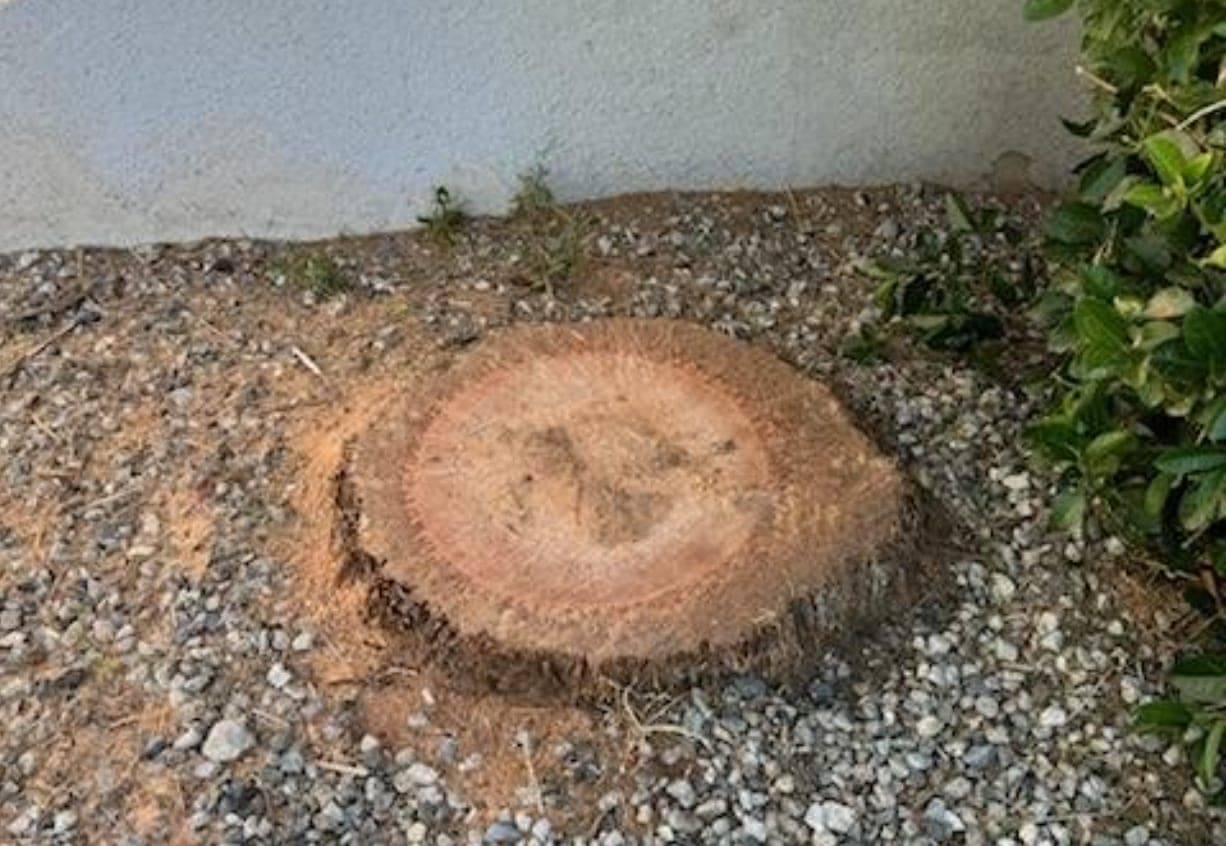
With stump grinding, a machine uses a cutting wheel to reduce the stump to small wood chips. The visible stump comes out below grade, and the remaining roots decay naturally over time.
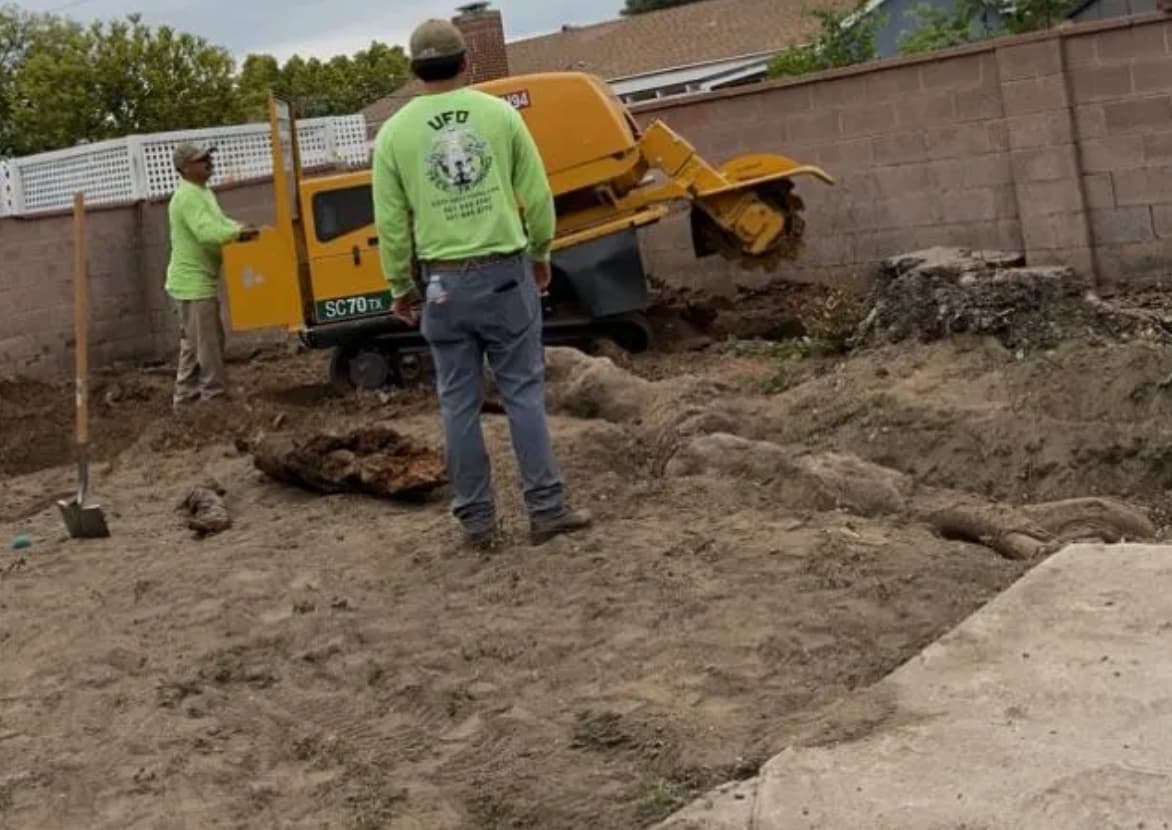
With full removal, the stump and main root ball are physically pulled from the ground. That means more digging, more labor, and considerably more disturbance to the surrounding area.
Neither is automatically better. The property decides.
When Grinding Is the Right Call
Grinding is usually best when the goal is removing the eyesore and making the area usable again.
We typically recommend it when:
- The stump sits in an open area
- The roots aren't damaging anything
- You want to landscape the space
- No nearby structures are affected
- The goal is appearance, without tearing up the yard
For most homeowners, grinding solves the actual problem without unnecessary excavation.
A Palmdale Example
A homeowner had an old tree removed from the middle of their front yard. Their goal was simple: get the stump gone so the yard looked better and they could plant new landscaping later.
The stump wasn't near the house, driveway, irrigation, or fence.
Full removal would have created more disruption without any real benefit. Grinding removed the visible problem, let them reclaim the space, avoided unnecessary digging, and cost less.
The most expensive option isn't always the best one.
When Full Removal Makes Sense
Full removal is the more aggressive process because it addresses the underground portion of the tree. Homeowners who need it are often already dealing with bigger tree decisions.
We usually recommend removal when the roots are the problem:
- Roots pushing against fences
- Roots lifting concrete or patios
- Future construction plans
- Landscaping that needs deeper preparation
- Concerns about regrowth
It costs more and disturbs more. Sometimes it's still the correct long-term answer.
A Lancaster Example
A homeowner took out a large mature shade tree along a back fence line. They originally wanted grinding — quicker, more affordable.
During our inspection, we found the problem was bigger than the stump. The root system was already pushing toward the fence, affecting the surrounding area, and running close to a patio slab.
Their concern wasn't appearance. It was avoiding future problems. As they put it: "I don't want this thing coming back or messing with my fence later."
Grinding would only have addressed what was visible. We recommended full removal because the underground issue was the actual issue.
They paid more up front and moved forward knowing the problem was gone.
The Biggest Mistake Homeowners Make
Choosing on price alone.
The thinking goes: "Grinding is cheaper, so it must be the better option."
But a stump in the middle of an open yard is a completely different situation from a stump beside a fence, foundation, patio, driveway, or block wall.
The better question is: what problem am I actually trying to solve?
Are you trying to improve how the yard looks? Create space for landscaping? Prevent future property damage? Prepare for construction?
The answer changes the recommendation.
What We Look At First
We don't decide based on stump size. Two identical stumps can need completely different solutions.
Tree species. Some trees have aggressive root systems or a real tendency to send up new growth. Knowing the species tells us whether grinding will actually accomplish your goal.
Root location. The biggest question is what the roots are doing — whether they're affecting fences, concrete, irrigation, foundations, or planting areas. If the roots are creating problems, removal starts to make sense.
Property layout and access. Gate width, nearby landscaping, structures, equipment limitations, and protecting the rest of the yard. Sometimes grinding wins simply because it solves the problem with far less disruption.
Your plans for the space. One of the first things we ask. Someone planting grass needs a different solution than someone installing a patio or building a structure.
What to Expect During the Work
Grinding means less yard disturbance, faster completion, smaller equipment access, and a cleaner recovery. The stump goes down, the area gets cleaned up, and the space is usually ready to prepare for landscaping.
Full removal means more digging, more equipment, more cleanup, and a larger disturbed area. The benefit is that the stump and main root mass are genuinely gone.
Questions to Ask Before You Hire
- Are you grinding the stump or removing it completely?
- How deep will it be ground?
- Will the debris be hauled away?
- Will the area be ready for landscaping afterward?
- Are there root issues elsewhere on the property?
- What happens if roots are affecting nearby structures?
Any professional company should explain the process before starting. That goes for all tree work — grinding, removal, or trimming, proper equipment and safe technique protect your property.
Our Rule of Thumb
If the stump is the problem, grind it. If the roots are the problem, remove it.
That's the simplest way we explain the difference.
Grinding is usually right when the goal is reclaiming space and improving appearance. Full removal is usually right when the underground portion is creating a property concern.
The goal isn't recommending the biggest job. It's recommending the right one.
Why Homeowners Choose Us
Stump work is more than pulling wood out of the ground. It's helping homeowners make the right decision for their property. Working with a local company means working with someone who knows the tree species, soil conditions, and property challenges common across the Antelope Valley.
We evaluate each situation on the condition of the property, the root system, your goals, and the best long-term solution.
Sometimes that's grinding. Sometimes it's full removal. The difference is understanding what the property actually needs.
Call 661-644-7347, or get an estimate started online.