If you're a homeowner in Palmdale, Lancaster, Quartz Hill, Acton, Littlerock, or anywhere in the Antelope Valley wondering "how much does stump grinding cost?", the honest answer is: it depends on the stump.
Our published range for stump grinding is $300–$600+ per stump, moving with size, location, access, species, and complexity.
Every stump has its own story. A small backyard fruit tree stump can be quick and simple. A large pine or eucalyptus stump can take considerably more time, equipment, and experience.
We don't give homeowners a random number just to get a phone call. The goal is an honest estimate based on what the job actually requires, so there are no surprises.
What Affects Stump Grinding Cost
Many homeowners assume pricing is based on size alone. Size is the biggest single factor, but several other details move the final number.
The Size of the Stump
The first thing we evaluate is diameter.
A small ornamental stump grinds much faster than a large mature one. Bigger stumps mean more grinding time, more passes, and more wear on the cutting teeth.
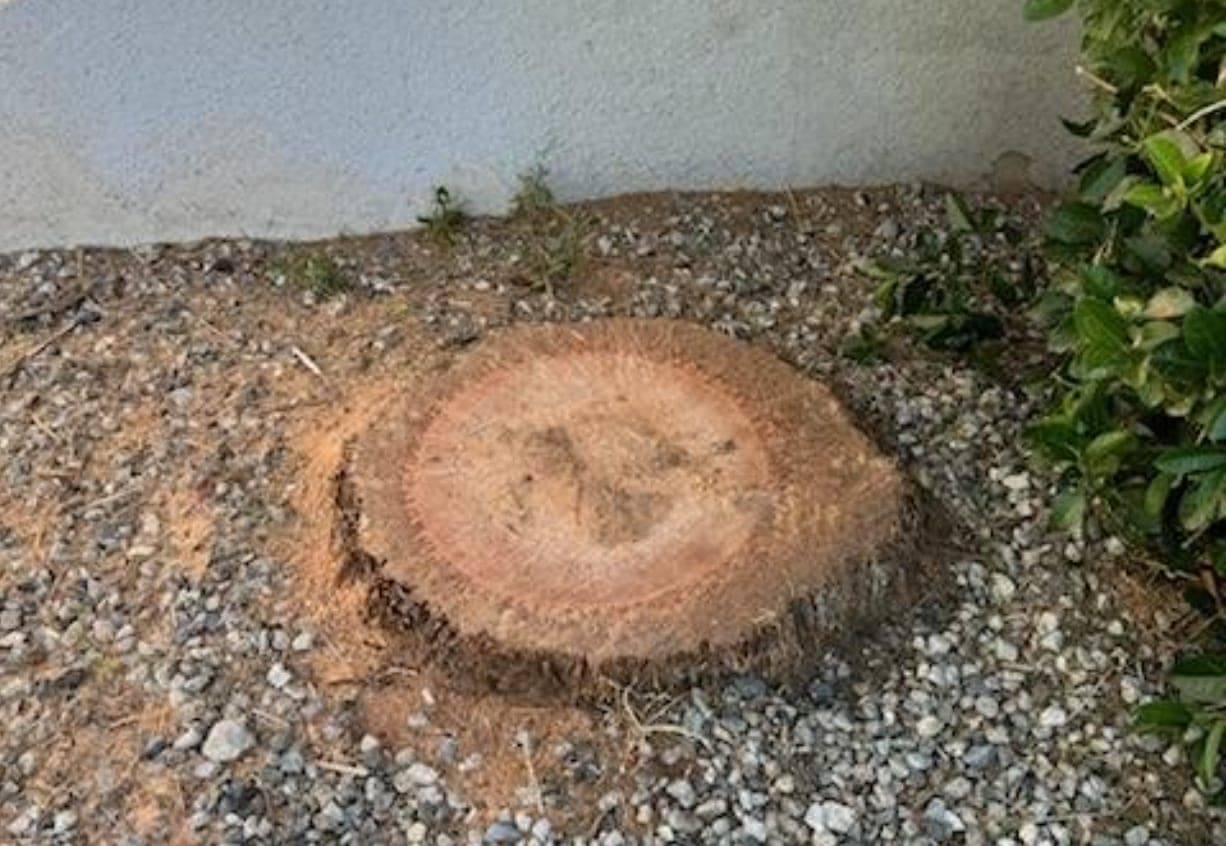
A stump that looks small from above can also have a far larger root flare hiding under the soil. What's visible doesn't always tell the whole story.
Tree Species and Wood Density
The type of tree makes a real difference. Common stump jobs across the Valley include:
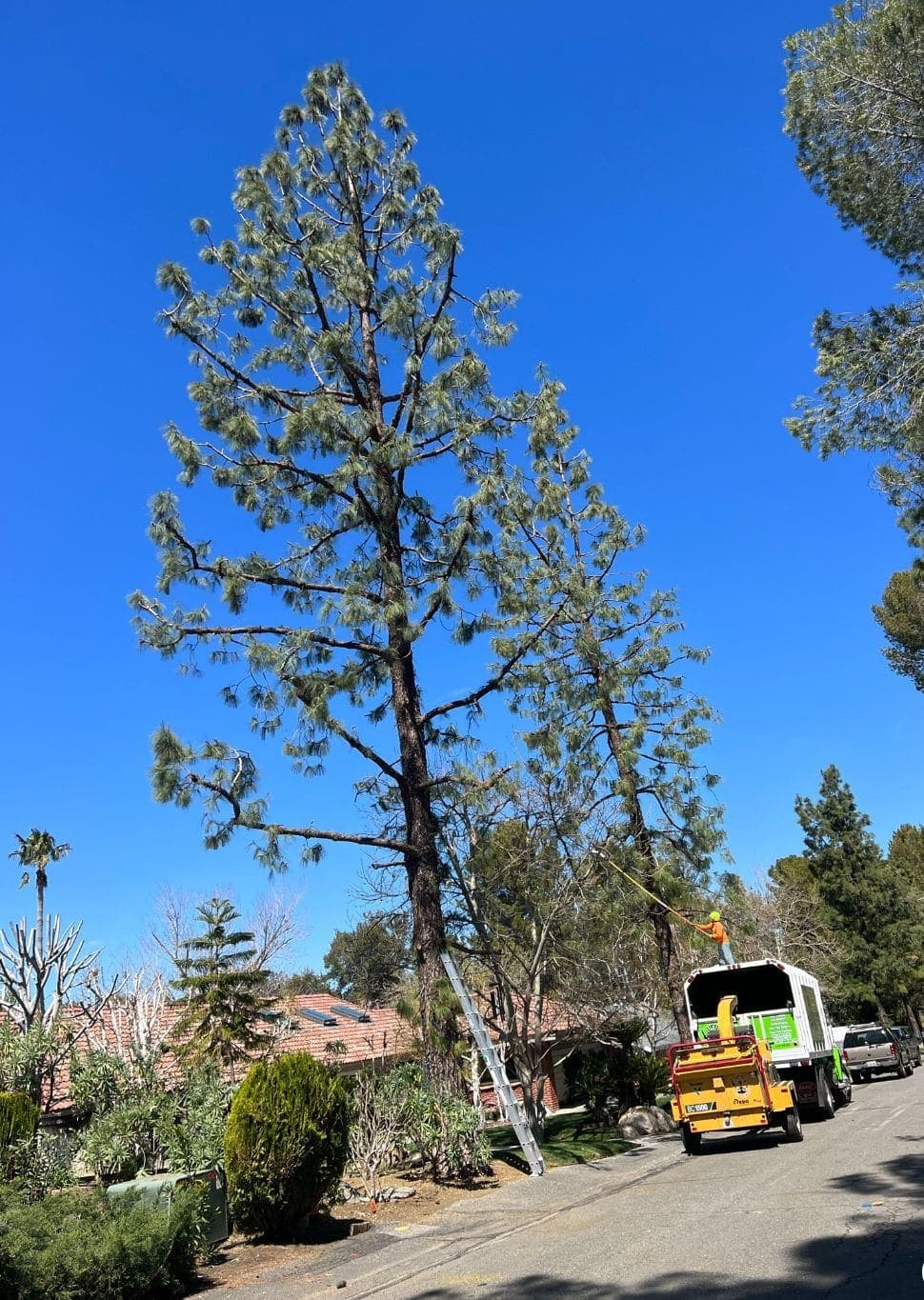
- Pines with large root flares
- Eucalyptus, with dense wood and extensive roots
- Palms, with their distinctive fibrous trunks
- Fruit trees tucked near landscaping or fences
- Large mature trees on rural properties
A mature eucalyptus stump can take significantly longer than a smaller ornamental simply because of wood density and size.
Access
Accessibility is the factor homeowners most often overlook.
A stump in an open front yard where we can position equipment easily is usually straightforward. A stump behind a fence, in a tight backyard, against a retaining wall, surrounded by landscaping, or on a slope takes more time and planning.
The goal is always to finish the work safely without damaging the rest of your property.
What's Around the Stump
Before grinding, we look for irrigation lines, landscape lighting, decorative rock, concrete borders, fences, patios, and other structures.
Taking extra care around these prevents damage and lets us do the job properly.
How Deep It Needs to Go
Required depth depends on what you plan to do with the space afterward.
Someone who just wants the stump out of sight needs a different depth than someone preparing for artificial turf, new landscaping, a fence line, concrete work, or a patio.
Telling us the plan up front means the stump gets ground deep enough the first time.
What Stump Grinding Actually Involves
Many homeowners have never had a stump ground and aren't sure what to expect.
We start by evaluating the stump and understanding what you need from the space — size, species, root flare, equipment access, surrounding conditions, and your plans for the area. Then we explain what we recommend and why.
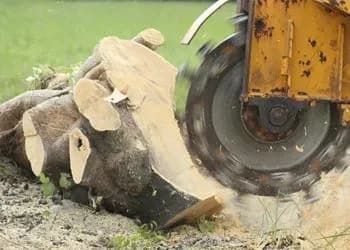
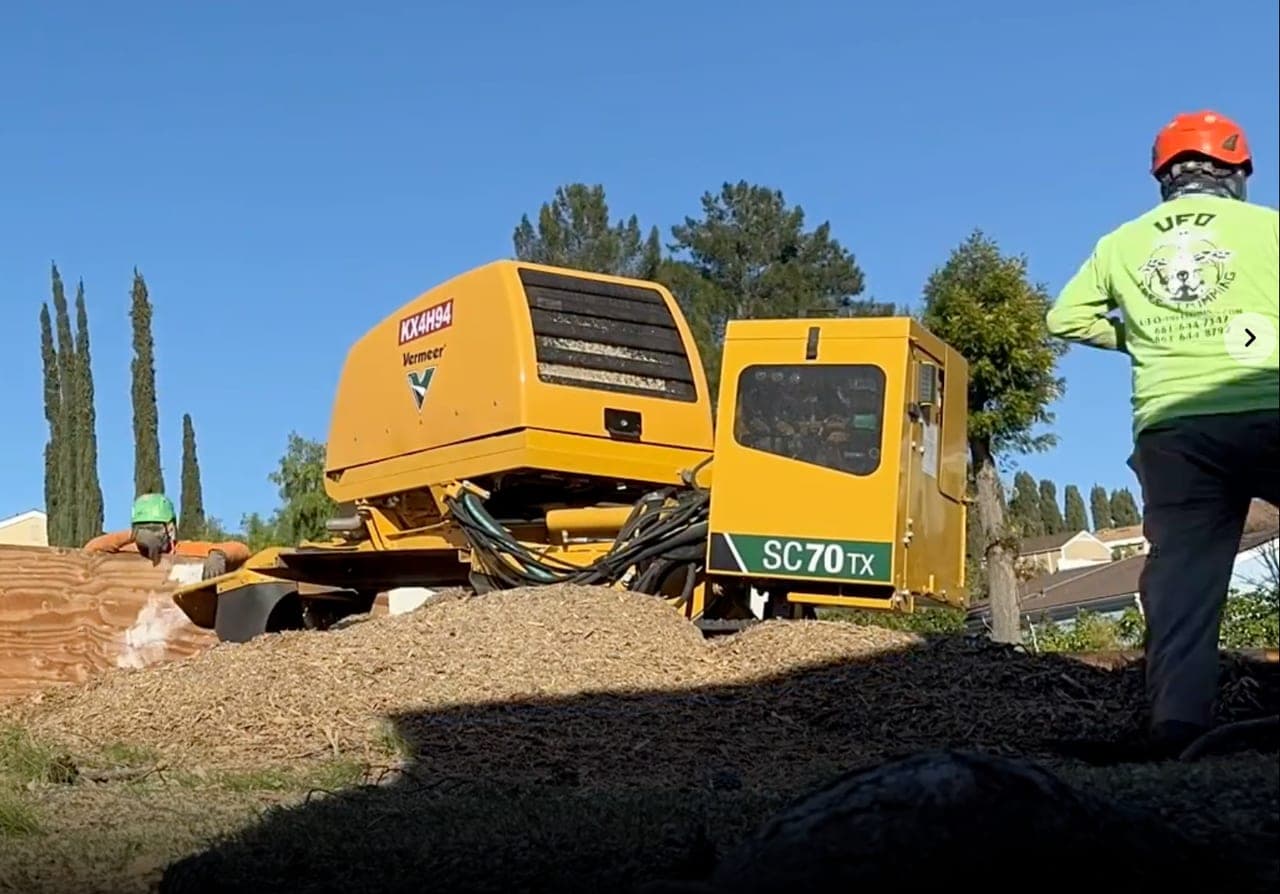
The grinding itself uses a machine with a rotating cutting wheel that reduces the stump to small wood chips. Rather than excavating the entire stump and root system, grinding removes the visible stump and the upper root area below ground level.
The result is a cleaner, safer space you can actually use.
Does Grinding Remove the Entire Root System?
No — and this is the biggest misconception we hear.
Stump grinding removes the stump and the main upper root area. The remaining underground roots break down naturally over time.
Removing every root would require excavation, which tears up the surrounding yard and costs significantly more.
For most homeowners, grinding is the practical answer because it removes the obstacle without turning the yard into a construction site. If you're weighing the two, our guide on stump grinding vs stump removal breaks down when each one is the right call.
Real Examples From the Antelope Valley
The Pine Stump That Was Much Bigger Underground
A Lancaster homeowner called about a pine stump that looked average from the surface.
When we inspected it, we noticed a wide root flare. Once grinding started, the underground portion turned out to be far larger than expected.
The homeowner came outside and said, "I had no idea the stump was that big."
This is exactly why we prefer evaluating stumps before quoting a final price.
Preparing a Backyard for Artificial Turf
A Palmdale homeowner wanted artificial turf but had an old stump left from a tree removed years earlier.
The landscaping project needed a smooth, stable base. We ground the stump below grade and prepared the area so the turf could go in without settling later.
The stump wasn't just something they wanted gone — it was the thing blocking the whole project.
Clearing the Way for a Fence
A Quartz Hill homeowner was replacing an old fence when the installers found a stump exactly where a post needed to go.
The tree had been removed years earlier, but the stump was still solid underground. We ground it deep enough to clear the post location so the fence work could continue.
Why Homeowners Remove Stumps
Most people don't wake up thinking "today I need stump grinding."
Usually something changes. Homeowners notice safety concerns, declining tree health, or other signs a tree has become a hazard before they get around to the stump.
Then they decide to install turf, improve landscaping, replace a fence, make the yard safer, improve curb appeal, prepare the property for sale, or simply stop mowing around an annoying obstacle.
A stump can sit for years without causing a real problem. Eventually it becomes the thing standing between the homeowner and what they actually want to do.
Is the Cheapest Quote the Best Deal?
Everyone wants a fair price. But the cheapest estimate isn't automatically the best value.
Worth asking any company:
- How deep will the stump be ground?
- Is cleanup included?
- Are you experienced with difficult access?
- Are you properly insured?
- Do you have the right equipment for this job?
A low price can mean shortcuts, incomplete work, or additional charges later. A job done properly the first time saves paying twice for the same problem.
How to Spend Less on Stump Grinding
Do It When the Tree Comes Out
If you're already having a tree removed, handling the stump in the same visit is usually the most efficient option — the crew and equipment are already on site.
If you're still planning the tree removal itself, our guide on what determines removal pricing explains why combining the two is often the most cost-effective route.
Grind Multiple Stumps at Once
Several stumps completed in one visit costs less than scheduling separate jobs.
Prepare the Area
You can help by moving furniture and yard decorations, clearing loose debris, unlocking gates, pointing out irrigation lines, and giving us clear access.
Why Homeowners Choose Us
We don't just look at a stump and ask how fast we can grind it. We consider what type of tree it was, how the roots developed, what you want to do next, and how to protect the surrounding property.
Our crew brings 20+ years of experience to that judgment, and we treat every property like it belongs to someone we know.
Show up when we say we will, explain the process clearly, do the work properly.
Get an Estimate
If you have an old stump taking up space, blocking a landscaping project, or becoming a safety concern, we can help — across Palmdale, Lancaster, Quartz Hill, Acton, Littlerock, Rosamond, and the entire Antelope Valley.
Call 661-644-7347 for an honest evaluation, or start your estimate online.