Sometimes, yes. A homeowner may be able to safely remove a small tree in an open area. But plenty of weekend projects turn into property damage, expensive repairs, or something genuinely dangerous. Working across Palmdale, Lancaster, Quartz Hill, Rosamond, Acton, and Littlerock, we've seen both sides: homeowners who handled a small tree just fine, and the calls that come in after a DIY attempt went wrong.
The core of it: tree removal is not about whether you can cut through wood. It's about whether you can safely control everything that happens after the cut.
The Biggest Mistake Homeowners Make
The line we hear most: "It's just a tree. I'll cut it down and make it fall where I want."
A standing tree is not lumber. It's a living structure with:
- Thousands of pounds of weight
- An unevenly distributed canopy
- Stored tension in the branches
- Hidden decay
- A root system affecting stability
- Wind forces constantly reshaping how it grows
The chainsaw is usually not the hard part. The hard part is predicting what the tree does once gravity takes over. It can twist, split, lean differently than expected, or shed limbs before the trunk ever reaches the ground.
A DIY Removal We Saw in Quartz Hill
One that stuck with us: a mature Aleppo pine in Quartz Hill.
The homeowner had lived on the property for years and watched large limbs die back through several dry summers and heavy wind events. To save money, they rented a chainsaw, gathered basic equipment, and planned the removal with help from a friend.
The problem was a noticeable lean toward the backyard fence. From the ground it didn't look serious — and the homeowner couldn't see that most of the tree's weight sat on one side.
When the cutting started, the trunk didn't fall the way they expected. It began twisting and splitting vertically — what's commonly called a barber chair. Nobody was injured, but the tree was left partially cut, with sections hanging under tension. The situation was now more dangerous than before anyone touched it.
When we arrived, the first priority was making the area safe. We removed the suspended sections with controlled rigging, lowered the pieces carefully, and finished the removal without further damage to the property.
A tree does not have to fall to be dangerous. Sometimes the most dangerous moment is when the cutting has already started and nobody controls what happens next.
Trees a Homeowner Can Safely Remove
There are removals a homeowner may be able to handle. We'd generally consider DIY only when the tree is:
- Small — usually under 10 to 12 feet tall
- Healthy
- Straight
- Less than about 4 to 6 inches in trunk diameter
- Away from homes, fences, vehicles, and utilities
- In an open area where the fall direction is predictable
Think small ornamental tree, young fruit tree, newly planted landscape tree.
The question isn't "Can I cut it down?" It's "If something unexpected happens, what can this tree hit?" If the answer includes your home, roof, fence, vehicle, pool, patio cover, solar panels, or a neighbor's property, the situation changes immediately.
When to Call a Professional Tree Service
We strongly recommend a professional evaluation before any cuts on:
- Trees taller than your home
- Trees with a noticeable lean
- Trees near structures
- Trees damaged by wind
- Trees with dead limbs overhead
- Trees near power lines
- Trees showing cracks or decay
- Trees that require climbing or ladder work
- Trees where you aren't sure where they'll fall
Many Antelope Valley trees have survived decades of extreme heat, drought, and strong winds — conditions that create hidden problems you can't spot from the ground. More on that in our guide to why trees are dying in the Antelope Valley.
Why Antelope Valley Trees Can Be More Complicated
Tree removal in Palmdale and Lancaster is a different job than in most places. Our environment stacks the deck:
- Long periods of drought
- Extreme summer temperatures
- Strong seasonal winds
- Hard, compacted soils
- Trees growing unevenly while chasing sunlight
A tree can look healthy and still have internal problems. We regularly inspect trees with hollow trunk sections, root problems, drought stress, dead structural limbs, and weak branch connections.
The trees homeowners underestimate most:
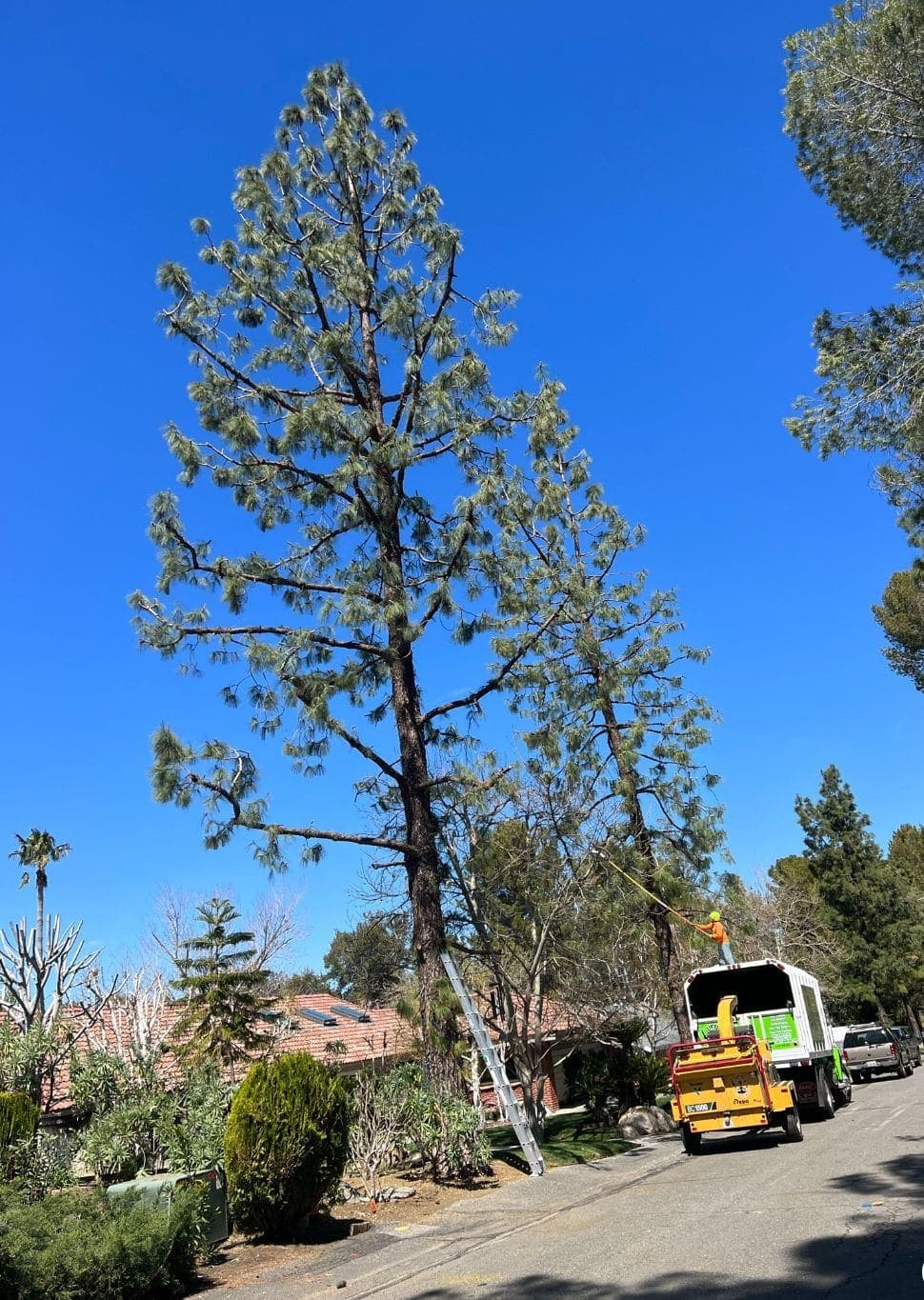
Aleppo Pine
Common throughout older Antelope Valley neighborhoods. Excellent shade — but a mature Aleppo gets very large and carries serious weight high above the ground. Typical issues:
- Heavy limbs
- Wind damage
- Large surface roots
- Drought stress
- Growth tight against homes and fences
Eucalyptus
Fast growers, good shade, and often underestimated. They demand respect during removal:
- Extremely heavy limbs
- Large canopies
- Unpredictable limb movement
- A lot of cleanup material
Cottonwood and Willow Trees
These surprise people because they hold a tremendous amount of moisture. Sections of wood can weigh far more than they look from the ground.
Questions to Ask Before Removing a Tree
Before anyone picks up a chainsaw:
- How tall is it? Could it reach your home, fence, vehicle, or another structure?
- Which way does it want to go? Look at the lean and where the canopy weight is concentrated.
- Is it healthy? Check for dead branches, cracks, fungus near the base, hollow areas, root problems, or recent changes in appearance.
- What happens if something goes wrong? If the tree twists, splits, or falls off-line, do you have a safe answer? If not, it's time for another opinion.
Why Professional Removal Costs More Than Just Cutting
Plenty of homeowners compare a professional quote to the price of renting equipment — see our guide to tree removal costs in the Antelope Valley for what actually drives the price.
Wanting to save money is fair, and there are safe ways to do it. After the dangerous work is done, homeowners may choose to handle:
- Moving smaller branches
- Stacking firewood
- Preparing landscaping areas
- Some of the cleanup
But the most dangerous part of the job is the part that should not be improvised. Professional removal includes far more than a chainsaw:
- Experience reading tree structure
- Proper safety equipment
- Rigging systems
- Commercial insurance
- Specialized equipment
- Planning around homes and property
- Knowing when conditions are unsafe
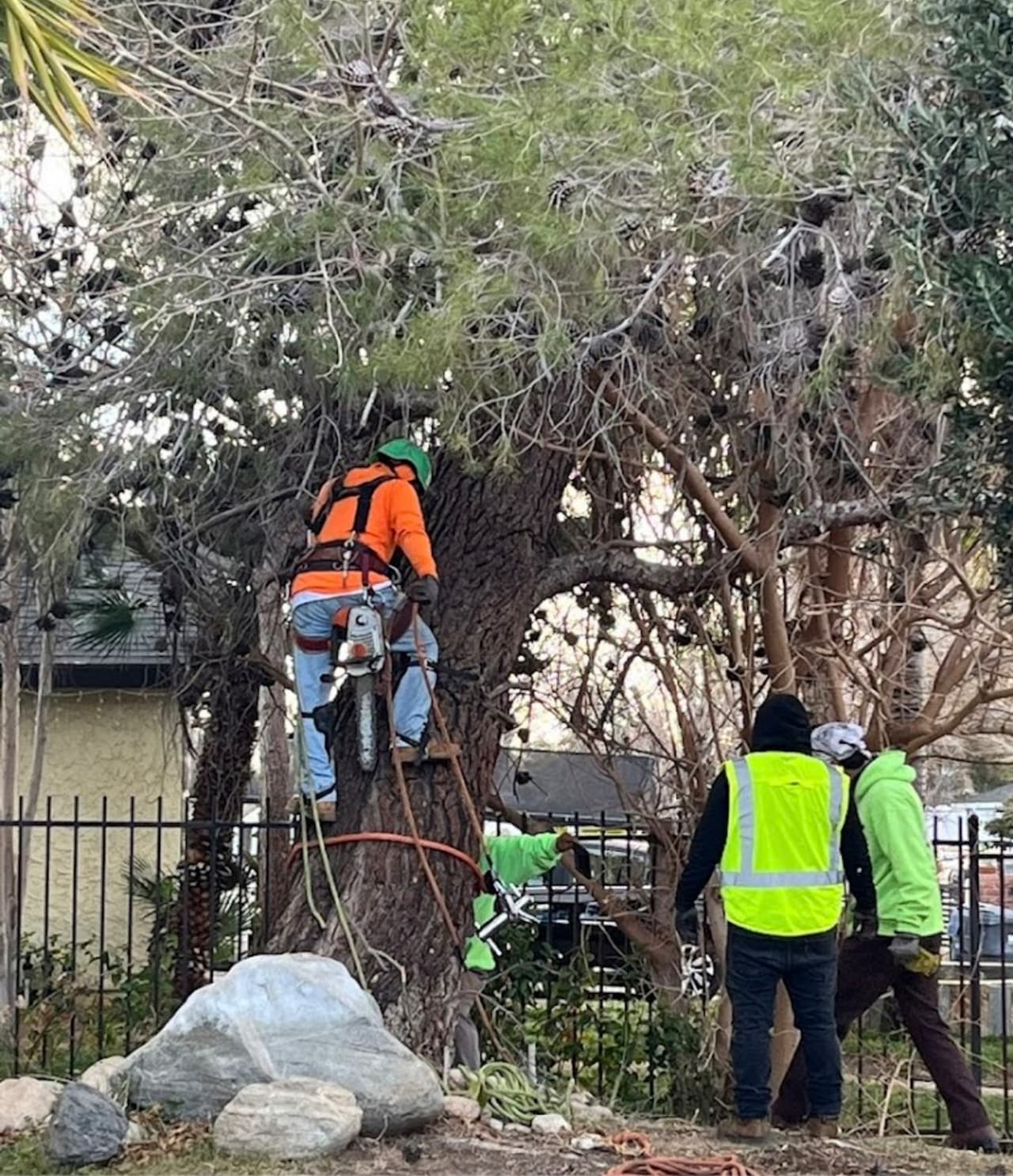
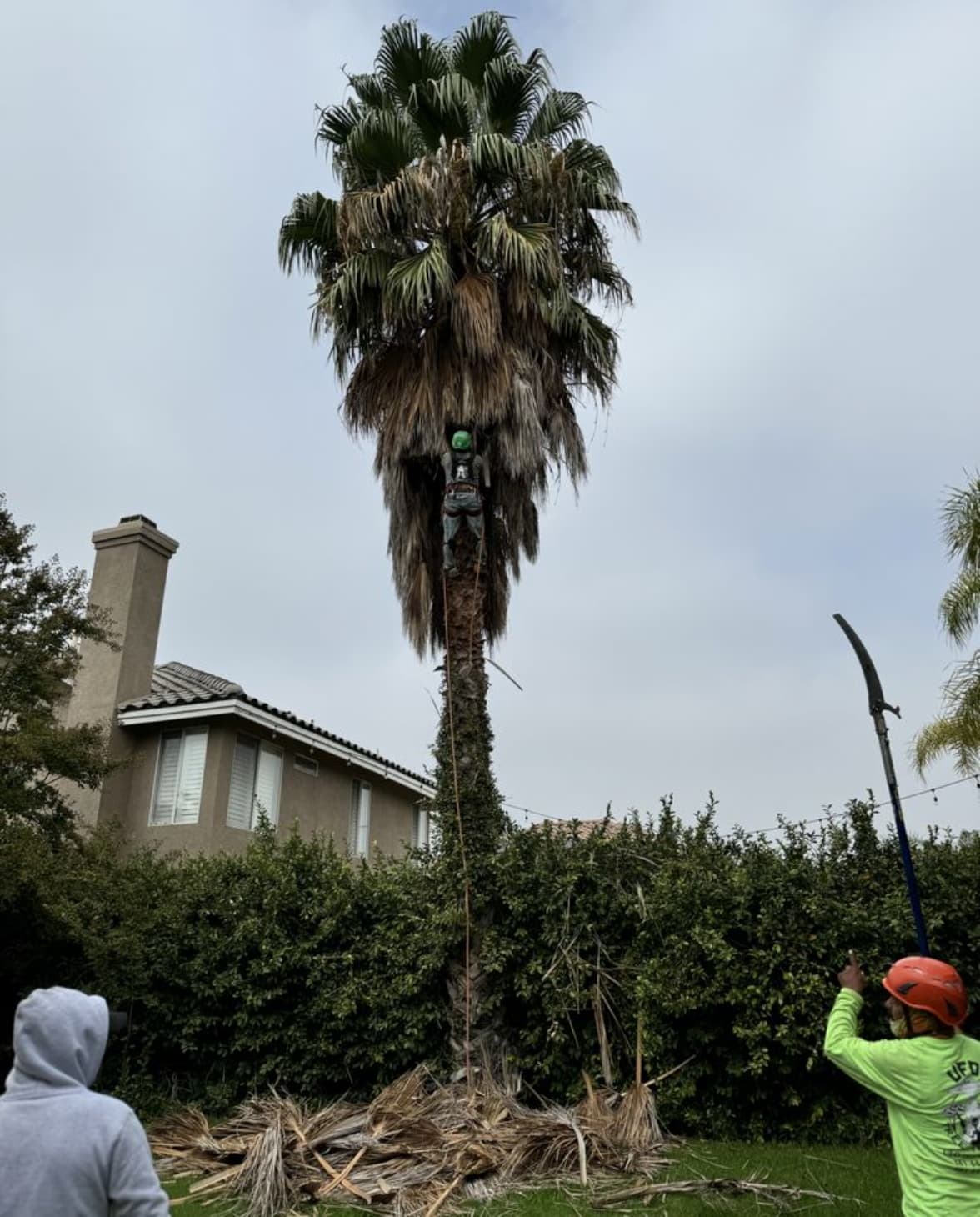
How Professional Crews Remove Trees Safely
Homeowners see the finished result — a clean yard and a missing tree. What they don't see is the planning:
- Inspecting the tree before cutting
- Establishing safe work zones
- Ropes and rigging systems
- Lowering limbs instead of dropping them
- Protecting fences, roofs, landscaping, and structures
- Constant communication between crew members
In tight residential areas, we often don't drop trees at all — we dismantle them piece by piece. That control is what prevents damage. More in our article on tree trimming safety in the Antelope Valley.
The Final Question Every Homeowner Should Ask
Before removing a tree yourself: "If this tree does something unexpected in the next five seconds, do I have a plan?"
If the answer is no, that's usually the point where calling a professional makes sense.
Across Palmdale, Lancaster, Quartz Hill, Rosamond, Acton, Littlerock, and the rest of the Antelope Valley, our advice hasn't changed: trees don't have to be feared, but they do have to be respected.
A small tree in an open area may be a manageable project for some homeowners. A large tree near a structure, a damaged tree, a leaning tree, or a questionable tree is a different job entirely. The best removal is the one that looks simple afterward — because the planning happened before the first cut.