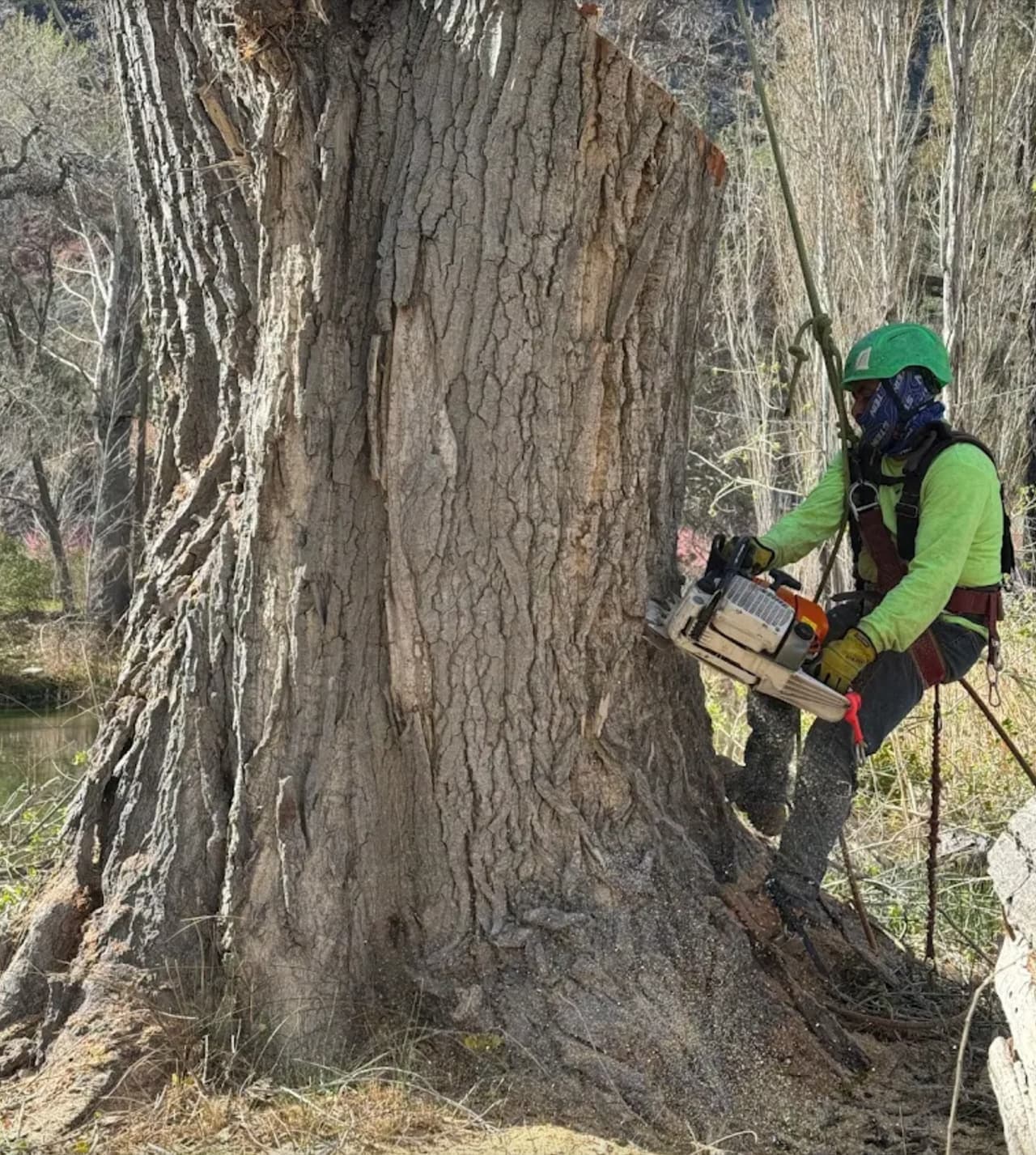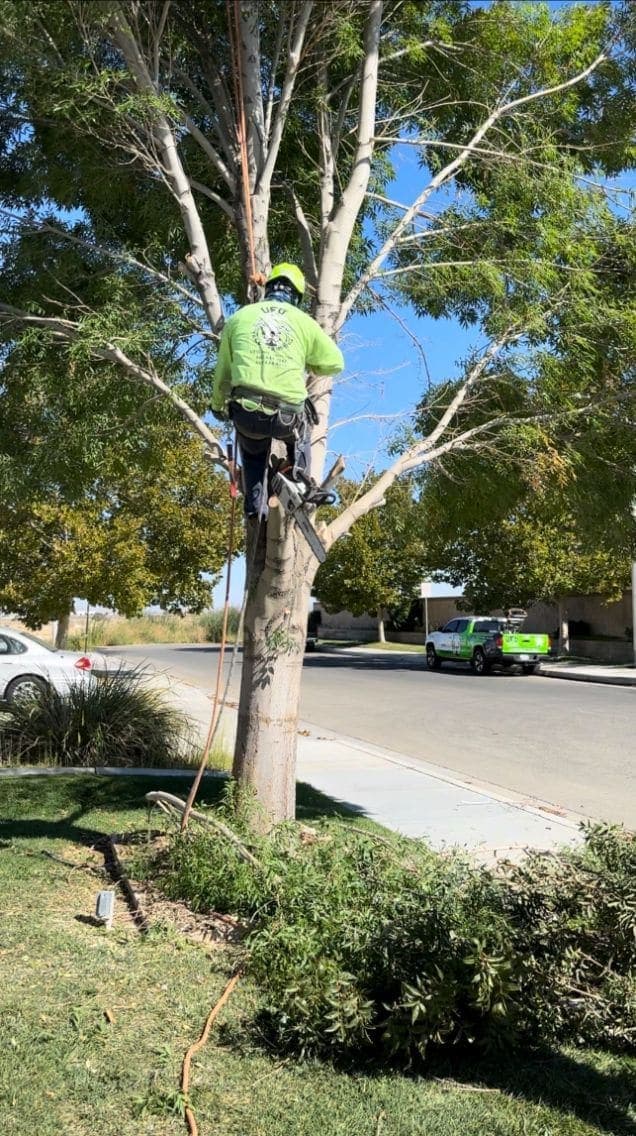
Sometimes a tree has to come down — for safety, for health, or because the landscape around it changed. Tree removal is often what protects the property and the people on it. At UFO Tree Trimming, we provide expert tree removal across the greater Palmdale, CA area, and these are the four most common reasons a tree might need to go.
1. Disease and Decay
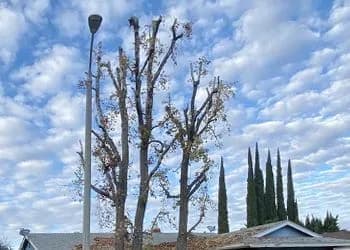
One of the most common reasons for tree removal is disease or decay. Fungal infections, bacterial diseases, and invasive pests can all compromise a tree's structural integrity.
Watch for:
- Discolored leaves
- Peeling bark
- Dead branches
- Fungal growth at the base
An extensively infected tree becomes weak and prone to snapping. Early treatment can sometimes save it; advanced decay means removal, before the illness spreads to the healthy trees around it.
2. Wind and Storm Damage
Severe weather can wreck a tree fast. In the High Desert, intense seasonal winds are especially tough on top-heavy or weakened trees — powerful gusts can break major branches, split trunks, or uproot a tree completely.
A structurally compromised tree poses an immediate risk to nearby homes, power lines, and vehicles.
Some damaged trees can be salvaged with structural pruning. Others are beyond repair and have to come out to eliminate the hazard.
3. Invasive Root Systems
Roots don't ask where the sewer line is. A tree's root system keeps it standing, but over time invasive roots can push into underground utilities, crack sidewalks, disrupt sewer lines, and damage home foundations. When a root system threatens expensive infrastructure, removing the tree is often the only practical way to stop the cycle of costly, recurring repairs.
4. Severe Leaning or Unstable Growth
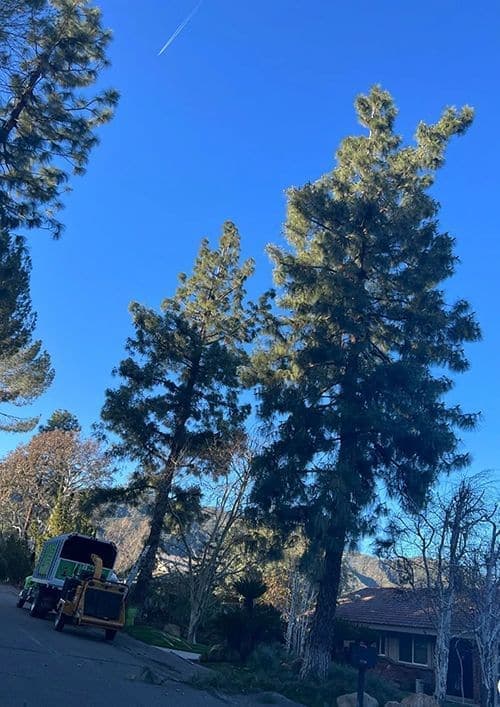
A tree with a significant lean or an unstable growth pattern is an accident on a timer. Unsafe leans often develop from hidden root rot, shifting soil, or past storm damage. When a tree leans toward a house, driveway, or roadway, the risk is too high to ignore. A professional arborist can assess the lean and determine whether removal is what it takes to keep the property safe.
FAQ
Do I need a permit to remove a tree in Palmdale?
Tree removal regulations can vary depending on the species (native Joshua trees and desert oaks, for example) and whether the property is residential or commercial. Have a certified arborist check the local city codes before anyone cuts.
Can a damaged tree be saved without removing it?
Not every damaged tree needs to come down. If the structural trunk is intact and less than 25% of the canopy is damaged, professional pruning, cabling, or bracing can often stabilize the tree and save it.