UFO Tree Trimming Blog
How Often Should Palm Trees Be Trimmed? A Local Palm Care Guide From UFO Tree Trimming
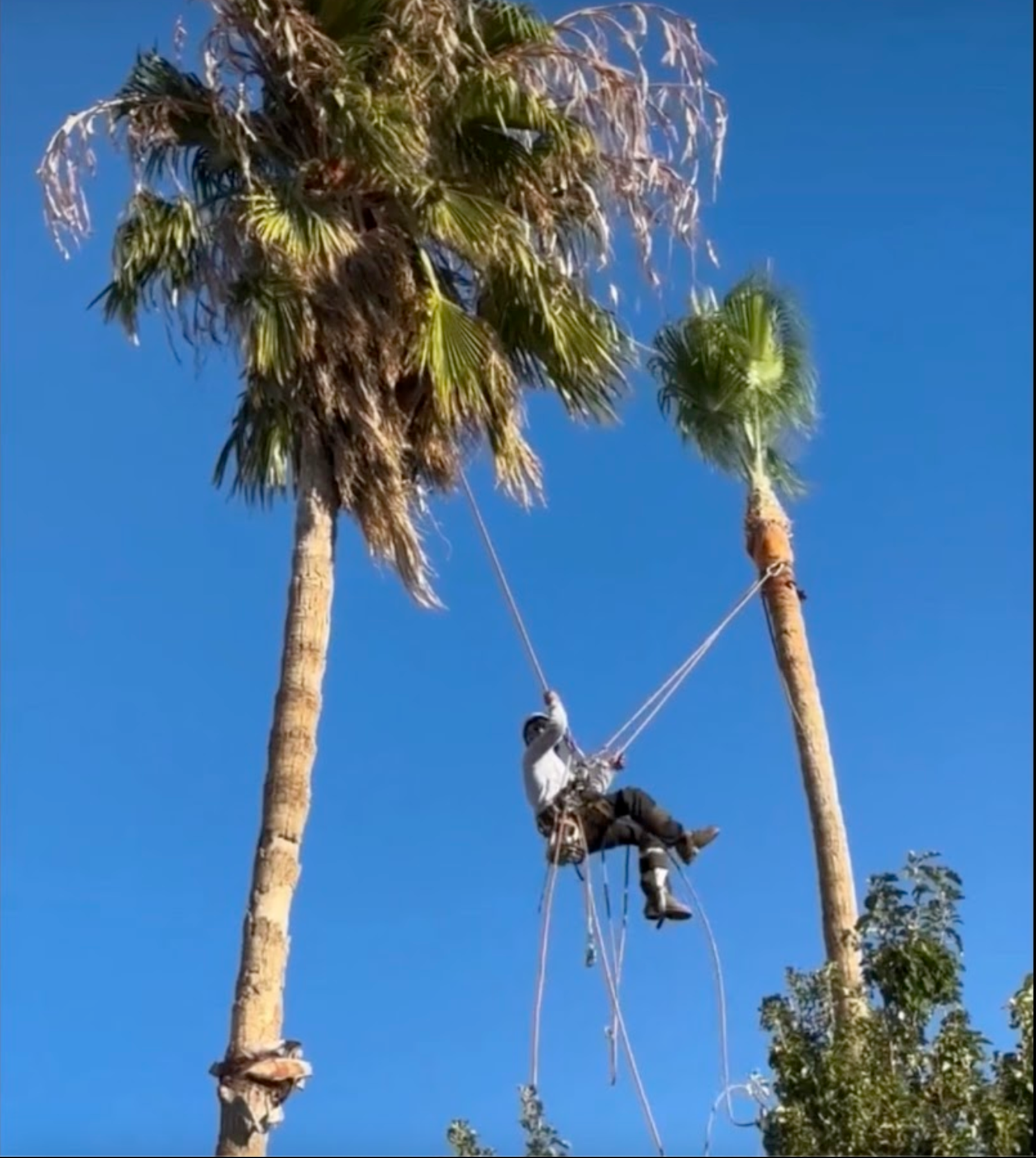
Homeowners throughout Palmdale, Lancaster, Quartz Hill, Acton, Littlerock, Rosamond, and the Antelope Valley often ask the same question:
How often should palm trees be trimmed?
After more than 20 years serving homeowners and businesses throughout the Antelope Valley, we have learned that the answer is not simply "every six months" or "once a year because that's what everyone does."
The right trimming schedule depends on the type of palm, the tree's condition, where it is growing, and whether there are safety concerns.
Our approach at UFO Tree Trimming has always been simple:
Trim palms because they need it—not just because someone wants to sell another service.
A healthy palm tree is not the palm tree that has been cut the most. It is the palm tree that has been maintained correctly.
Most Palm Trees Should Be Trimmed About Once a Year
For most residential palm trees in the Antelope Valley, annual trimming is usually a good starting point.
Many palms do well with maintenance every 12 months, while faster-growing palms or trees in high-traffic areas may need attention every 6–9 months.
The goal of professional palm trimming is not to remove every frond and make the tree look bare. The goal is to remove:
- Dead or damaged fronds
- Loose hanging growth
- Hazardous material that could fall
- Seed pods or flower stalks when appropriate
- Old growth that affects safety or appearance
Healthy green fronds should usually remain because they help the palm produce energy and continue growing.
One of the biggest mistakes we see is homeowners assuming a cleaner-looking palm is automatically a healthier palm.
That is not always true.
A palm with a full, balanced canopy is often much healthier than one that has been aggressively stripped.
Why Palm Trimming Frequency Depends on the Tree
Every palm has different growth patterns. The right maintenance schedule depends on several factors:
- Palm species
- Age of the tree
- Growth rate
- Exposure to wind
- Location on the property
- Nearby structures
- Overall tree health
A palm growing next to a driveway, home, pool, or walkway may need more frequent attention than one growing in an open area.
A palm exposed to Antelope Valley winds may also need earlier maintenance because loose dead fronds can become a safety concern.
Common Palm Trees We Trim in the Antelope Valley
Mexican Fan Palms
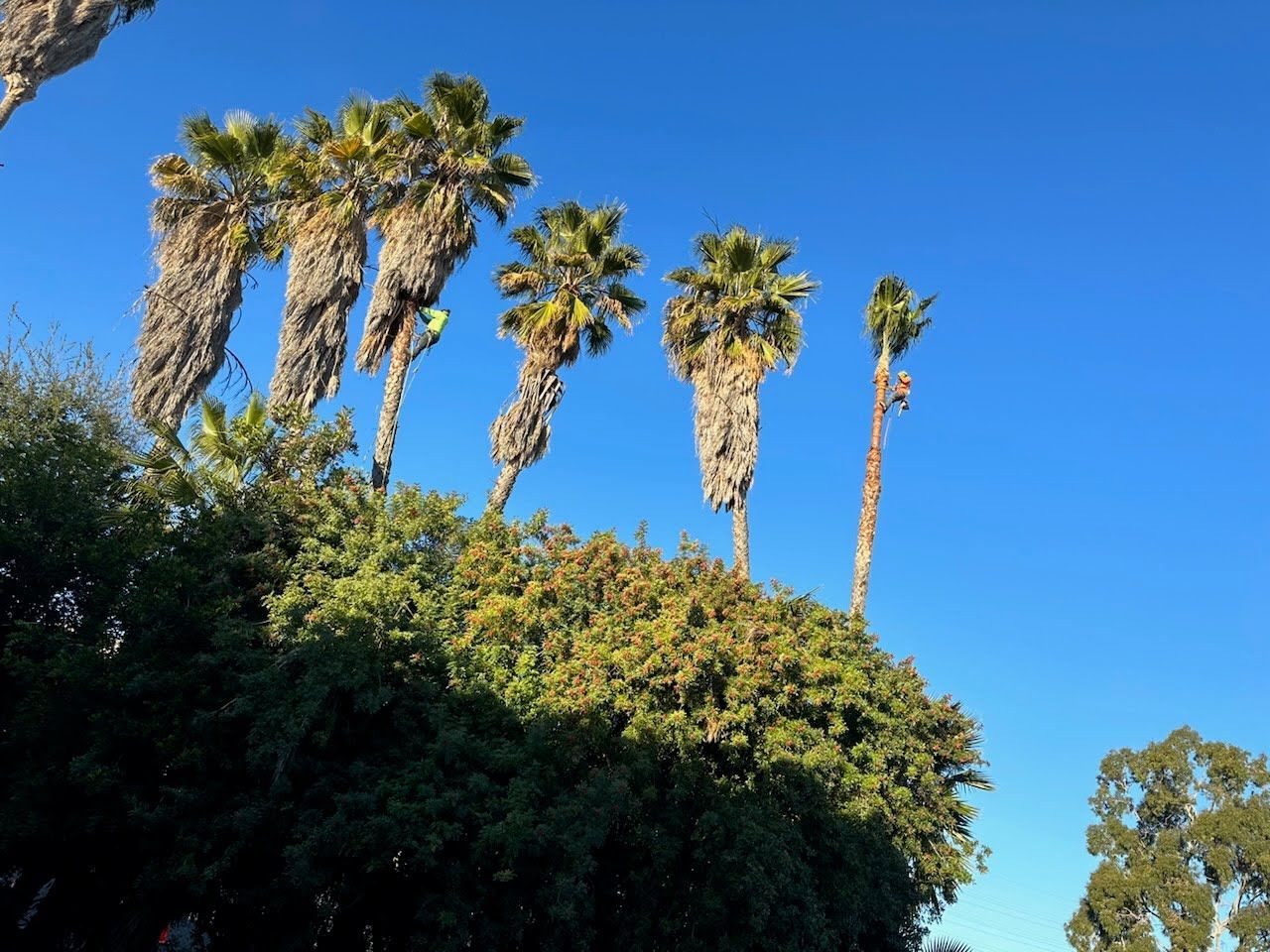
Mexican Fan Palms are among the most common palms we see throughout Palmdale, Lancaster, and surrounding areas.
These tall palms are known for their height and dramatic appearance, but their size creates unique maintenance challenges.
Most Mexican Fan Palms need trimming about once a year.
Common issues include:
- Large dead fronds hanging beneath the canopy
- Heavy buildup of old growth
- Loose fronds during windy conditions
- Seed production and cleanup
Because these palms can become extremely tall, waiting too long can make the job more difficult and increase safety risks.
Queen Palms
Queen Palms are popular because of their tropical appearance, but they often require more cleanup than homeowners expect.
Many Queen Palms benefit from trimming once or twice per year depending on the property.
Common issues include:
- Dropping seed pods
- Mess around patios and walkways
- Brown lower fronds
- Heavy old growth
For Queen Palms near outdoor living areas, regular maintenance can help prevent constant cleanup.
Canary Island Date Palms
Canary Island Date Palms are some of the most impressive palms we work on.
They have thick trunks, large crowns, and heavy fronds that require experience to handle safely.
These palms often need annual maintenance, although the exact timing depends on the tree.
Common challenges include:
- Heavy fronds
- Sharp spines
- Large amounts of old growth
- Difficult access
These are not palms where homeowners should simply climb up with basic tools and start cutting.
Date Palms
Date Palms require knowledge and proper technique because they have sharp spines and different maintenance needs depending on whether the homeowner values appearance, fruit production, or general care.
They often benefit from yearly maintenance.
The goal is to improve safety and appearance without damaging the tree.
Smaller Ornamental Palms
Smaller palms around homes and patios still need proper care.
A smaller palm does not automatically mean an easy palm.
Common problems include:
- Brown lower fronds
- Crowded growth
- Dead material near walkways
- Over-pruning
The goal should always be natural, healthy growth—not removing everything possible.
Signs It May Be Time to Trim Your Palm
Many homeowners ask how they can tell when their palm needs attention.
Some signs include:
- Dead brown fronds hanging low
- Loose fronds that move during wind
- Seed pods creating excessive mess
- Growth hanging over walkways or structures
- Years of accumulated dead material
- Fronds creating a safety concern
However, appearance alone does not tell the whole story.
A palm can look messy but still be healthy. A palm can also look acceptable from the ground while having hidden problems.
If you are unsure whether your palm needs trimming, it is worth having it inspected by someone experienced. You can also learn more about signs your palm may have health problems before deciding what type of service it needs.
Why Over-Trimming Can Damage Palm Trees
One of the biggest mistakes we see is what many people call "hurricane cutting."
This happens when someone removes nearly all of the green fronds and leaves only a small crown at the top.
While the palm may look cleaner temporarily, this can stress the tree.
Green fronds are important because they help the palm create the energy it needs to grow.
Removing too much healthy growth can:
- Slow recovery
- Stress the palm
- Reduce its ability to handle heat
- Create long-term health problems
Professional palm trimming is about knowing what to remove and what to leave.
How We Inspect a Palm Before Recommending Trimming
At UFO Tree Trimming, we never arrive at a property and immediately start cutting.
We first inspect the tree.
We look at:
- Overall canopy health
- Dead or damaged fronds
- Tree structure
- Surrounding property
- Nearby hazards
- Signs of pests or disease
- Whether trimming is actually needed
Sometimes the answer is yes.
Sometimes the answer is no.
There have been many times where homeowners called expecting a full trimming service, but after inspection we recommended waiting because the palm was still healthy.
That honesty is how we build long-term relationships.
Real Examples From 20+ Years of Palm Trimming
A Dead Frond That Nearly Hit a Vehicle
One Lancaster homeowner contacted us after weeks of strong winds.
Their Mexican Fan Palm did not look too bad from the ground, but when we inspected it, we found many loose dead fronds hanging beneath the canopy.
During setup, a dried frond broke loose during a gust of wind and landed only a few feet from a parked vehicle.
Fortunately, no damage occurred.
But it showed exactly why waiting too long can create unnecessary risk.
A Palm Damaged by Over-Trimming
We also worked with a Palmdale homeowner whose palm had been aggressively trimmed by another company.
Nearly every healthy green frond had been removed.
The homeowner wondered why the palm was struggling.
We explained that the tree needed time to rebuild its canopy naturally. There was no quick fix, but with proper care and patience, the palm began recovering.
When We Recommended Waiting
One of our favorite situations is when the best advice is actually doing less.
A homeowner in Quartz Hill called because they thought their palm needed trimming.
After inspection, we found that the palm was healthy and most of the fronds were still green.
Instead of recommending unnecessary work, we told them the tree could wait.
Several months later, they called us back when maintenance was actually needed.
That is the type of trust we work hard to earn.
Why Palm Trimming Safety Matters
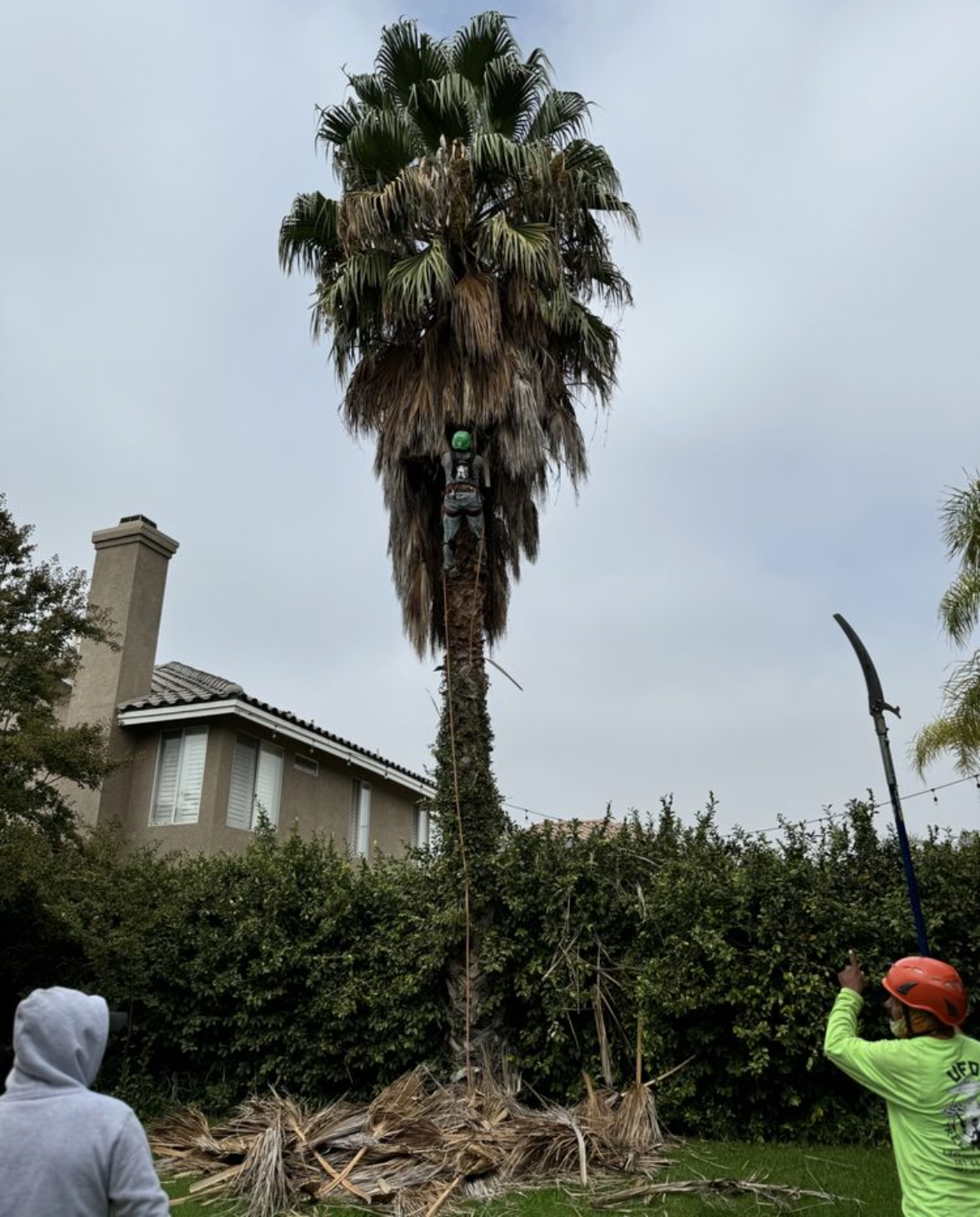
Palm trimming can look simple from the ground, but mature palms involve serious risks.
Dead fronds can weigh much more than homeowners expect.
Additional challenges include:
- Working at significant heights
- Controlling falling material
- Antelope Valley winds
- Power lines
- Heavy equipment
- Protecting nearby property
A palm frond falling from several stories high can damage roofs, vehicles, fences, landscaping, or injure someone below.
For more information about why professional tree work is safer than DIY trimming, read our guide on tree trimming safety in the Antelope Valley.
The Best Time of Year to Trim Palm Trees in the Antelope Valley
While palms can be trimmed throughout the year when needed, late winter through spring is often an ideal time for routine maintenance.
Generally, February through May provides a good balance because:
- Temperatures are more comfortable
- Trees have time to recover before extreme summer heat
- Homeowners can prepare before stronger winds
- Outdoor spaces are cleaned up before peak use
That said, the calendar is only part of the decision.
A palm growing in a windy location may need attention sooner than a sheltered backyard palm.
How to Choose the Right Palm Trimming Company
The cheapest price is not always the best value.
Before hiring someone, homeowners should ask:
- How long have you worked on palms in this area?
- Will you inspect the tree first?
- What exactly will you remove?
- How will you protect my property?
- Will you clean up all debris?
Experience matters because the biggest skill in palm trimming is not cutting.
It is judgment.
Knowing what to remove, what to leave, and when to recommend waiting is what separates experienced professionals from someone simply offering a low price.
If a palm has issues beyond routine maintenance, such as structural concerns or serious decline, it may require a different evaluation. Learn more about when a tree problem goes beyond routine trimming.
Our Philosophy at UFO Tree Trimming
After more than 20 years serving the Antelope Valley, we have learned that good tree care is built on trust.
We do not believe every palm needs to be trimmed just because someone called.
Our job is to look at the tree, explain what we see, and recommend what is actually best.
Sometimes that means trimming.
Sometimes it means removing only a few hazardous fronds.
Sometimes it means telling a homeowner:
"Your palm is healthy. Let it grow a little longer."
We are proud of the relationships we have built throughout Palmdale, Lancaster, Quartz Hill, Acton, Littlerock, Rosamond, and the surrounding Antelope Valley.
The best compliment we can receive is not only that the palm looks great.
It is hearing:
"They were honest."
"They explained everything."
"They took care of my property."
"They did not try to sell me something I did not need."
Final Advice for Antelope Valley Homeowners
If there is one thing we want homeowners to remember, it is this:
A healthy palm tree is not the palm tree that has been cut the most. It is the palm tree that has been maintained correctly.
Do not wait until a dead frond becomes a problem.
Do not assume aggressive trimming is better.
Do not hire someone who only focuses on how much they can remove.
Find someone who understands the tree.
At UFO Tree Trimming, we believe the best palm trimming is about making the right cuts at the right time for the right reasons.
For professional palm trimming throughout Palmdale, Lancaster, Quartz Hill, Acton, Littlerock, Rosamond, and the Antelope Valley, contact UFO Tree Trimming at 661-644-7347.