UFO Tree Trimming Blog
How Much Does Tree Removal Cost? A Local Tree Expert Explains What Really Determines the Price
When homeowners ask, “How much does tree removal cost?” they usually want a simple number. They want to know if they should expect to pay a few hundred dollars, a few thousand dollars, or more.
The truth is that tree removal pricing is not as simple as measuring the height of a tree and assigning a price. The cost depends on the size of the tree, but also on the location, difficulty, risk, equipment required, access, tree condition, and the amount of cleanup involved.
After more than 20 years removing trees throughout Palmdale, Lancaster, Quartz Hill, and the entire Antelope Valley, I can tell you that no two tree removals are exactly alike.
A small tree in the wrong location can be more difficult than a much larger tree with plenty of room to work.
At UFO Tree Trimming, we believe homeowners deserve to understand what they are paying for. Tree removal is not just about cutting down a tree. It is about safely removing a living structure that may weigh thousands of pounds while protecting everything around it.
Average Tree Removal Cost in the Antelope Valley
In Palmdale, Lancaster, and surrounding Antelope Valley communities, tree removal costs can vary widely depending on the job.
Typical price ranges include:
- Small tree removal (under approximately 20 feet): $300–$900
- Medium tree removal (approximately 20–40 feet): $700–$1,800
- Large tree removal (approximately 40–70 feet): $1,500–$4,000
- Very large or complex removals: $4,000–$10,000+
- Stump grinding: $150–$600+ depending on size and access
These are general ranges, not fixed prices. A 25-foot tree growing between a house and a block wall may require more labor and planning than a 70-foot tree standing alone in an open yard.
The tree itself does not determine the price. The situation around the tree determines the price.
Why Do Tree Removal Prices Vary So Much?
One of the most common questions we hear is:
“Why does one company quote $600 and another quote $3,000 for what looks like the same tree?”
The answer is that professional tree removal is based on much more than tree size.
Tree Location and Access
The location of a tree is one of the biggest factors affecting the cost.
A tree in an open front yard with easy access may be removed quickly because equipment can be positioned close by and branches can be lowered or processed efficiently.
A tree located between a home, fence, patio cover, pool, or power lines requires a completely different approach.
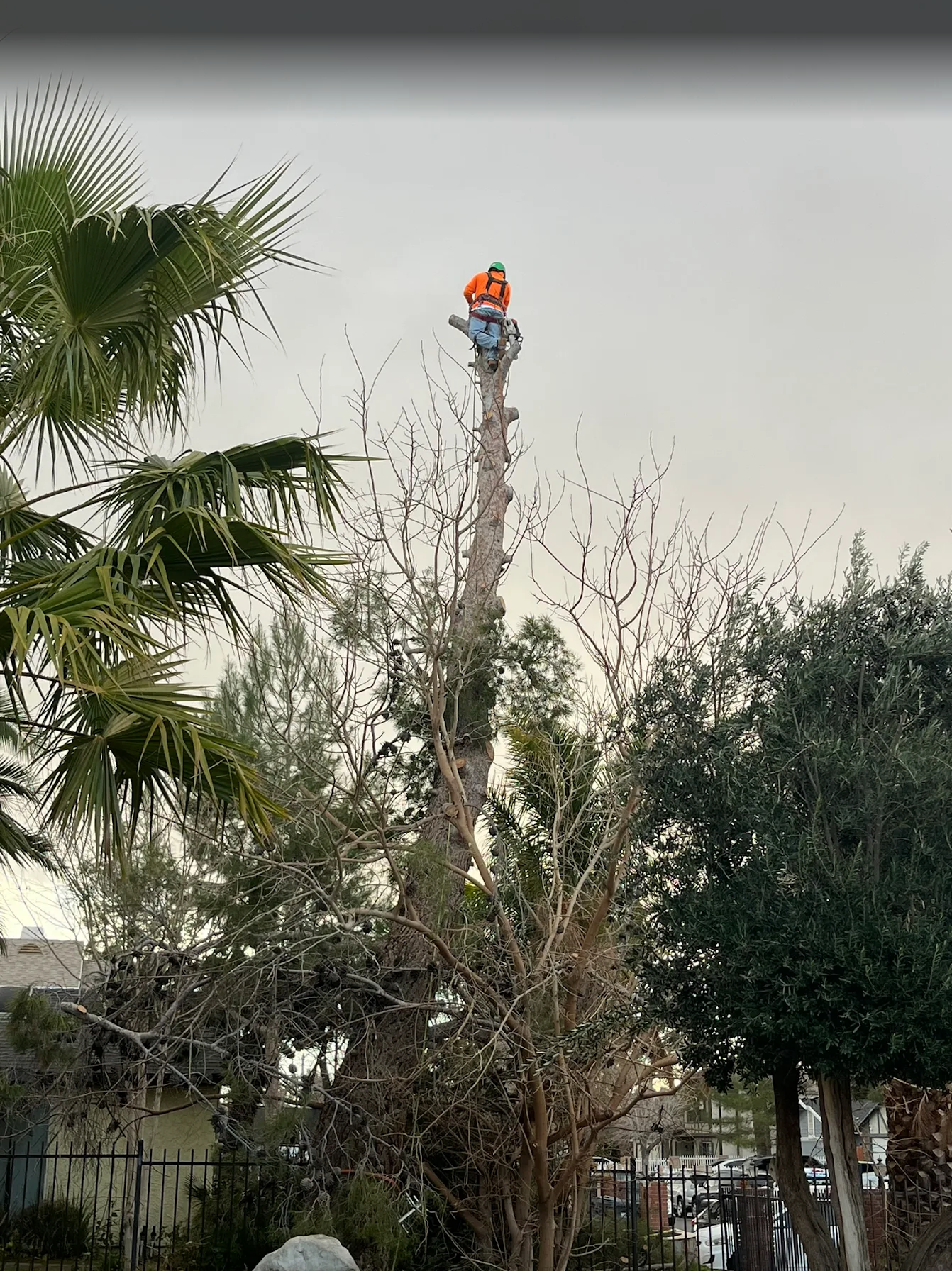
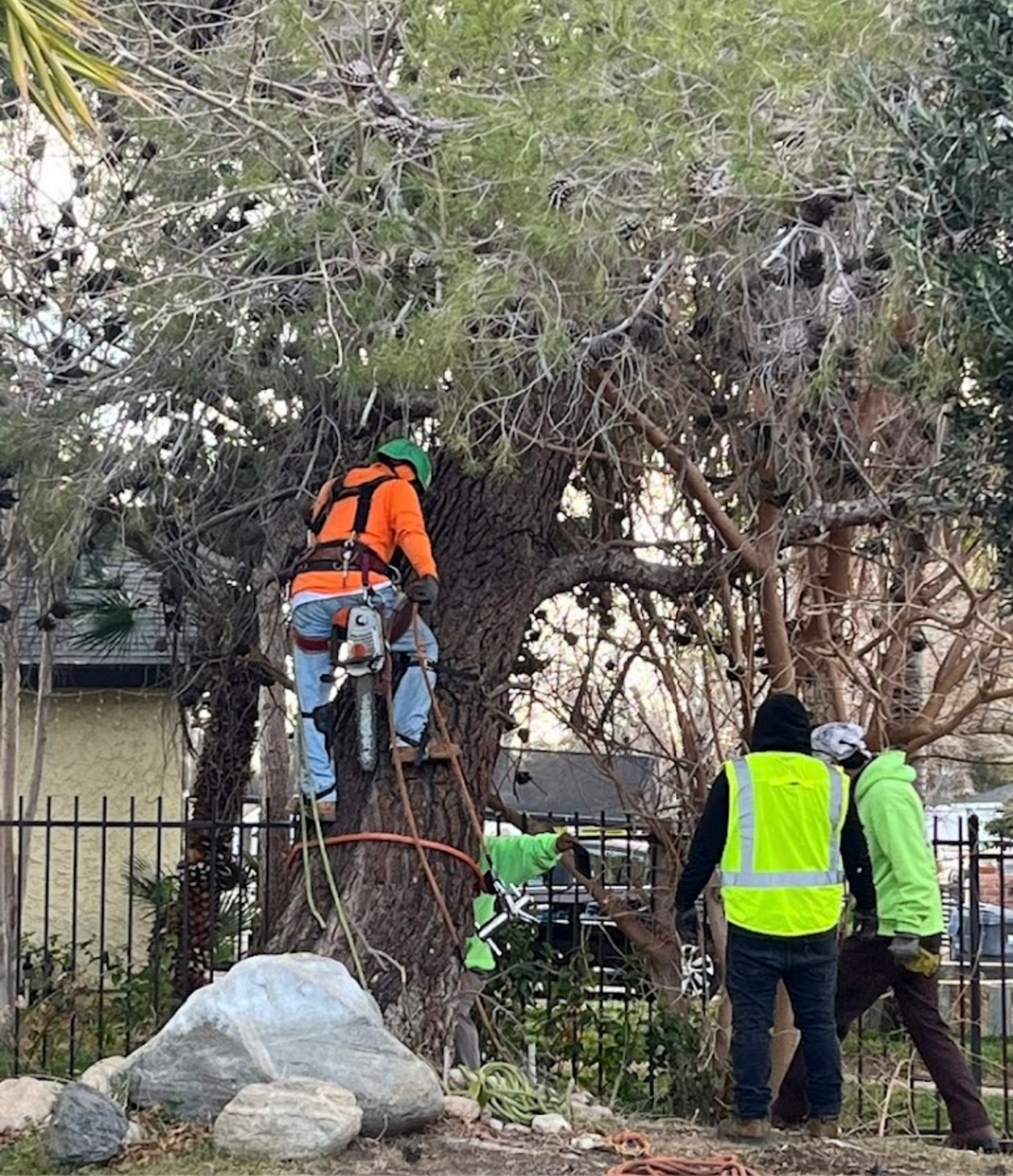
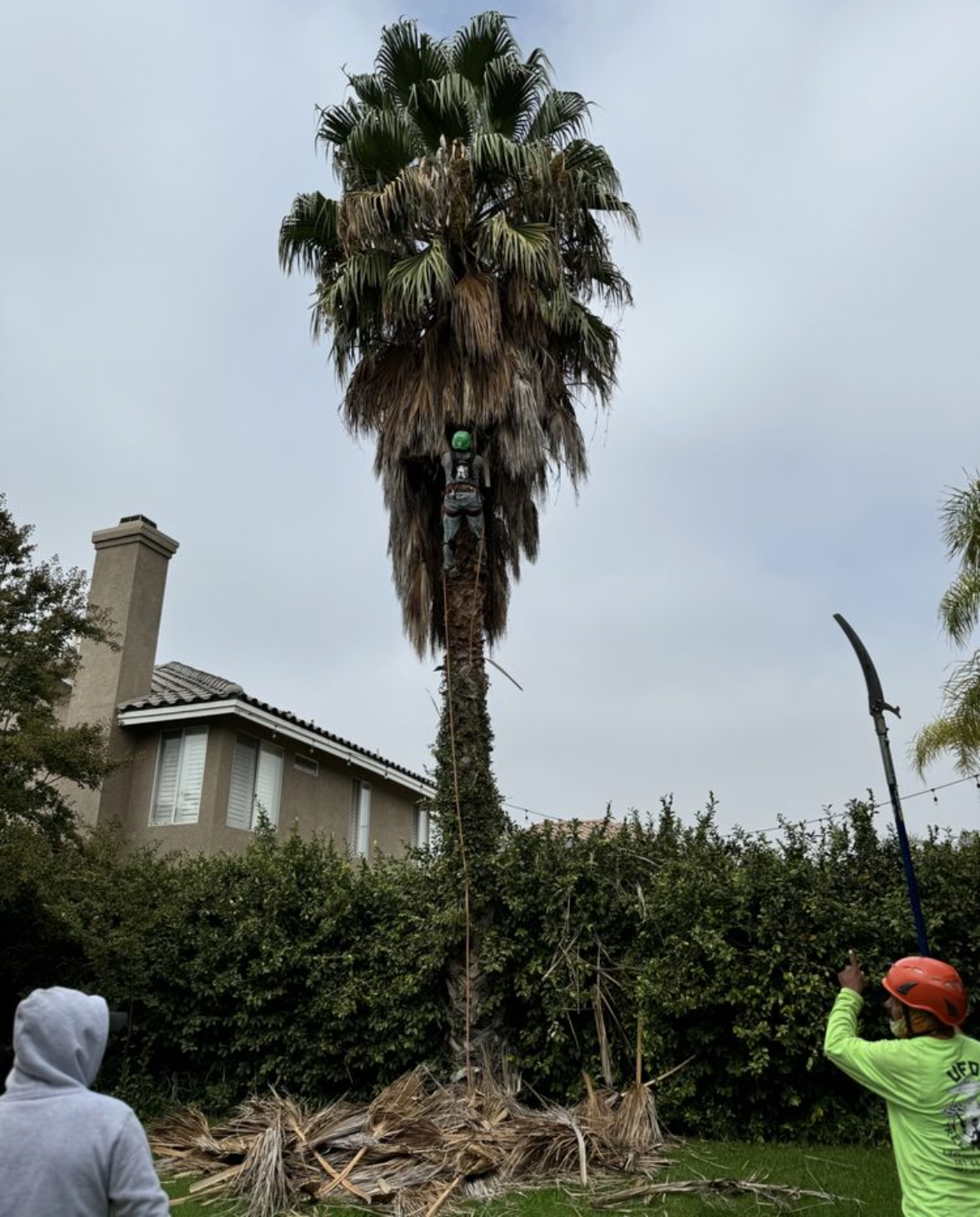
Instead of simply cutting branches and letting them fall, each section may need to be carefully lowered using ropes and rigging equipment. That takes more time, more labor, and more experience.
Access also matters.
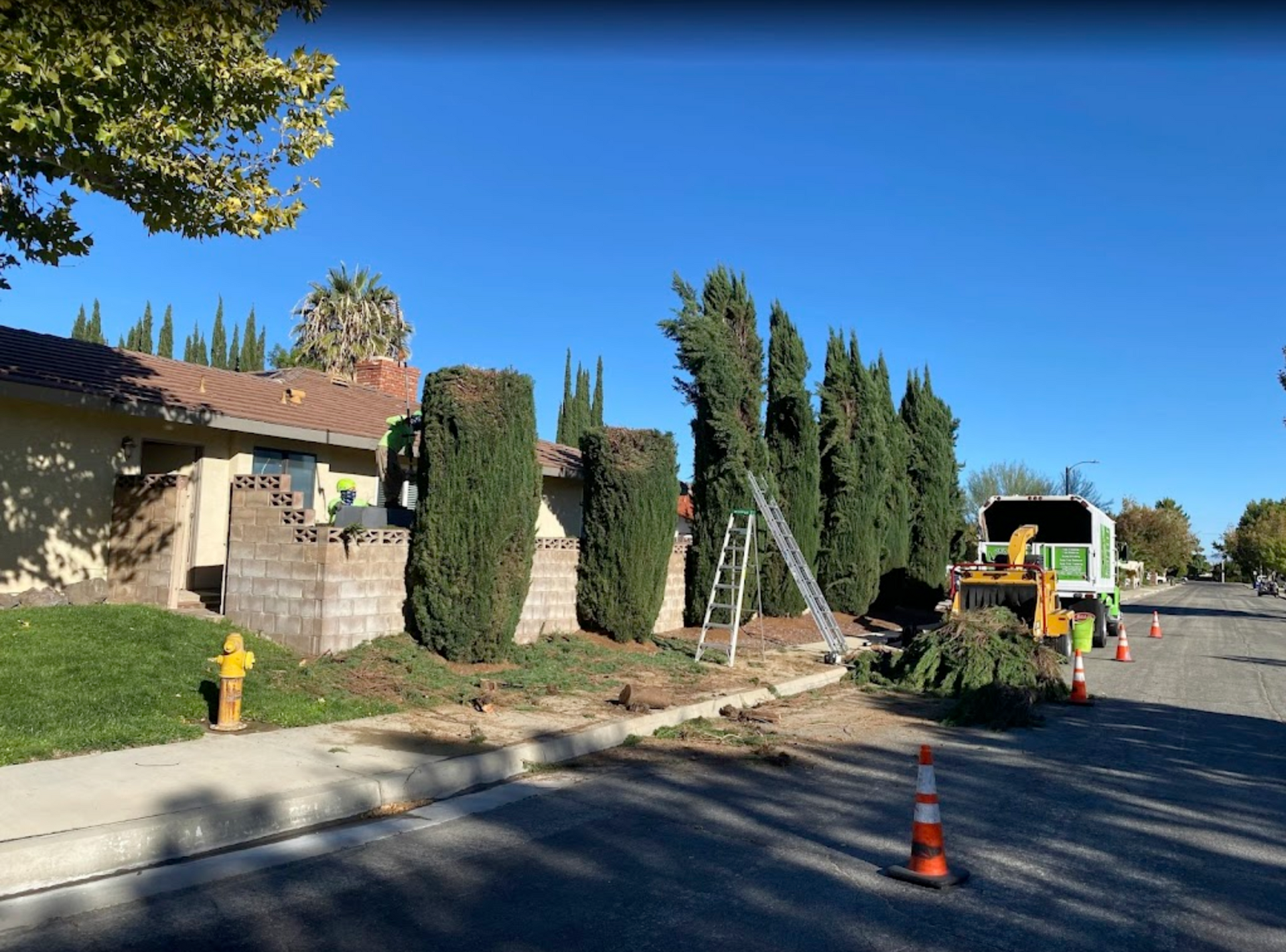
If a truck and chipper can be parked close to the tree, the job moves faster. If branches and logs must be carried through a narrow gate or around landscaping, the labor increases.
Tree Size and Species
Size matters, but height alone does not tell the whole story.
A 25-foot Chinese elm is not the same as a 25-foot eucalyptus. Different species have different characteristics that affect removal.
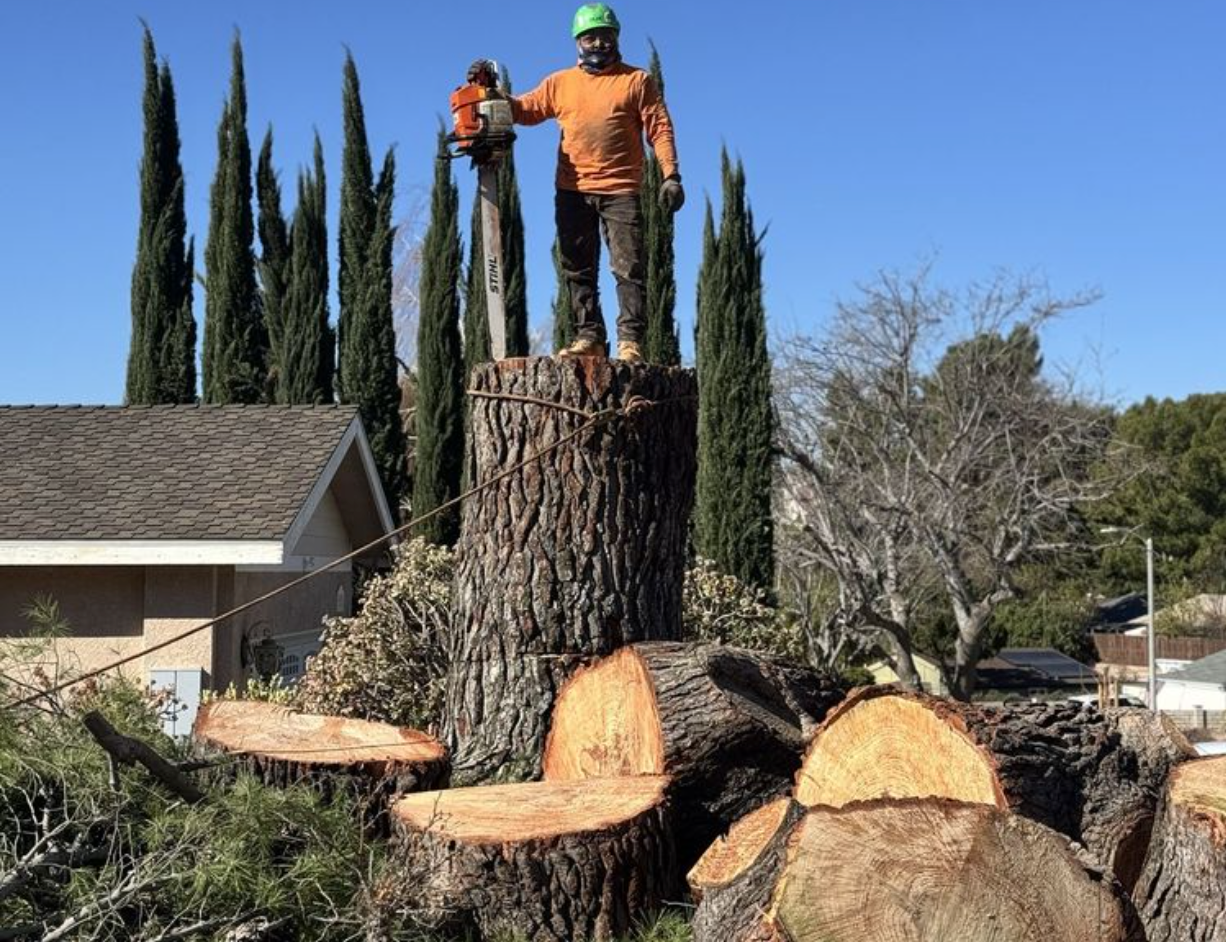
Eucalyptus trees, for example, can be extremely heavy and have brittle limbs that require careful planning. Large pines often create significant cleanup because of their dense branches and needles. Mature ash trees can have massive limbs and structural concerns.
The question is not just:
“How big is the tree?”
The better question is:
“How difficult is it to remove this tree safely?”
Tree Condition and Safety Risks
A healthy tree and a declining tree require very different approaches.
Dead trees are not always easier or cheaper to remove. In many cases, they are more dangerous because the wood becomes brittle and unpredictable.
In the Antelope Valley, we regularly see trees affected by:
- Long periods of drought
- High winds
- Extreme heat
- Insect activity
- Root stress
- Previous poor pruning
A tree may look fine from the street but have hidden structural problems.
Before removing a tree, we evaluate:
- Trunk condition
- Branch structure
- Lean direction
- Root stability
- Dead limbs
- Surrounding hazards
Safety has to come before speed.
Equipment and Labor Required
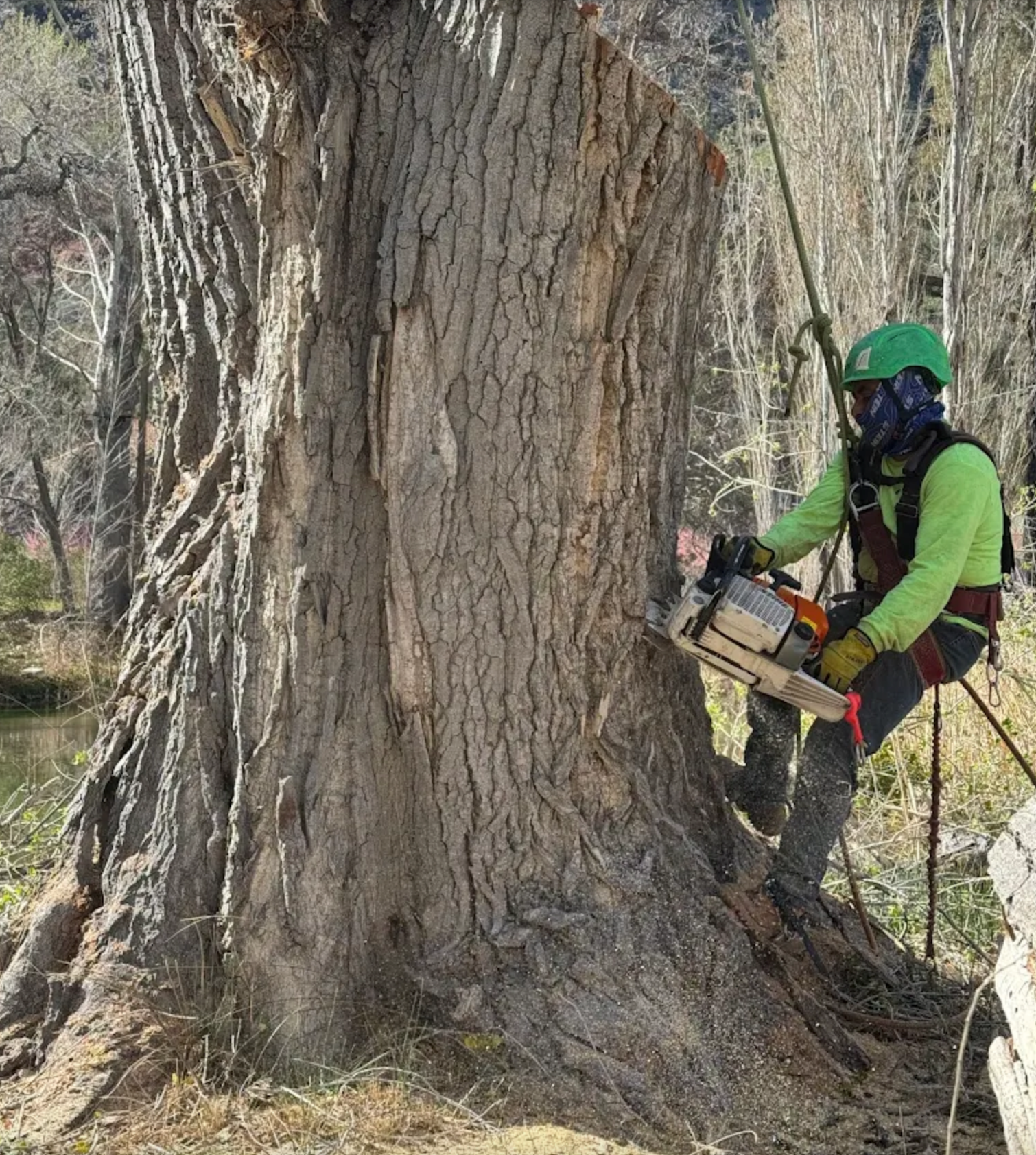
Professional tree removal requires specialized equipment and training.
Depending on the job, removal may require:
- Bucket trucks
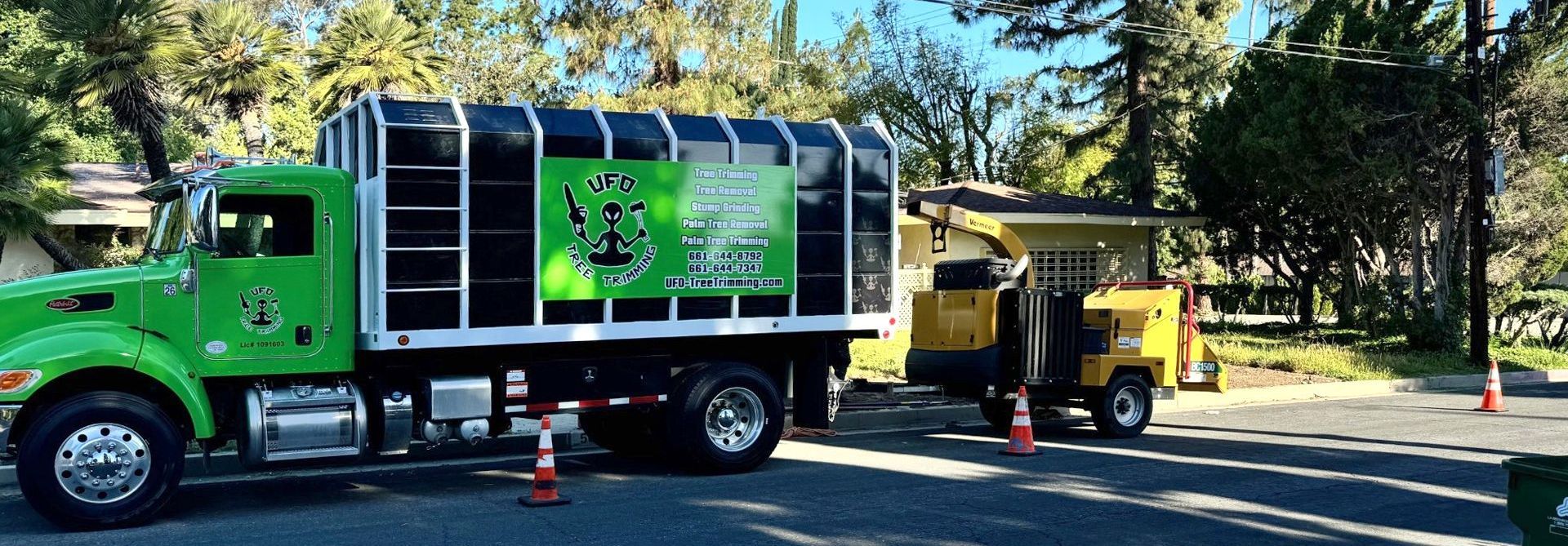
- Chippers
- Stump grinders
- Rigging equipment
- Climbing gear
- Additional crew members
A company investing in professional equipment, insurance, and training will naturally have higher operating costs than someone showing up with basic tools.
Those investments are what allow the job to be completed safely.
Real Examples: Why Difficult Trees Cost More
Over the years, two removals stand out because they show why experience matters.
Removing a Wind-Damaged Eucalyptus Near a Home
After a major wind event in West Palmdale, we received a call about a large eucalyptus tree leaning toward a house.
A major scaffold limb had already split, and the homeowner was worried the tree could fail during the next storm.
The challenge was that there was nowhere safe to simply drop the tree.
There was:
- A house nearby
- A block wall
- A patio cover
- Power lines along the street
Before making the first cut, we planned the entire removal.
Every large limb had to be tied off and lowered carefully. The tree was dismantled piece by piece until it was safely removed without damaging the home, landscaping, or surrounding property.
This is the type of situation where experience matters. The cost is not just for removing wood—it is for controlling risk.
Removing a Large Chinese Elm in Lancaster
Another memorable job involved a large Chinese elm in an older Lancaster neighborhood.
The tree had developed multiple trunks, and one section had begun separating after years of drought stress and high winds.
The homeowners had invested heavily in their backyard landscaping, including:
- Decorative concrete
- Irrigation
- Mature plants
- A custom patio
There was very little room for equipment.
Instead of bringing machinery through the yard and risking damage, we climbed and dismantled the tree section by section. Each limb was lowered into a controlled landing area, and the wood was carried out by hand.
The removal took longer than a simple tree removal, but the property was left intact.
Those are the jobs where homeowners understand that they are paying for planning, skill, and protection—not just the cutting itself.
Why the Cheapest Tree Removal Quote Is Not Always the Best Value
When comparing estimates, the lowest price is not automatically a bad price, and the highest price is not automatically the best.
However, large differences between quotes should raise questions. Knowing the right questions to ask before hiring a tree service can help you spot the difference between a fair quote and a risky one."
A professional tree service should clearly explain:
- What is included in the price
- Whether debris will be removed
- Whether stump grinding is included
- How the property will be protected
- Whether the company carries insurance
Insurance is one major difference between reputable companies and inexperienced operators.
A properly insured company carries liability insurance and workers’ compensation to protect both the workers and the customer.
If a tree falls and causes damage, you may also be wondering whether your homeowners insurance will help — we cover that in detail in our Antelope Valley homeowners insurance and tree removal guide.
Another difference is cleanup.
Some estimates only cover cutting the tree down. A complete removal may include:
- Cutting and processing logs
- Chipping branches
- Loading debris
- Hauling material away
- Cleaning the work area
A homeowner should always ask:
“Is this a complete removal, or just the tree coming down?”
Common Trees We Remove in the Antelope Valley
The Antelope Valley has a unique climate that creates specific challenges for trees.
We deal with:
- Extreme summer heat
- Dry conditions
- Strong seasonal winds
- Heavy soils
- Drought stress
Some of the most common trees we work on include:
Chinese Elm Trees
Chinese elms are common in older Palmdale and Lancaster neighborhoods.
They provide excellent shade, but mature trees can develop:
- Heavy limbs
- Dense canopies
- Poor structure from past pruning
- Deadwood buildup
Eucalyptus Trees
Large eucalyptus trees are among the most challenging removals we perform.
They can have:
- Extremely heavy wood
- Brittle limbs
- Significant height
- High wind exposure
Many large eucalyptus removals require advanced planning, rigging, and sometimes specialized equipment.
Pine Trees
Pines are common throughout the Antelope Valley.
- Challenges include:
- Large heavy limbs
- Wind damage
- Needle buildup
- Difficult cleanup
Large pines near homes often require careful dismantling rather than simple removal.
Ash Trees and Palms
Mature ash trees can develop structural issues, while large palms can be challenging because of their weight and access requirements.
A large palm may look simple compared to a traditional tree, but the sections being removed can be extremely heavy.
Tree Removal Is Not Always the Best Option
One thing we want homeowners to understand is that tree removal is usually the last option, not the first.
Sometimes the best solution is:
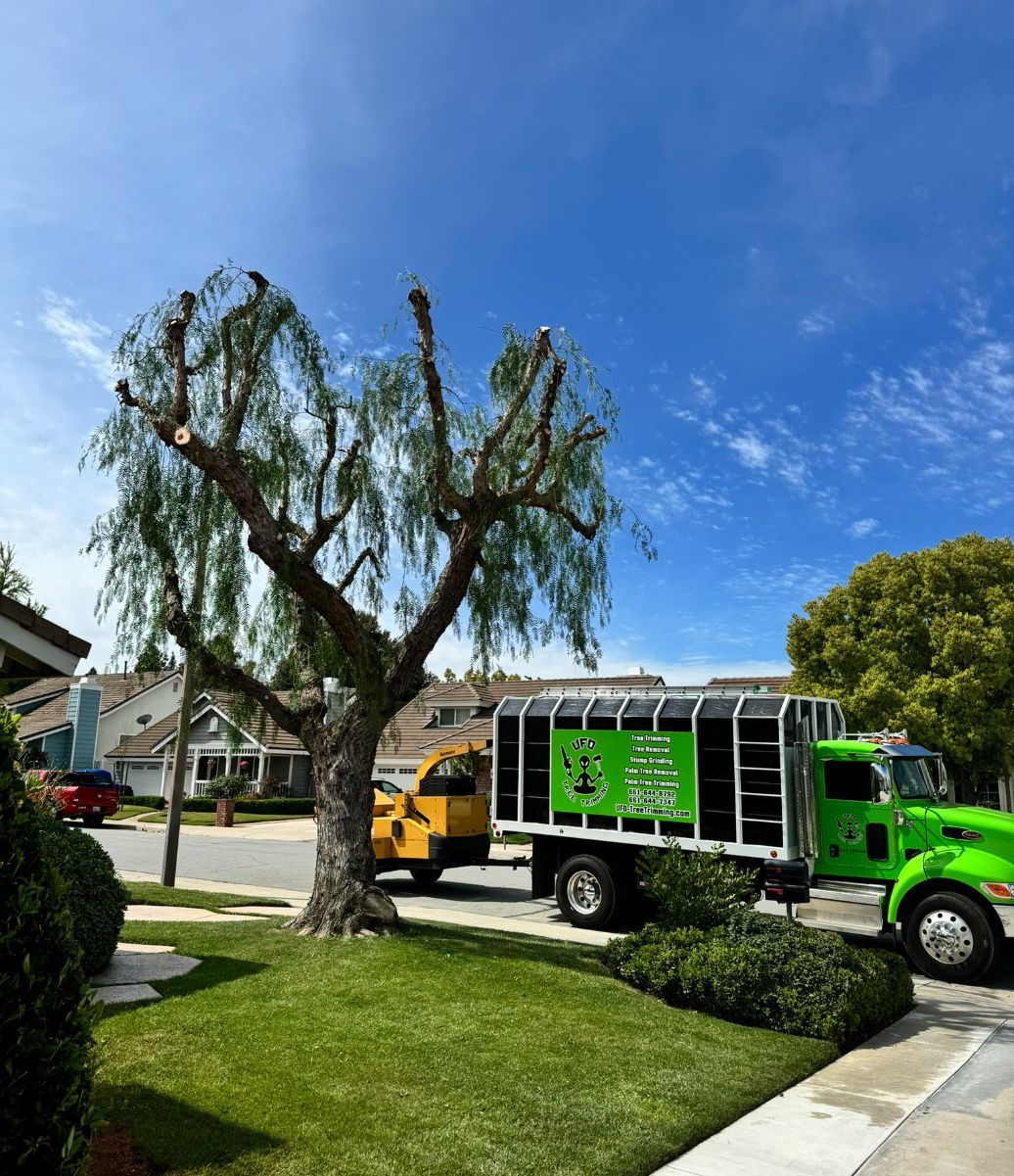
- Tree trimming
- Pruning
- Hazardous limb removal
- Tree maintenance
- A professional inspection
A healthy tree does not need to be removed just because it is large.
A few branches touching a roof does not always mean the entire tree needs to come down.
A tree with good structure may simply need proper pruning to remain safe and healthy.
Before any removal, it's also worth knowing whether your tree requires a permit — read our full tree removal permit guide for Palmdale and Lancaster.
Our goal at UFO Tree Trimming is not to remove as many trees as possible. Our goal is to make the right decision for each tree and each property.
Services Offered by UFO Tree Trimming
Beyond tree removal, we help homeowners and businesses with:
- Tree trimming and pruning
- Hazardous limb removal
- Stump grinding
- Emergency tree service
- Tree health assessments
- Commercial property maintenance
- Brush clearing and vegetation management
We work with:
- Homeowners
- Property managers
- Businesses
- HOAs
- Commercial properties
Whether it is a small backyard tree or a large hazardous removal, the same standards apply.
Why Choose UFO Tree Trimming?
At UFO Tree Trimming, we are not just a company that shows up with a chainsaw and removes whatever tree a customer points at.
Our approach is based on doing the right work for the right reason.
After more than 20 years serving Palmdale, Lancaster, Quartz Hill, and the Antelope Valley, we have learned that every tree and every property is different.
Sometimes the right answer is removal.
Sometimes the right answer is pruning.
Sometimes the right answer is telling a homeowner:
“Your tree is healthy. Keep it and maintain it.”
We believe honesty matters.
We look at:
- Tree health
- Branch structure
- Root stability
- Property conditions
- Safety concerns
- The homeowner’s goals
A successful tree removal is not just a tree on the ground.
It is:
- No damage to the home
- No damage to landscaping
- Safe working conditions
- Complete cleanup
- A satisfied customer
We proudly serve:
- Palmdale
- Lancaster
- Quartz Hill
- Leona Valley
- Littlerock
- Lake Los Angeles
- Rosamond
- Acton
- Pearblossom
- Surrounding Antelope Valley communities
If you need professional tree removal, trimming, or advice about a tree on your property, contact UFO Tree Trimming at 661-644-7347.
After more than 20 years in this business, the thing we are most proud of is not the number of trees we have removed. It is the number of customers who call us again years later, recommend us to their neighbors, and trust us with their property.
That reputation is built one job at a time.