UFO Tree Trimming Blog
Why Are My Palm Tree Fronds Turning Brown in the Antelope Valley?
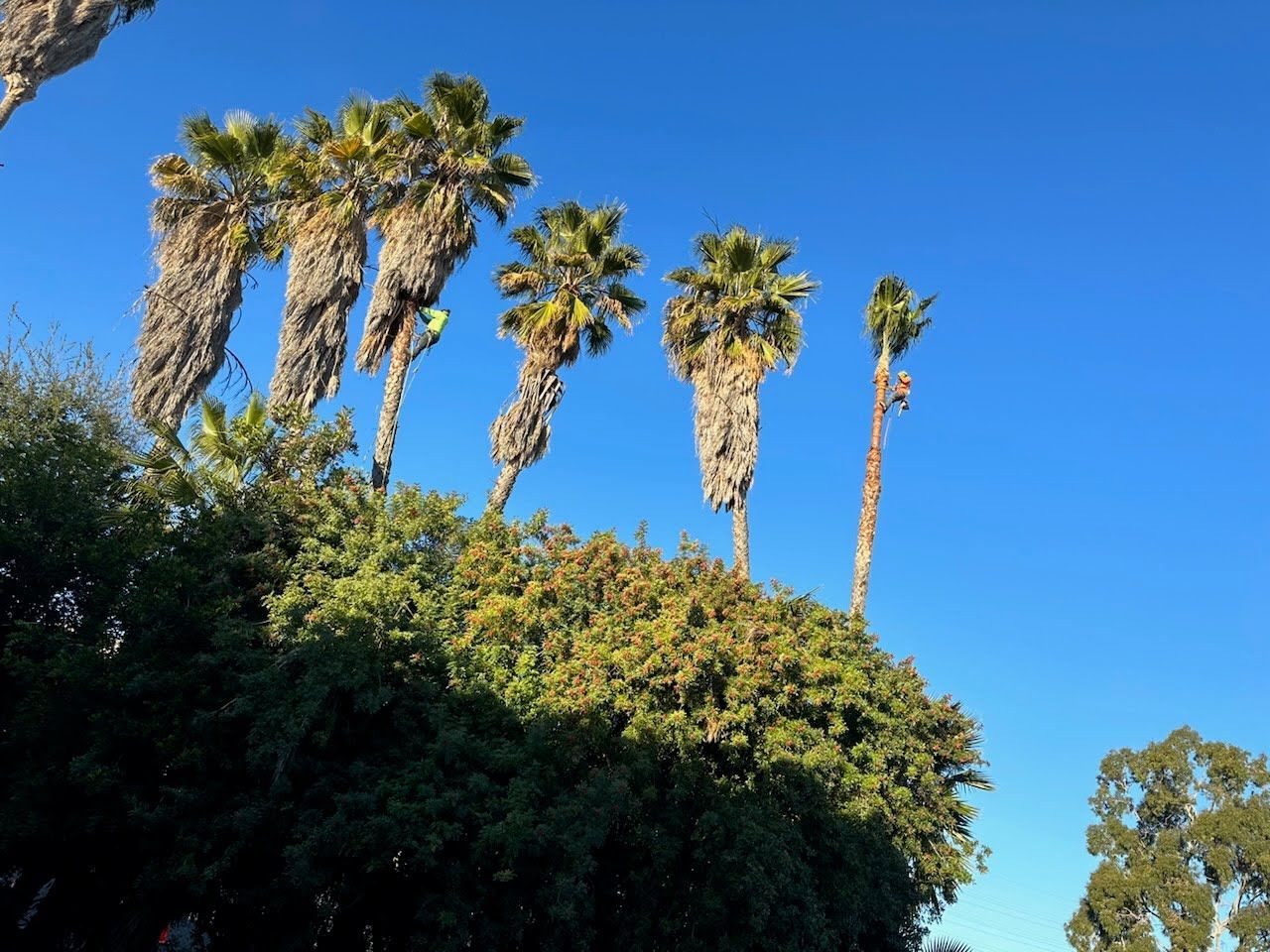
If you live in the Antelope Valley and notice your palm tree fronds turning brown, your first thought may be that the tree is dying. Many homeowners in Palmdale, Lancaster, Quartz Hill, Acton, Littlerock, and Rosamond contact UFO Tree Trimming with the same concern: “Why are my palm leaves turning brown, and what can I do about it?”
After more than 20 years experience working with palm trees throughout the Antelope Valley, we’ve learned that brown fronds are usually a symptom — not the actual problem. A palm can turn brown for many different reasons, including water stress, extreme heat, wind damage, nutrient deficiencies, improper trimming, natural aging, or other health concerns.
The key is understanding what the palm is telling you before making changes. Cutting away brown fronds or adding more water without knowing the cause can sometimes make the problem worse. Brown fronds are only one warning sign that a palm may be experiencing stress. Other symptoms such as discoloration, weak growth, trunk issues, or unusual changes in appearance can indicate deeper problems. Learn more about the signs of poor palm tree health and what homeowners should watch for.
At UFO Tree Trimming, we focus on diagnosing the reason behind the problem, not just removing what is visible. Our experience with local desert conditions helps us determine what your palm actually needs to stay healthy, safe, and attractive.
Why Palm Trees in the Antelope Valley Develop Brown Fronds
The Antelope Valley is a challenging environment for many landscape plants. Our intense summer heat, dry air, strong winds, and limited rainfall create conditions that are very different from milder climates.
Palm trees can survive and thrive here, but they still require proper care. A palm that is healthy in another part of California may struggle when exposed to our high-desert environment.
Some of the most common causes of brown palm fronds we see include:
Water Stress and Irrigation Problems
One of the biggest causes of palm stress in the Antelope Valley is improper watering.
Many homeowners see brown tips or dry-looking fronds and assume the palm simply needs more water. While underwatering can definitely stress a palm, overwatering can also cause problems by damaging roots and reducing the tree’s ability to absorb nutrients.
Another common issue is shallow watering. Running irrigation for a short period may wet the surface but not provide enough moisture to the deeper root zone where the palm needs it.
Healthy palm care requires the right amount of water delivered correctly and consistently.
Extreme Heat and Sun Stress
Antelope Valley summers can be extremely demanding on palm trees. During periods of high temperatures, palms can lose moisture faster than they can replace it.
Palms located near:
- Concrete patios
- Block walls
- Driveways
- Reflective surfaces
- Open areas with direct afternoon sun
may experience additional heat stress because these surfaces absorb and release extra heat.
South- and west-facing palms are especially vulnerable during the hottest parts of the year.
Improper Palm Trimming
One of the most common mistakes we see is aggressive trimming.
Many homeowners want their palms to look clean and neat, but removing too many healthy green fronds can weaken the tree. Green fronds are responsible for producing energy for the palm, and removing them unnecessarily can create additional stress.
We also see palms that have been trimmed too aggressively, leaving them more vulnerable to:
- Heat stress
- Wind damage
- Nutrient problems
- Slow recovery
At UFO Tree Trimming, we focus on removing dead, damaged, or hazardous growth while preserving the healthy parts of the palm.
Natural Aging of Palm Fronds
Not every brown frond is a sign of a serious problem.
Palm trees naturally replace older growth with new growth. Lower fronds commonly turn brown as the palm transfers resources to newer leaves.
The important thing to understand is where the browning is happening.
A few older brown fronds near the bottom of the tree may be normal. Browning that spreads to newer growth near the center of the palm deserves closer attention.
Wind Damage in the Antelope Valley
Strong desert winds are another major factor we see throughout the area.
Wind can:
- Tear and shred palm fronds
- Break weakened leaves
- Cause hanging dead fronds
- Accelerate damage on already stressed palms
A palm that has been neglected for years is much more likely to develop safety problems after a period of strong winds.
Common Palm Tree Varieties We Maintain in the Antelope Valley
After two decades working locally, UFO Tree Trimming has worked with nearly every type of palm commonly planted in Antelope Valley landscapes. Each variety responds differently to our desert conditions.
Mexican Fan Palms
Mexican fan palms, also known as Washingtonia robusta, are among the most common palms we maintain.
They are popular because they grow quickly and handle heat well, but that fast growth also means they require regular maintenance.
Common issues include:
- Hanging dead fronds
- Seed pod buildup
- Heavy dry material around the trunk
- Wind-related damage
When these palms are neglected, the accumulated dead material can become both an appearance issue and a safety concern.
California Fan Palms
California fan palms, or Washingtonia filifera, are naturally adapted to desert environments and are generally very durable.
However, they can still develop brown fronds from:
- Extreme heat
- Poor irrigation
- Nutrient deficiencies
- Normal aging
The biggest factor is determining whether the browning is occurring only on older fronds or whether newer growth is being affected.
Queen Palms
Queen palms are beautiful but can be more challenging in the Antelope Valley because they are not naturally adapted to our extreme desert conditions.
They may require more attention because they are more sensitive to:
- Heat stress
- Cold temperatures
- Inconsistent watering
- Nutrient issues
A queen palm planted near concrete or in a highly exposed area may struggle more than one in a protected landscape.
Date Palms
Date palms are another common variety in our area. They are durable, but mature date palms require proper maintenance because of their size and the weight of their fronds and fruit clusters.
Keeping them maintained is not just about appearance. Proper trimming helps protect homes, vehicles, walkways, and people around the property.
A Real Example: Helping a Stressed Palm in Palmdale
One situation that stands out involved a homeowner in Palmdale who contacted UFO Tree Trimming because several palms in their front yard looked unhealthy.
The homeowner was concerned because the palms had many brown hanging fronds and appeared like they might be dying.
When we inspected the trees, we found that the problem was not a single issue. The palms were dealing with a combination of:
- Desert heat stress
- Inconsistent watering
- Years of improper trimming
- Wind exposure
Some of the dead fronds were simply natural aging, but previous maintenance practices had also caused additional stress.
Instead of removing the palms or cutting away everything, we focused on restoring them properly. We removed dead and hazardous growth, cleaned up the palms without stripping away healthy fronds, and explained better watering practices to help reduce future stress.
After the service, the palms had a much healthier appearance. The property looked cleaner, the safety concerns were reduced, and the homeowner better understood how to care for the trees moving forward.
This is a perfect example of why brown fronds do not automatically mean a palm needs to be removed. Sometimes the tree simply needs the right evaluation and proper care.
How UFO Tree Trimming Evaluates a Brown Palm
When we inspect a palm with brown fronds, we don’t start by cutting. The first step is understanding why the palm is showing stress.
Our evaluation includes looking at:
- Where the browning is occurring
- The condition of the newest growth
- The palm’s crown and center growth
- Previous trimming practices
- Irrigation and watering habits
- Soil conditions
- Exposure to heat and wind
- Possible nutrient issues
- Signs of pests or disease
After evaluating the palm, we determine whether it needs:
- Professional trimming
- Improved maintenance practices
- Care adjustments
- Additional treatment
- Removal if it has become unsafe or severely declined
While many palms can recover with proper maintenance, some trees reach a point where removal becomes the safest option. If you are unsure whether a tree can be saved or needs removal, our guide on warning signs a tree may need removal explains what homeowners should look for.
Every palm has a history, and that history helps determine the right solution.
How Often Should Palm Trees Be Trimmed in the Antelope Valley?
For many residential palms, yearly professional maintenance is a good starting point.
However, the right schedule depends on:
- Palm variety
- Age
- Growth rate
- Location
- Exposure to wind
- Overall health
Fast-growing Mexican fan palms often need more frequent attention, while slower-growing varieties may require less.
Large mature palms near homes, walkways, driveways, and outdoor living areas should be inspected regularly because falling fronds can become a safety concern.
Preventive maintenance is usually safer and more affordable than waiting until a palm becomes severely neglected.
Safety Concerns With Neglected Palm Trees
Palm maintenance is not only about appearance. Safety is one of the biggest reasons we recommend staying ahead of problems.
Dead palm fronds can become heavy and may fall unexpectedly, especially during strong winds.
Neglected palms can create risks involving:
- Falling fronds
- Property damage
- Blocked walkways
- Wind-blown debris
- Dry material buildup that increases fire concerns
We frequently see palms growing near driveways, patios, entryways, fences, and homes where falling debris could cause damage.
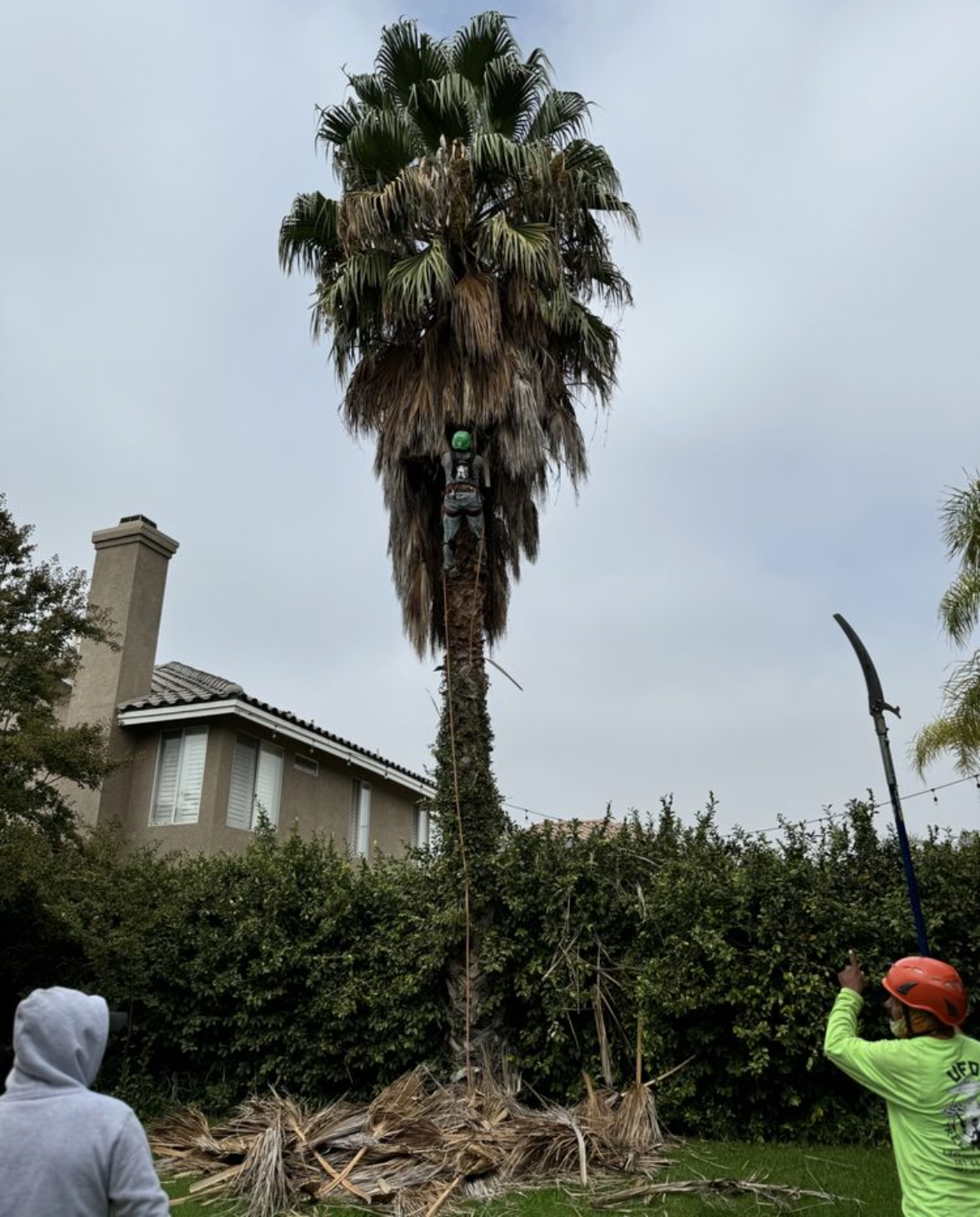
Large palms should also be handled carefully. Attempting to trim mature palms without proper equipment and experience can be dangerous. Palm trimming is not simply a matter of cutting away dead leaves. Working at height, handling heavy fronds, and dealing with desert wind conditions all create safety risks. For more information about why professional tree care matters, read our guide on tree trimming safety in the Antelope Valley.
What Homeowners Should Do When Palm Fronds Turn Brown
If you notice brown fronds on your palm tree, the best thing to do is not panic and not immediately cut everything away.
Start by asking:
- Are only the oldest lower fronds turning brown?
- Is new growth in the center affected?
- Has the watering schedule changed?
- Has the palm experienced extreme heat or wind?
- Has it been aggressively trimmed in the past?
Avoid:
- Overwatering without identifying the cause
- Removing healthy green fronds
- Applying random fertilizers or treatments
- Making major changes without understanding the problem
A professional evaluation can help determine whether the palm needs trimming, improved care, treatment, or another solution.
Why Choose UFO Tree Trimming for Palm Care in the Antelope Valley?
UFO Tree Trimming is more than a company that removes palm fronds. We are a local tree-care company with more than 20 years of hands-on experience serving homeowners throughout Palmdale, Lancaster, Quartz Hill, Acton, Littlerock, Rosamond, and the surrounding Antelope Valley communities.
Our goal is to provide professional tree care while treating every property as if it were our own.
We believe homeowners deserve honest answers about what their trees actually need. That means we do not believe in unnecessary work, aggressive trimming, or recommending removal when proper maintenance can solve the problem.
We help homeowners with:
- Brown palm fronds
- Overgrown palms
- Wind damage
- Hazardous hanging fronds
- Routine palm maintenance
- Tree safety concerns
The Antelope Valley is a unique environment, and local experience matters when caring for trees here.
If your palm trees are turning brown or you are concerned about their health and safety, contact UFO Tree Trimming at 661-644-7347. We are happy to evaluate your palms and help you understand the best solution for your property.