UFO Tree Trimming Blog
Does Homeowners Insurance Cover Tree Removal? (Antelope Valley Guide from UFO Tree Trimming)
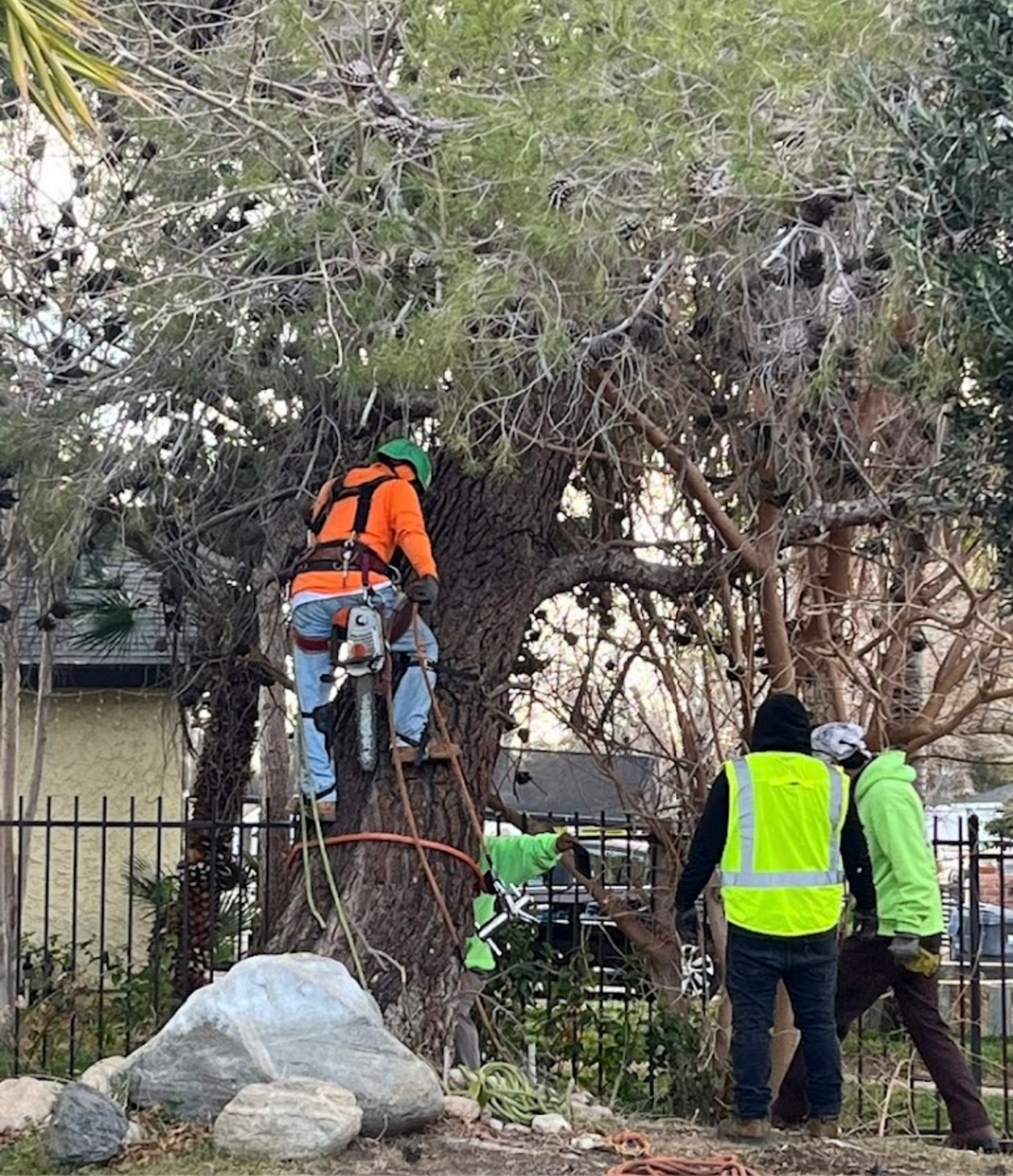
If you live in Palmdale, Lancaster, Quartz Hill, Rosamond, or anywhere in the Antelope Valley, you already know one thing: wind and trees don’t always get along.
After more than 20 years of emergency tree removals experience across the Antelope Valley, one question comes up more than any other:
Does homeowners insurance cover tree removal?
The answer is: sometimes—but not always, and the details matter far more than most homeowners realize.
At UFO Tree Trimming, we’ve seen thousands of storm-damaged trees, insurance claims, approvals, and denials. And the difference between a covered claim and an out-of-pocket expense often comes down to understanding a few key rules.
When Homeowners Insurance Typically Covers Tree Removal
Insurance generally does not cover tree removal just because a tree fell.
Coverage usually applies when a tree falls due to a covered event (like wind or a storm) and causes a specific type of damage.
1. Tree Falls on a Structure (Most Common Covered Scenario)
The most straightforward claims we see involve trees that hit:
- Homes
- Roofs
- Garages
- Fences
- Vehicles (depending on policy)
A common example in Palmdale is an Aleppo pine snapping during a windstorm and landing across a roof. In cases like this, insurance often covers:
- Structural repairs
- Some or all of the removal costs
- Temporary protective measures (like tarping)
These are the clearest and most commonly approved claims.
2. Tree Blocks Access to the Property
In some cases, insurance may help if a tree blocks access to the home—especially a driveway or main entry.
We’ve seen this in Lancaster where large eucalyptus limbs blocked driveways after wind events. Coverage varies widely by policy, but partial reimbursement is sometimes possible.
3. Neighbor’s Tree Falls on Your Property
One of the biggest misconceptions we hear is:
“My neighbor’s tree fell, so their insurance has to pay.”
That’s not automatically true.
In most cases, your own insurance policy is the first one involved. Liability only becomes a factor if negligence can be proven, such as ignored warnings about a clearly hazardous tree.
Real Antelope Valley Insurance Scenarios We See
Here are real situations we encounter regularly across Palmdale and Lancaster:
🌲 Aleppo Pine on a Roof (Palmdale)
Windstorm snaps a mature pine. Tree lands on a two-story home.
✔ Roof repairs covered
✔ Partial tree removal covered
✔ Emergency response required
This is one of the most common approved claim types.
🌿 Eucalyptus Blocking Driveway (Lancaster)
Large limb fails across driveway, but no structural damage.
✔ Sometimes partial coverage for access obstruction
❌ Not always fully covered
Policy details matter heavily here.
🌲 Dead Pine Falls in Yard (Quartz Hill)
Tree falls but hits nothing.
❌ Usually NOT covered
✔ Removal typically out-of-pocket
This is one of the most misunderstood scenarios.
⚠️ Hazardous Tree Removed Before Falling (Lake Los Angeles)
Tree is leaning and decaying. Homeowner requests insurance coverage before failure.
❌ Preventive removal is usually not covered
✔ Considered maintenance responsibility
🌳 Neighbor’s Tree on Roof (West Lancaster)
Tree falls during windstorm from adjacent property.
✔ Typically filed through homeowner’s insurance first
✔ Liability depends on negligence evidence
What Most Homeowners Get Wrong About Tree Insurance Claims
After 20+ years in the field, we see the same misunderstandings repeatedly.
1. Assuming Insurance Covers All Tree Removal
Insurance only applies when specific conditions are met. A fallen tree alone is not enough.
2. Not Knowing Timing Matters
The first few hours after a tree falls can significantly affect your claim.
3. Cleaning Up Too Quickly
Once evidence is removed, it becomes harder for adjusters to evaluate the loss.
4. Assuming the Neighbor Pays
Even if the tree came from next door, your insurance is usually involved first.
The Most Important Tree Species for Insurance Claims in the Antelope Valley
Some trees show up far more often in insurance-related damage:
🌲 Aleppo Pine
Most common for full tree failures onto structures.
🌿 Eucalyptus
Most common for massive limb failures causing high-dollar damage.
🌳 Ash Trees
Often fail due to hidden internal decay.
🌳 Chinese Elm
Frequent limb drop damage to property.
🌲 Cottonwood
Less frequent, but often high-damage when failure occurs.
Do Insurance Companies Care About Tree Maintenance?
Yes—and more than most homeowners realize.
From what we’ve seen:
- Well-maintained trees = smoother claims
- Neglected trees = more questions during investigation
We regularly see adjusters focus on whether:
- The tree was dead or declining
- Warning signs were ignored
- Maintenance was overdue
- Prior recommendations existed
Not every claim is affected by this, but it can matter.
What to Do Immediately After a Tree Falls (UFO Tree Trimming Checklist)
If a tree falls on your property in Palmdale, Lancaster, or anywhere in the Antelope Valley, follow this exact order:
1. Stay Safe First
Do not approach if:
- Power lines are involved
- Structure is unstable
- Gas or electrical hazards exist
Call 911 if there is immediate danger.
2. Take Photos Before Anything Moves
Capture:
- Entire property
- Roof impact points
- Root failure (if visible)
- Vehicles, fences, structures
This is critical for insurance.
3. Prevent Further Damage (Only If Safe)
- Tarp roof openings
- Move vehicles if accessible
- Shut off utilities if safe
4. Call Your Insurance Company
Report:
- Storm or wind event
- Structural damage
- Access issues
- Emergency repairs performed
5. Call a Licensed Tree Service
A professional crew like UFO Tree Trimming can:
- Stabilize the situation
- Prevent further damage
- Perform safe emergency removal
- Coordinate documentation for insurance
6. Keep All Records
Save:
- Photos and videos
- Receipts
- Contractor invoices
- Temporary repair costs
Real Example: Why This Process Matters
In one Lancaster windstorm case, a homeowner:
✔ Took detailed photos
✔ Called insurance immediately
✔ Requested emergency stabilization only
✔ Waited for adjuster approval
Result:
- Claim processed quickly
- Roof damage covered
- Tree removal partially reimbursed
In another case where everything was cleared immediately:
- Evidence was lost
- Claim review took longer
- More questions from insurance
Final Thoughts from UFO Tree Trimming
Homeowners insurance can cover tree removal—but only under the right conditions.
In the Antelope Valley, where wind events are common and trees vary widely in age and condition, the difference between a smooth claim and a stressful one often comes down to preparation and documentation.
If there’s one takeaway from 20+ years in this field:
Most expensive tree failures don’t happen without warning—they just aren’t recognized in time.