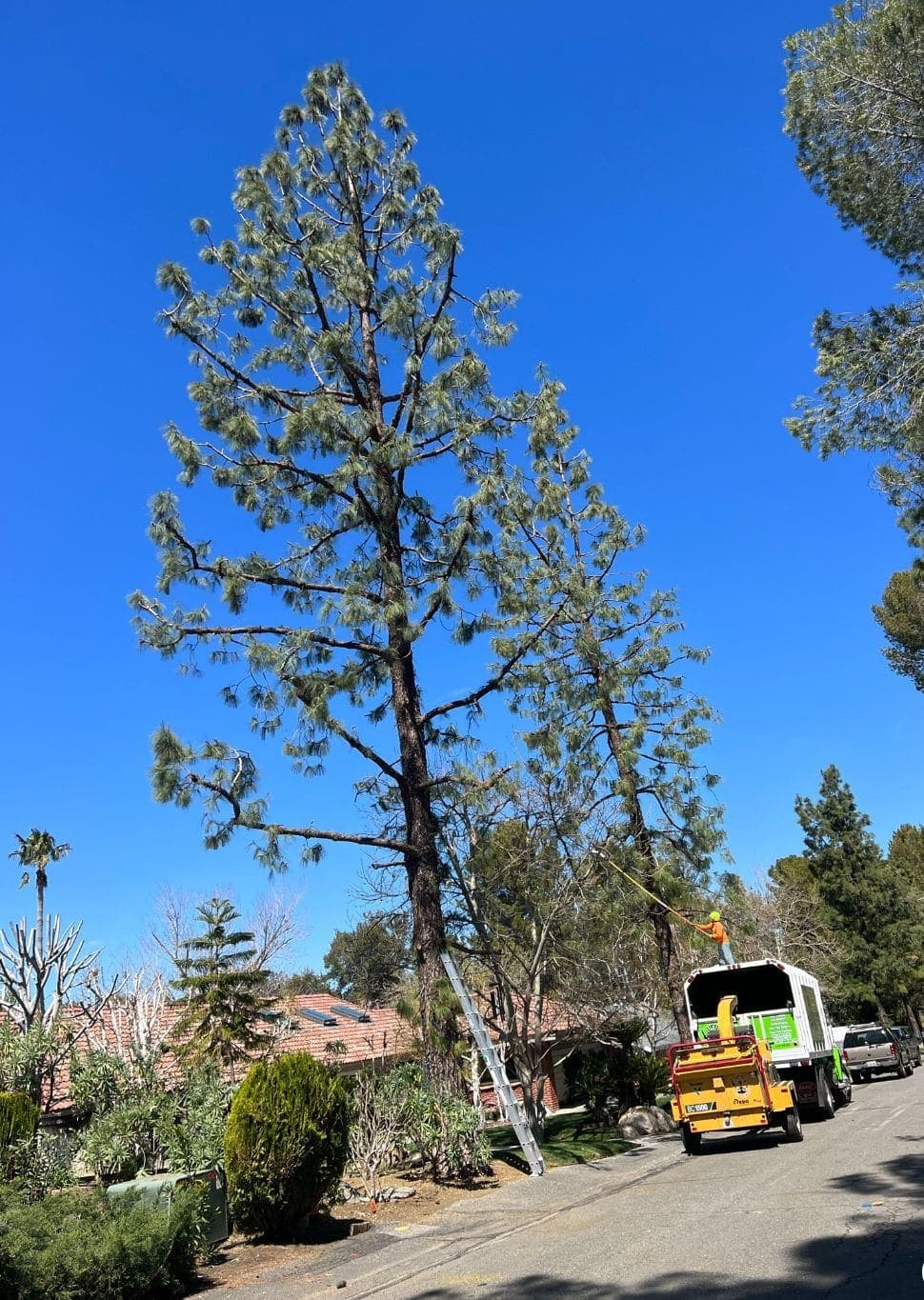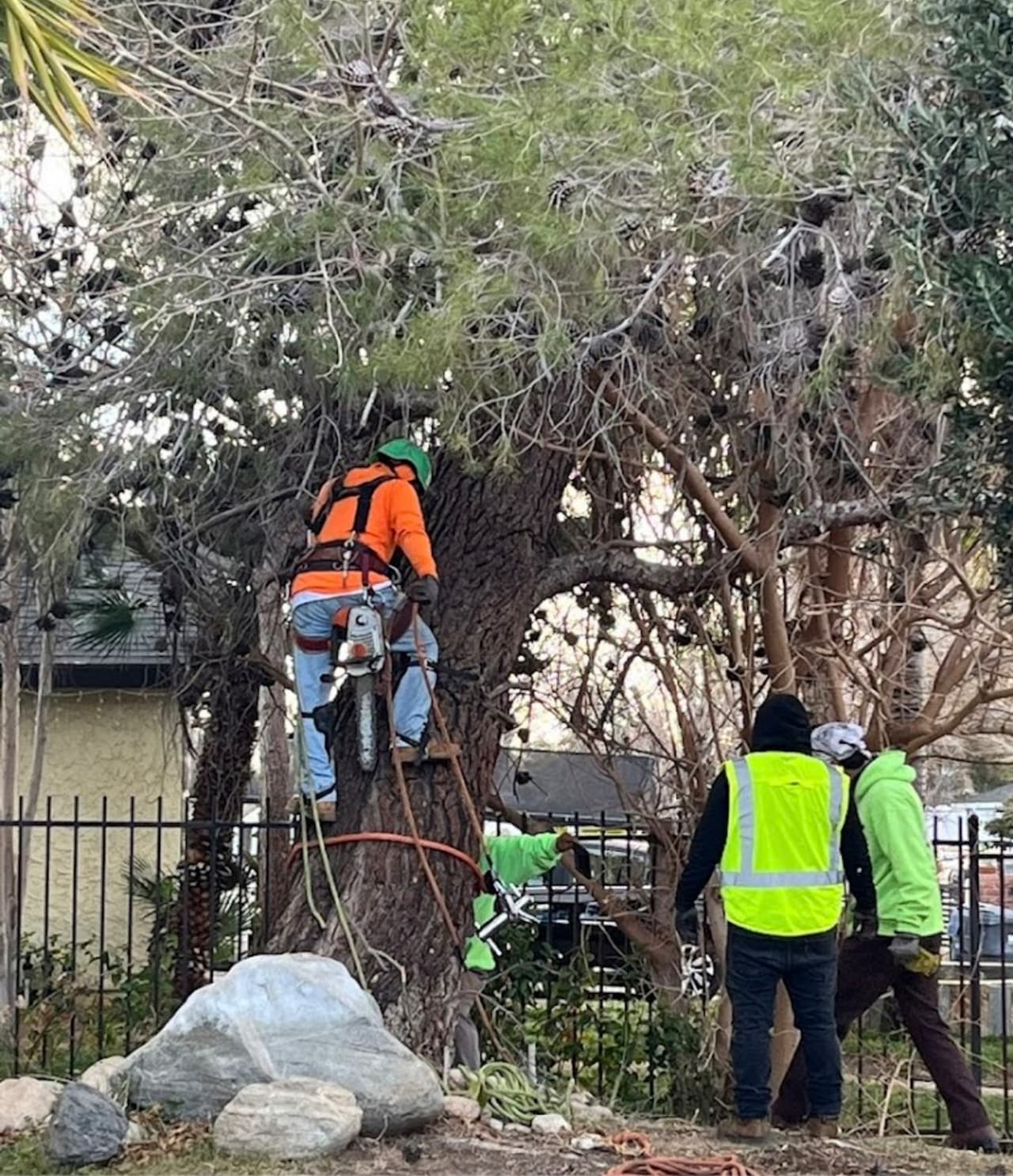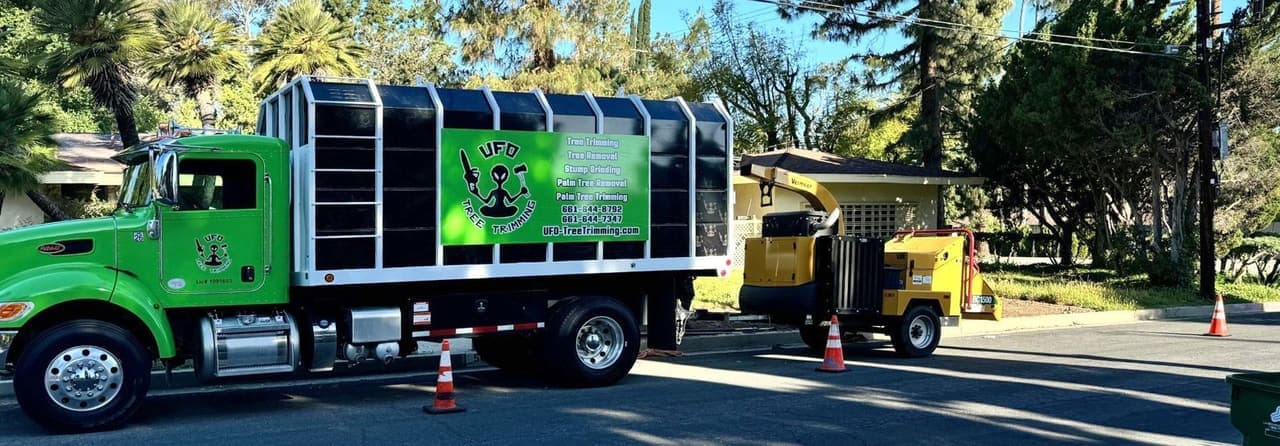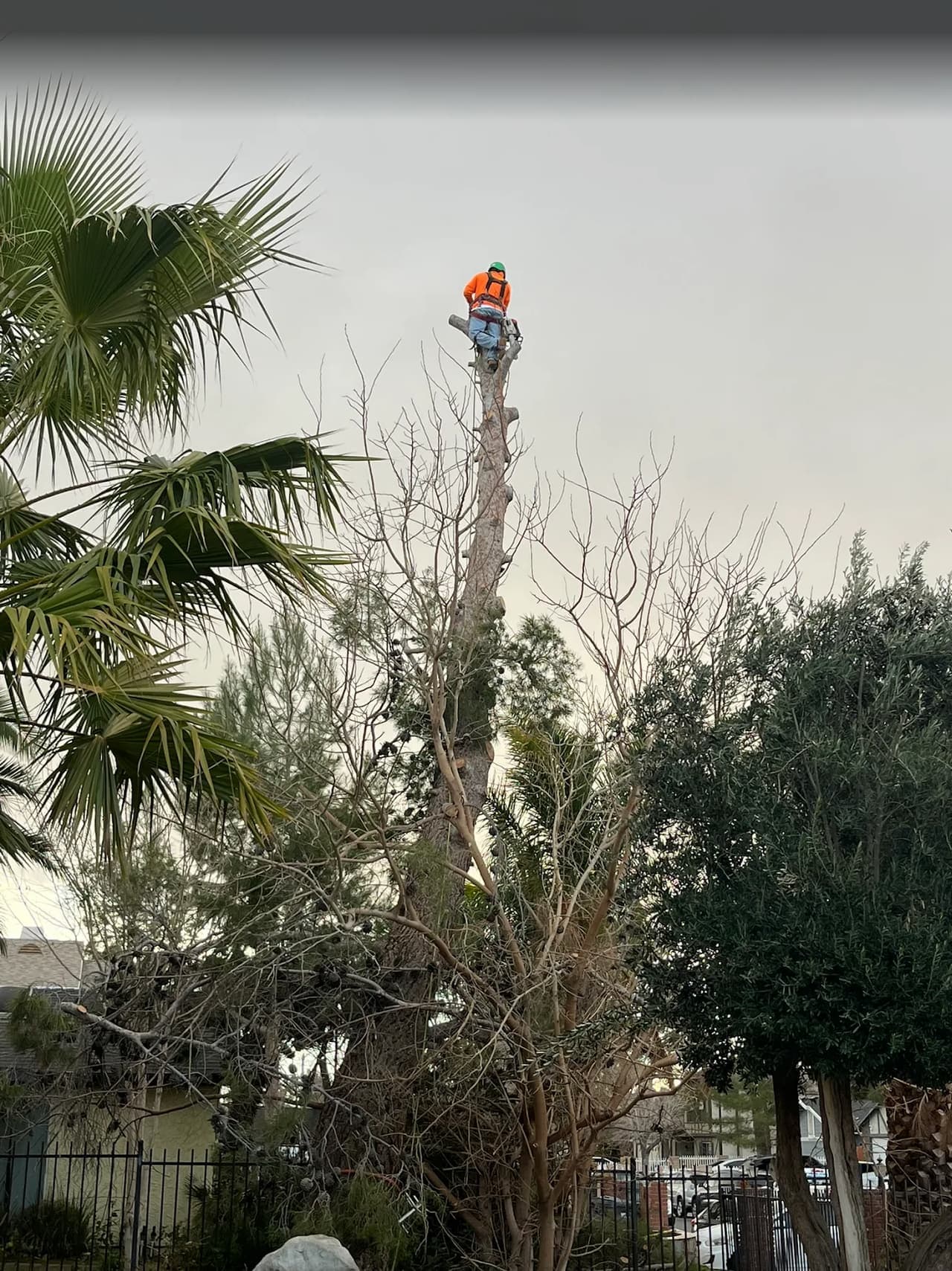
If you've ever gotten a tree removal estimate in Palmdale or Lancaster and thought, "Why is this so expensive?" — you're not alone. It's the question we hear most. Tree removal isn't expensive because it's "just cutting a tree down." It's expensive because it's controlled demolition: skilled labor, specialized equipment, and liability management working together in a high-risk environment.
Here's the breakdown. (If you want the number before the explanation, our instant estimator gives you the range for your job first — then come back and read why it says what it says.)
Tree Removal Is Not "Just Cutting a Tree Down"
People hear "tree removal" and picture a tree cut at the base, falling cleanly into open space. In Palmdale and Lancaster, it rarely works that way.
The way we put it to customers:
"Tree removal isn't just cutting a tree down. You're paying for a controlled demolition, with a crew, equipment, and liability all tied into it."
Antelope Valley trees are often wind-stressed, drought-affected, or partially dead. That makes them unpredictable — and unpredictability drives both risk and cost. A tree that looks simple in the morning can turn dangerous with the afternoon wind shift.
Skilled Labor and Safety Control
Most of the cost is the crew and the skill the job demands.
Tree work here is high-risk — wind, height, structural instability — which is why training matters as much as muscle. We break this down further in our guide on tree trimming safety and why professionals are required in the Antelope Valley.
A proper removal often involves:
- Climbers working at height
- A ground crew controlling rigging systems
- Precision lowering of heavy limbs
- Constant communication for safety
One mistake means serious property damage — or worse. What you're paying for is control, not cutting.
And depending on the tree's health and structure, full removal may not even be necessary. It's worth understanding the difference before you decide — see our guide Tree Pruning vs Tree Removal: Which Do I Need?
Equipment That Makes the Job Safe
Professional removal runs on specialized equipment:
- Chippers for debris
- Stump grinders for root removal
- Chainsaws designed for heavy structural cuts
- Rigging systems (ropes, pulleys, friction devices)
- Sometimes lifts or bucket trucks, depending on access
All of it is expensive to buy, maintain, and run — especially in desert heat, where equipment wears faster.
Disposal and Hauling Costs
The job doesn't end when the tree is on the ground. In Palmdale and Lancaster, green waste disposal is a real cost.
A single large tree can produce:
- Multiple truckloads of debris
- Heavy dump and landfill fees
- Fuel and transport costs
One removal commonly fills a chip truck — sometimes more than once.
Real Example: What Happens When It Goes Wrong
We've been called in more than once after a cheaper crew's removal didn't go as planned.
One Lancaster job started with a homeowner hiring a low-cost crew promising a "quick drop." The result:
- The tree barber-chaired during the cut
- It damaged the backyard fence
- It cracked concrete near the patio
- It ended up partially hung over the roofline
The crew left the job unfinished. When we arrived, the first priority wasn't removal — it was stabilizing the tree and making the site safe. Then we rigged and dismantled it in controlled sections to prevent further damage.
The "cheap" job often costs more once damage, cleanup, and corrections are added up — especially when homeowners go DIY or hire low-cost crews without seeing the risks. Understanding how professionals handle hazardous removals matters before hiring anyone; we explain it in our guide on tree trimming safety in the Antelope Valley.
The homeowner told us later the biggest cost wasn't the money. It was the stress of a half-finished tree hanging over his house.
Why Local Conditions Matter in the Antelope Valley
Tree removal in Palmdale, Lancaster, Quartz Hill, and Littlerock is not like other regions:
- Afternoon wind shifts can change a tree's stability quickly
- Trees are often drought-stressed and brittle
- Heat causes hidden cracking in limbs
- Access is tight in residential neighborhoods
A tree that looks stable at 9 AM can be dangerous by 2–3 PM. That's why local experience matters.
The Advantage of Hiring a Local Tree Service
The biggest difference between local crews and out-of-area companies comes down to understanding and accountability.
Local crews know:
- How Antelope Valley wind affects tree structure
- Which species fail under heat stress
- How quickly conditions change
- How to work safely in tight residential spaces
And just as importantly — we're here. Not coming from another county; already in the area. A national company is structured for convenience. A local Antelope Valley crew is structured for conditions, accountability, and long-term reputation.
Warning Signs Before Hiring Any Tree Company
Watch for these red flags before hiring anyone for tree work:
- Too-cheap or instant pricing. A firm price without seeing the tree is a guess. Real pricing depends on height, lean, access, wind exposure, and surrounding structures.
- No insurance proof. If they hesitate to show insurance, do not hire them.
- No clear removal plan. A professional can explain how the tree will come down. If the answer is only "we'll cut it down," that's a red flag.
- No written estimate. Everything should be documented clearly.
- Wrong equipment. A proper removal takes more than a saw and a pickup truck.
- No safety discussion. If they never mention protecting your home, fence, or property, they're selling speed — not safety.
Final Thought: Cheap vs Professional Tree Work
It comes down to one thing:
Cheap crews sell speed. Professional crews sell control.
And in the Antelope Valley — where wind, heat, and tree stress all collide — control is everything. Once a tree starts going wrong, you don't get to decide when it stops. Wind does.