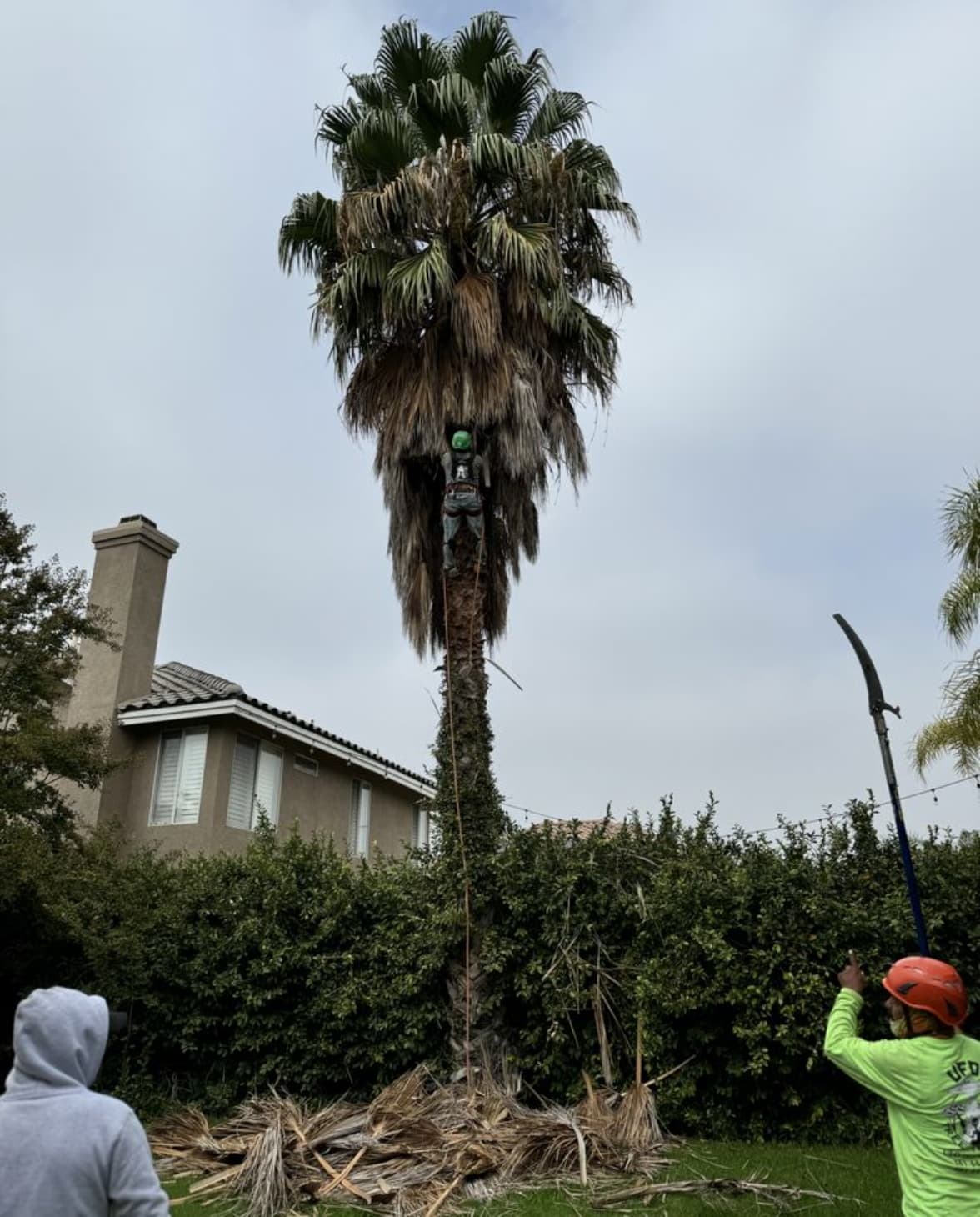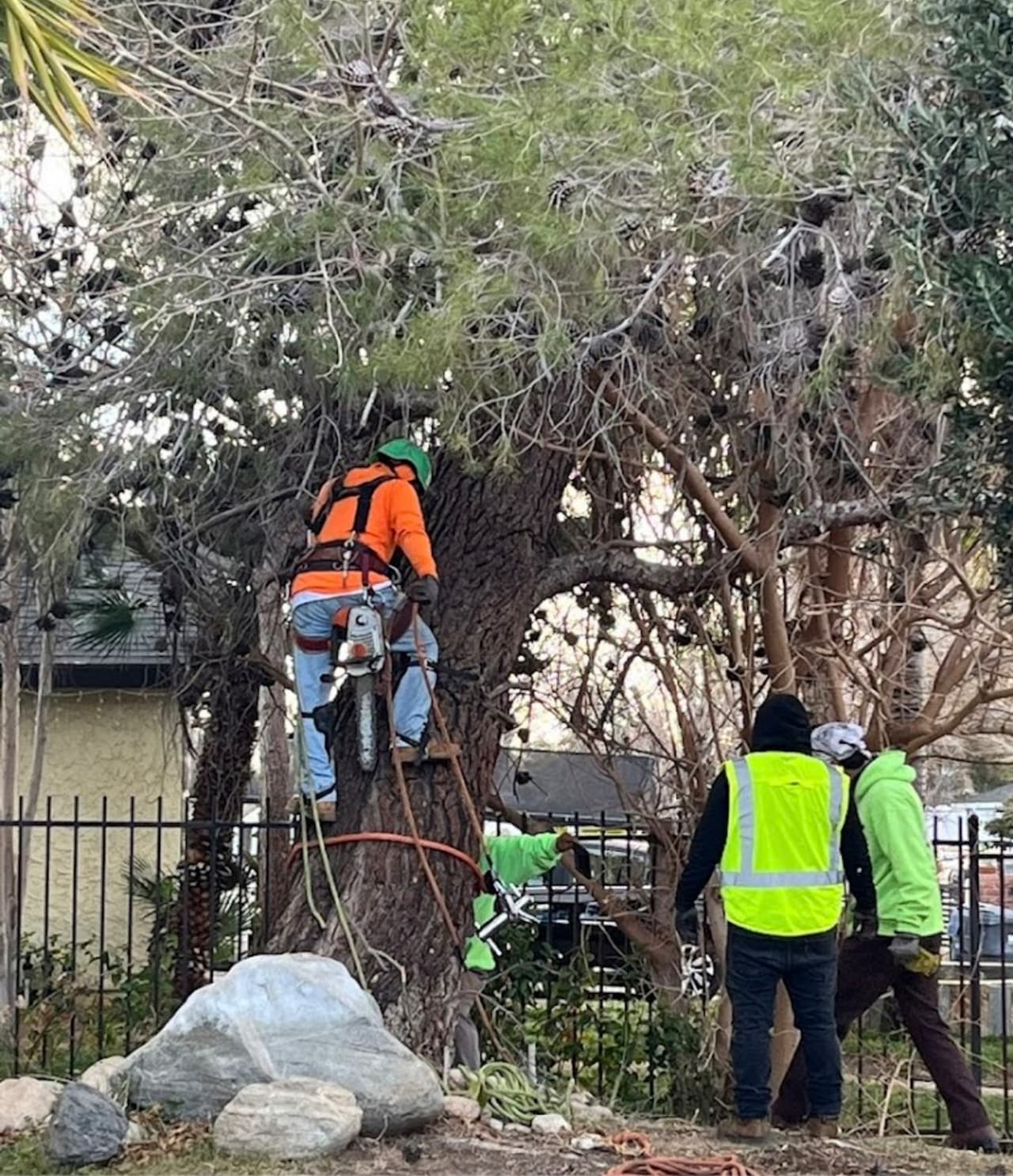
Tree trimming in Palmdale, Lancaster, and the surrounding Antelope Valley gets underestimated. From the ground it looks like yard work — cut some branches, clean up. In reality, tree work is a high-risk activity: height, heavy loads, unpredictable movement, power tools, wind, heat, and sometimes electrical hazards, all in the same job. The high desert amplifies each of those risks — drought-stressed trees, brittle wood, intense summer heat, and strong seasonal winds.
What looks safe from the ground can turn unpredictable the moment a cut is made. This guide covers the real risks, the common mistakes, and why professional tree care matters so much here.
The Biggest DIY Tree Trimming Safety Mistakes
Homeowners in Palmdale, Lancaster, and the Antelope Valley run into the same dangerous situations when they attempt tree work themselves.
Working near power lines
One of the most serious risks on the list. People assume they're safe if they're not touching the wire — but electricity can arc through branches, tools, or ladders. Antelope Valley wind makes it worse: branches can shift into lines mid-cut.
Using a ladder with cutting tools
The classic accident: a homeowner on an extension ladder, running a chainsaw or pole saw, reaching too far for the last cut. The branch shifts, the ladder goes unstable, and the fall is serious.
Underestimating desert tree failure
Trees in the Antelope Valley often look stable but are structurally stressed from drought and heat. Internal dryness, hidden cracking, and brittle limbs can let go without warning during trimming.
Over-pruning in extreme heat
Removing too much canopy exposes the tree to direct desert sun — sunscald now, long-term decline later. Plenty of homeowners weaken trees by "opening them up" too aggressively.
Topping trees
Cutting the top off a tree to reduce height is one of the most damaging things you can do to it. It looks like a fix for height or wind control; what it actually creates is weak regrowth and long-term instability.
Ignoring wind conditions
Antelope Valley wind changes fast, and it affects branch direction, ladder stability, rope tension, and fall paths. Even experienced crews adjust or stop work during unsafe gusts.
No plan for drop zones or escape paths
Homeowners routinely stand in exactly the wrong place when cutting. Professionals plan where limbs will land, how they might swing or roll, and where to stand — before anything gets cut.
How UFO Tree Trimming Approaches Safety Differently
We follow a safety-first process built for Antelope Valley conditions.
- Tree inspection before any cutting. The tree is evaluated for dead or hanging limbs, cracks and decay, drought stress, structural imbalance, and pest or borer damage. That evaluation determines how the work gets done safely.
- Planning drop zones and escape routes. Every cut is planned in advance: where limbs will fall, what could be damaged, how the wood might swing or rotate, and safe exit paths for the crew.
- Controlled rigging instead of free-falling limbs. Wherever possible, limbs come down on ropes and rigging instead of dropping free — critical in tight residential areas with homes, fences, and vehicles nearby.
- Work pauses during unsafe wind conditions. Antelope Valley wind is unpredictable. We stop or adjust when conditions turn unsafe instead of rushing to finish.
- Professional equipment and safety systems. Proper climbing systems, helmets, protective gear, rigging devices, and clear communication between ground crew and climbers.
- Utility awareness and clearance safety. Any work near power lines is treated as high-risk and handled with extreme caution and proper coordination.
- Property protection during the job. Before cutting begins, we assess the surrounding area to protect roofs, fences, solar panels, vehicles, patios, and structures.
- Continuous cleanup and hazard removal. Debris is managed throughout the job so work areas stay clear.
Common Misconceptions About Tree Trimming Safety
Tree work looks simpler than it is, and the misconceptions follow a pattern.
- "Tree trimming is just yard work." Tree work involves physics, weight distribution, and unpredictable movement — not just cutting.
- "A chainsaw means I can do it myself." The tool is the easy part. Knowing how a tree reacts after the cut is the real skill.
- "Topping makes trees safer." Topping weakens trees and leads to dangerous regrowth.
- "If a tree is green, it's healthy." A tree can look healthy and still be structurally compromised inside.
- "Palm trees are easy to trim." Heavy fronds and unpredictable drop behavior make palm work dangerous.
- "A ladder is safer than climbing." Ladders are one of the most common causes of tree-related injuries.
- "Wind doesn't matter much." Wind affects every stage of tree work, from the cut to the falling direction.
Trees That Are Most Dangerous in the Antelope Valley
Certain species demand extra caution because of how they respond to desert conditions:
- Eucalyptus — brittle wood and unpredictable limb failure
- Aleppo pine — often drought-stressed with hidden internal damage
- Arizona ash — fast growth builds weak structure over time
- Pepper trees — heavy, spreading limbs that can fail unexpectedly
- Mexican fan palms — tall, heavy fronds and difficult climbing conditions
- Cottonwoods — fast growth with weak, water-heavy wood
Every one of these can look stable while hiding structural risk.
How Antelope Valley Weather Increases Risk
Local conditions make tree work significantly more dangerous than in many other regions:
- Santa Ana winds can shift direction suddenly
- Extreme heat weakens both trees and human performance
- Drought makes wood brittle and less flexible
- Dust reduces visibility during cuts
- Open landscapes mean higher wind exposure
- Irrigation patterns often produce uneven growth
Stack those factors and tree trimming gets far less predictable.
What Homeowners Should Do Instead of DIY Tree Work
Most of safe tree care is knowing when not to do it yourself. Call a professional if:
- Branches are near power lines
- Ladders are needed to reach limbs
- Limbs are heavy or hanging over structures
- Trees show cracks, dead sections, or leaning
- Wind conditions are present
- Palms are tall or overdue for maintenance
Small ground-level pruning is generally the only safe DIY task. Anything involving height, heavy limbs, or structure should be evaluated professionally.
A simple rule: if you need elevation, cutting force, or control over falling weight — it's professional work.
The Real Cost of DIY Tree Trimming Gone Wrong
An attempt to save money can escalate fast:
- Injuries: ER visits, surgery, rehab, lost work time
- Property damage: roofs, fences, vehicles
- Utility incidents: outages, fire risk, liability exposure
- Long-term tree damage: premature removal or expensive corrective pruning
- Insurance issues: deductibles, premium increases, or denied claims
One mistake often costs more than the professional service would have.
Why Experience Matters
Experienced crews don't just cut branches — they read how a tree is loaded, how it will move, and what it will do after the cut. They recognize:
- Tension and compression in wood
- Hidden cracks and decay
- Wind load changes at canopy level
- How a tree's structure reacts when weight comes off
Most importantly, they adjust in real time when conditions change — which is how accidents get prevented instead of survived.
What Homeowners Should Do Next
Tree safety in the Antelope Valley isn't about appearance. It's about preventing avoidable risk in a region where wind, heat, and drought constantly work on tree stability.
Most serious tree problems start small: overgrown limbs, hidden decay, storm stress, uneven weight. They go unnoticed until a trimming attempt or a wind event exposes them.
If you're unsure about a tree, have it inspected before doing anything yourself. A quick professional assessment can determine whether the tree needs maintenance, structural correction, or removal — before it becomes a safety hazard or an expensive emergency.